

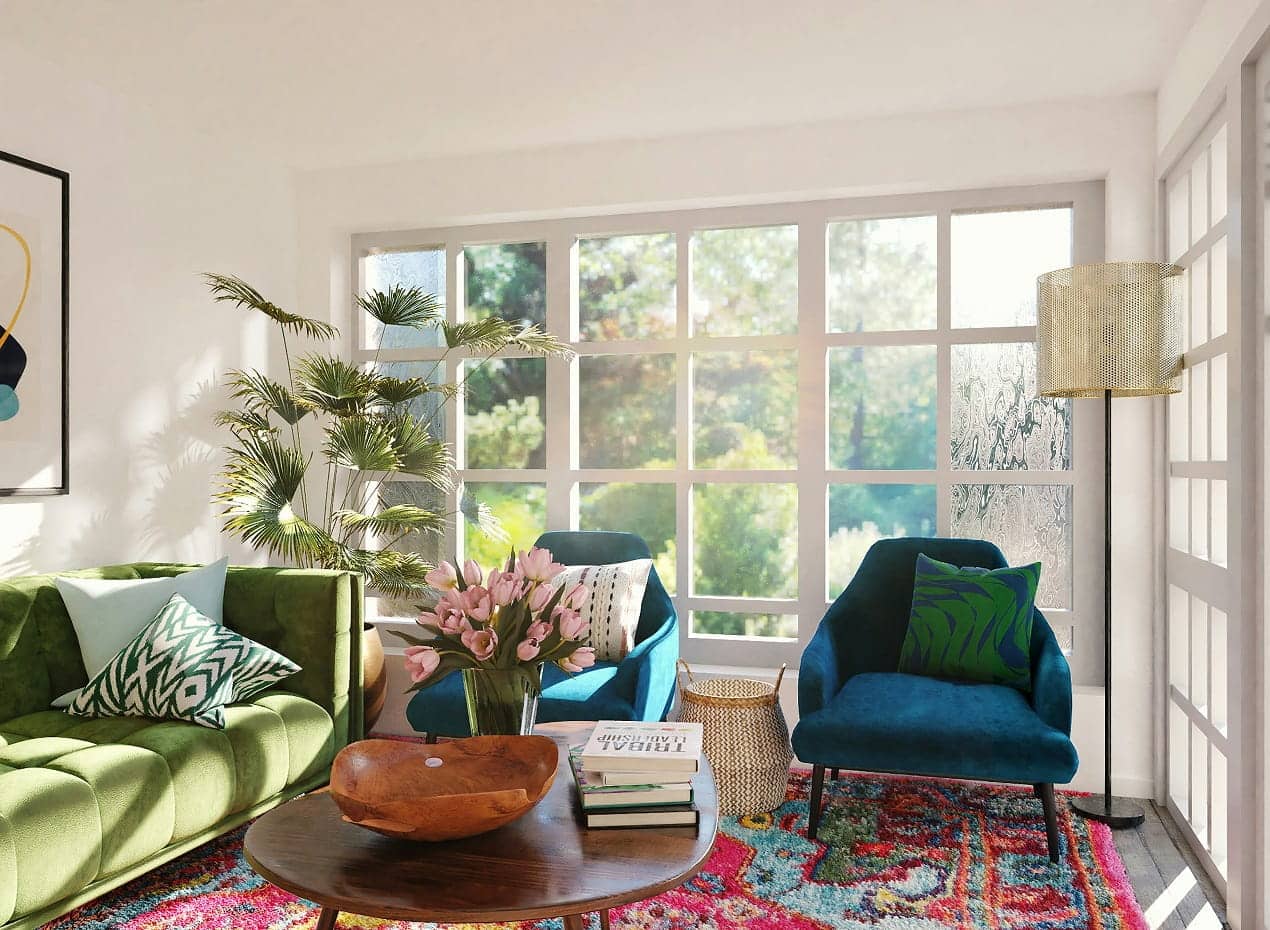
Every square foot matters when space is limited. Whether you’re working with a studio apartment, a compact guest bedroom, or a cozy home office, the right design choices can transform a cramped room into one that feels open, airy, and intentional.
Here are five proven strategies interior designers use to visually expand small spaces — no renovation required.
1. Let Light Do the Heavy Lifting
Natural light is the single most effective tool for making a room feel larger. Dark corners shrink a space, while sunlight opens it up. The key is removing anything that blocks light from entering and flowing through the room.
Start with your windows. Even small ones can flood a room with brightness when dressed correctly. Lightweight sheers, inside-mount shades, and café curtains all maximize daylight without sacrificing privacy. If you’re unsure where to begin, this guide to window treatments for small windows breaks down the best options for every room in the house.
2. Choose Furniture with a Low Visual Weight
Bulky furniture dominates a small room. Swap heavy pieces for options with exposed legs, slim profiles, and open frames. A glass-top coffee table or a wall-mounted console takes up the same functional space while allowing the eye to travel further across the room.
The rule is simple: if you can see more floor, the room feels bigger.
3. Use a Cohesive Color Palette
A room painted in five different colors feels chaotic and closed-in. Stick to two or three tones from the same family — soft whites, warm neutrals, or cool grays — and carry them across walls, textiles, and décor.
This doesn’t mean the space has to be boring. Introduce texture through linen cushions, woven rugs, or a subtly patterned throw to add depth without visual clutter.
4. Think Vertically
When floor space is tight, use your walls. Tall bookshelves, floor-to-ceiling curtains, and vertically hung artwork all draw the eye upward and create the impression of height. Even something as simple as mounting a curtain rod a few inches above the window frame can make a noticeable difference.
5. Edit Ruthlessly
The biggest mistake in small-space design isn’t choosing the wrong furniture or paint color — it’s having too much of everything. Every object in a compact room needs to earn its place. If it doesn’t serve a function or bring genuine visual value, it’s taking up space that could be left open.
Adopt a “one in, one out” rule and resist the urge to fill every surface.
The Bottom Line
Designing a small room well isn’t about tricks or illusions — it’s about making deliberate choices. Prioritize light, keep proportions in check, and let simplicity guide your decisions. The result is a space that feels considered, comfortable, and far more spacious than its measurements suggest.