

Your roof is one of the hardest-working parts of your home. It shields everything underneath it from rain, wind, snow, ice, and sun — year after year, without much acknowledgment. Most homeowners never think about their roof until something goes obviously wrong.
But when it’s time to replace it, the decisions you make matter a great deal. The material you choose will affect how your home looks, how it performs through the seasons, what it costs to maintain, and how long it lasts before you have to do this again.
This guide walks you through the most common residential roofing materials, what each one is best suited for, and how to approach the decision so you end up with a roof that fits your home, your climate, and your budget.
Why the Right Material Matters More Than Most Homeowners Realize
Not every roof is built the same way, and not every home needs the same solution. The best roofing material for a steep-pitched colonial in a cold climate is not the same as the best option for a low-slope addition on a contemporary ranch.
Choosing the wrong material can lead to:
- Premature wear and a shortened lifespan
- Higher long-term maintenance costs
- Energy inefficiency
- Aesthetic mismatch with the home’s architecture
- Difficulty sourcing compatible materials for future repairs
Taking the time to understand your options before you commit saves money, headaches, and potentially another full replacement sooner than expected.
Asphalt Shingles: The Most Common Choice for Good Reason
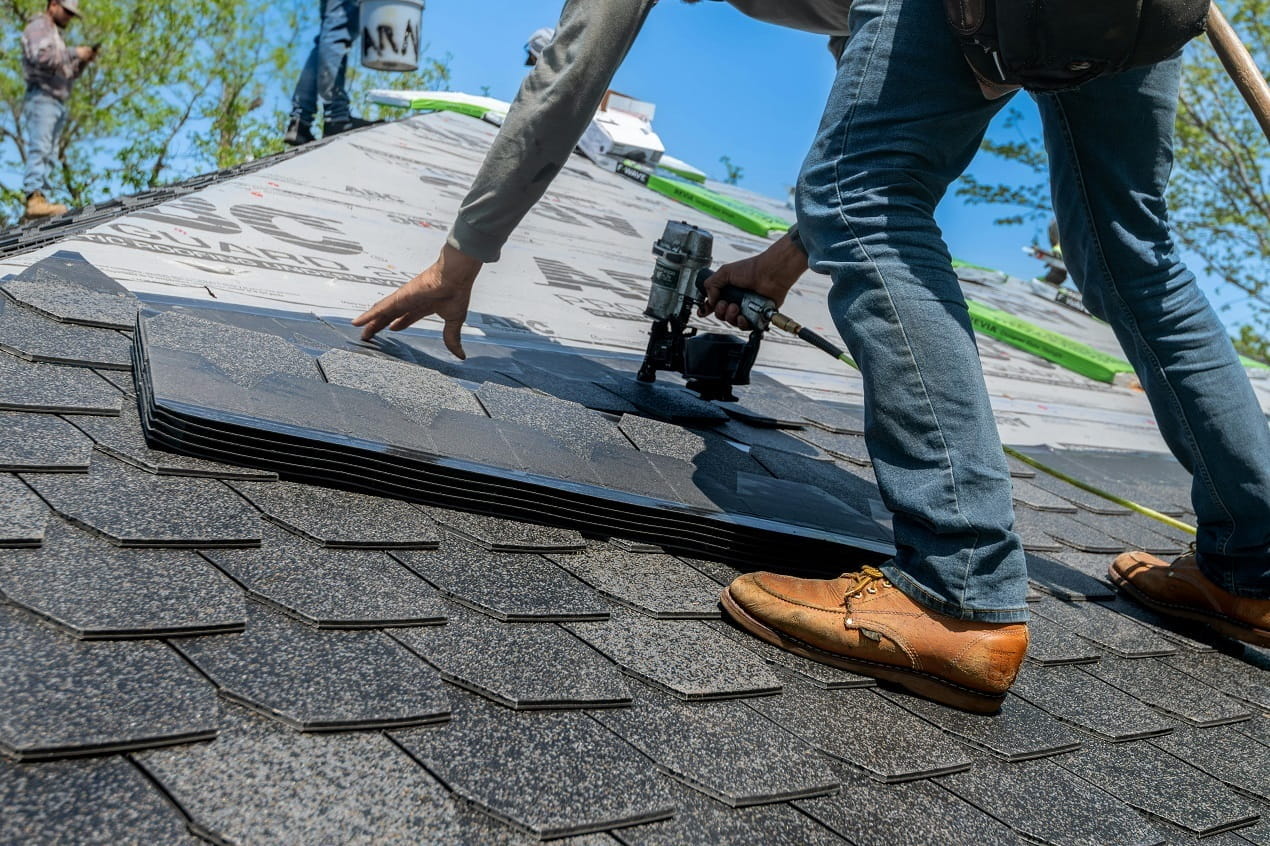
Asphalt shingles are installed on the majority of homes across the country, and there’s a practical reason for that. They offer a reliable combination of affordability, versatility, and decent longevity that makes them a sensible default for most residential projects.
How they work. Asphalt shingles consist of a fiberglass or organic mat base coated with asphalt and topped with mineral granules. The granules protect against UV exposure and provide the shingle its color and texture.
Lifespan. Standard three-tab asphalt shingles typically last 15 to 25 years. Architectural shingles, also called dimensional or laminate shingles, are thicker and more durable, with lifespans of 25 to 30 years or more under normal conditions.
Best for. Homes where budget is a primary consideration, or where the architectural style doesn’t call for a specialty material. They work well across a wide range of roof pitches and are suitable for most residential structures.
Things to know. Asphalt shingles can be more susceptible to damage in high wind or hail events, and they don’t perform as well as metal or slate across very long temperature cycles. Proper ventilation and installation are critical to getting the most out of their lifespan.
Metal Roofing: Long Life and Strong Performance
Metal roofing has grown significantly in popularity over the past decade. When properly installed, a metal roof can last 40 to 70 years with minimal maintenance, making it one of the best long-term investments available to homeowners.
Common types. Standing seam metal roofing features continuous vertical panels that run from the ridge to the eave, with seams raised above the panel surface. This design prevents water infiltration at the seam and gives the roof a clean, modern look. Corrugated metal panels are a more economical option traditionally associated with agricultural buildings, but increasingly popular for residential use as well.
Lifespan. 40 to 70 years or more depending on the material, which may be steel, aluminum, or copper, and the coating system applied.
Best for. Homeowners who plan to stay in their home long-term and want to avoid future replacements. Metal roofing is also an excellent choice in areas with heavy snowfall, since its smooth surface sheds snow efficiently and reduces the risk of ice dam formation.
Things to know. Metal roofing typically costs more upfront than asphalt. Installation requires a contractor experienced with the specific panel system being used. Improperly installed metal roofs can develop problems with thermal expansion, fastener failure, or panel movement over time.
Cedar Shingles and Shakes: Natural Character with a Traditional Look
Cedar roofing brings a warmth and texture to a home that manufactured materials can’t replicate. It has been used on American homes for centuries and holds up impressively in both hot and cold climates when properly maintained.
Shingles vs. shakes. Cedar shingles are sawn on both sides for a smooth, uniform appearance. Cedar shakes are split on one or both sides, giving them a rougher texture and somewhat greater thickness.
Lifespan. 20 to 40 years with proper maintenance. Cedar’s natural oils provide built-in resistance to insects and moisture, but the material does require periodic treatment to maintain its performance over time.
Best for. Homes with traditional, craftsman, cottage, or colonial architecture. Cedar pairs naturally with stone or wood siding and gives older homes a historically appropriate character that fits well in established neighborhoods.
Things to know. Cedar requires more maintenance than asphalt or metal. Moss, mold, and mildew can develop in shaded or damp environments if the roof isn’t treated and cleaned on a regular schedule. Some municipalities also restrict wood roofing in areas with elevated fire risk.
Slate Roofing: Built to Last Generations
If longevity is your primary goal, nothing comes close to natural slate. A properly installed slate roof can last 75 to 150 years, meaning the roof you put on your home today may well outlast you.
What it is. Natural slate is a metamorphic rock quarried and cut into roofing tiles. It is one of the few truly natural roofing materials available and among the most durable building materials in existence.
Lifespan. 75 to 150 years or more for hard slate varieties. Soft slate quarried from certain regions carries a shorter lifespan of roughly 50 to 75 years.
Best for. Historic homes, high-end residential properties, and homeowners who want a permanent solution. Slate is often used in restoration projects where architectural authenticity is important and the investment is meant to last.
Things to know. Slate is heavy. Before installation, a structural assessment may be needed to confirm that the home’s framing can support the added load. It is also expensive, both in material cost and in the specialized labor required. Not every roofing contractor has genuine experience working with slate and copper detailing, and choosing the wrong installer can result in cracking, improper flashing, or water infiltration that’s difficult and costly to diagnose.
Rubber Roofing (EPDM): The Right Solution for Flat and Low-Slope Surfaces
Not all roofs are steeply pitched. Flat or low-slope areas, common on additions, garages, and porches, present a unique drainage challenge that traditional shingles aren’t designed to handle. This is where rubber roofing, specifically EPDM (ethylene propylene diene monomer), becomes the right solution.
How it works. EPDM is a synthetic rubber membrane installed in large sheets over a flat or low-slope surface. Its flexibility allows it to handle temperature changes without cracking, and its smooth surface sheds debris easily.
Lifespan. 20 to 30 years with proper installation and routine inspection. Coatings can also be applied to extend performance and improve the roof’s reflectivity.
Best for. Flat or low-slope sections, additions, detached garages, and covered porches. It is not appropriate for steeply pitched surfaces.
Things to know. The seams and edges of an EPDM roof are the most vulnerable points. Proper seaming during installation and periodic inspection of those areas is the key to a long-lasting rubber roof. If your flat roof is structurally sound but showing early signs of wear, a rubber coating may also extend its life without requiring a full replacement.
How to Evaluate Your Current Roof Before Making a Decision
Before choosing a replacement material, it’s worth fully understanding the condition of what you have. A few questions to answer before any contractor conversation:
How old is the roof? Age provides important context. A 15-year-old asphalt shingle roof showing significant granule loss is nearing the end of its useful life. A 12-year-old roof with isolated storm damage may only need targeted repairs.
Is the decking in good shape? Damaged or soft decking underneath the shingles adds scope and cost to any replacement project. A thorough inspection will identify this before work begins.
Is the attic properly ventilated? Poor ventilation is one of the leading causes of premature shingle failure. Heat and moisture build up without adequate airflow, deteriorating the shingles from the underside. A qualified contractor will assess this as part of any full roof evaluation.
Are there already multiple shingle layers? Many jurisdictions allow up to two layers of roofing material. If your home already has two, the next replacement will require a full tear-off, which adds labor and disposal cost to the overall project budget.
Questions Worth Asking Your Roofing Contractor
Once you’ve done your research, the conversation with a contractor should feel like a collaborative discussion, not a sales pitch. Come prepared with a few pointed questions:
- What material do you recommend for this home, and what’s your reasoning?
- Are you experienced with the specific installation requirements for that material?
- What does the product and workmanship warranty cover, and who backs it?
- How will you handle flashing at chimneys, vents, and any roof penetrations?
- What does the cleanup and disposal process look like?
- What is a realistic timeline from start to finish?
A contractor who answers these questions clearly and without pressure is a strong sign that you’re working with someone trustworthy. For homeowners in central Pennsylvania, partnering with a residential roofing contractor in Lancaster County who understands the region’s specific climate demands, including freeze-thaw cycles, humidity, and seasonal temperature swings, makes a meaningful difference in the quality and longevity of the finished project.
Final Thoughts
Replacing your roof is one of the larger investments you’ll make in your home. Done well and with the right material, it protects everything beneath it for decades. Done poorly, or with a material that wasn’t matched to the home’s needs, it can create ongoing problems that far exceed the original cost of getting it right.
Take the time to understand your options, get a thorough inspection, and work with a contractor who is honest about what your home actually needs. That combination, the right material and the right installer, is what makes a roofing project one you won’t need to revisit for a very long time.