

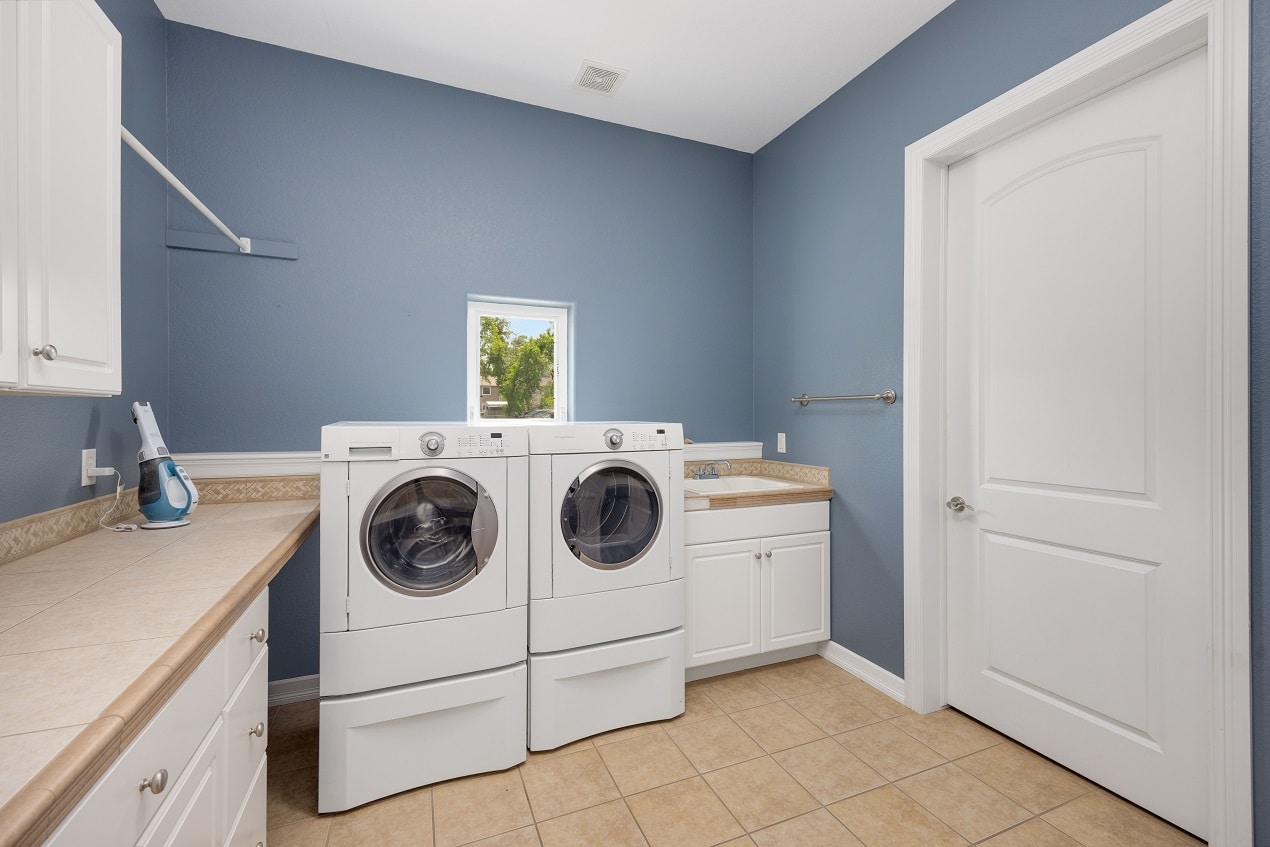
You turn on the AC and the rest of the house cools down within the hour. The bedroom feels comfortable, the living room settles at a good temperature, but the laundry room stays hot no matter how long the system runs. Most homeowners assume the AC is the problem, but the unit is usually doing its job fine.
Laundry rooms are built differently from other rooms in the house. They sit against exterior walls, sit below poorly insulated attic spaces, and run heat-producing appliances for long stretches.
All of these factors combine in June and July to make the room trap heat faster than the AC can remove it. Understanding each cause helps you fix the right thing instead of guessing.
1. Heat Travels Down from the Attic
Attic temperatures can reach 130°F or higher on a clear summer afternoon.
If your laundry room sits directly below the attic, that heat presses through the ceiling for hours, even after sunset. Builders often insulate utility rooms less than bedrooms or living areas, which makes this problem worse.
Pull back the attic hatch near your laundry room and check the insulation depth. Less than four inches is a clear sign heat is getting through.
2. The Dryer Adds a Lot of Heat to the Room
A dryer heats air to around 125 to 135°F during every cycle. That hot air is supposed to exit through the vent line.
When lint builds up inside the duct, airflow slows and the heat has no clean path out. Instead of leaving the house, it backs up into the room.
A blocked vent also makes the dryer run longer. A 45-minute cycle can stretch to 80 minutes or more. During those extra minutes, the room keeps getting warmer.
If clothes finish a full cycle still damp, or the room feels stuffy right after drying, the vent needs attention. Trusted dryer vent cleaning in Allentown clears that lint buildup so heat exhausts properly and drying times return to normal.
3. Poor Airflow Traps Heat in the Room
Laundry rooms are usually tucked away at the end of a hallway or in a back corner. Cold air from the AC often loses most of its strength before it reaches that far.
Without a return air vent nearby, warm air also has no exit path. It just sits in the room and keeps building.
Keeping the door open during AC operation helps a little. But if the supply vent is too small for the room’s heat load, the room will still fall behind. An HVAC technician can measure the airflow and confirm whether the vent size is the issue.
4. Gaps in Insulation Let Outside Heat Creep In
Many laundry rooms sit against an exterior wall. Walls that face west absorb direct afternoon sun for three to five hours in summer.
Older insulation can compress and thin out over the years. Even a small gap lets heat pass through the wall and raise the room temperature steadily through the afternoon.
Check the spot where the dryer vent pipe exits through the wall. The sealant around that opening cracks over time. Hot outdoor air pushes through that gap even when the dryer is off. Resealing it takes about fifteen minutes and removes one steady heat source.
5. Humidity Makes the Heat Feel Worse
Washing machines release water vapor through every cycle. Dryers add more moisture when the vent is blocked.
High humidity makes a room feel five to ten degrees warmer than the actual temperature. In summer, when outdoor humidity is already elevated, trapped moisture from both appliances hits you hard the moment you open the door.
A small exhaust fan running for twenty minutes after each load removes most of the leftover moisture. Still, if the dryer vent is the main moisture source, clearing that blockage fixes the root cause rather than managing the symptom.
6. The AC Vent Setup Does Not Match the Room’s Heat Load
Builders size AC vents based on a room’s standard heat load. Laundry rooms are small, so they get smaller vents.
The problem is that a running dryer produces more heat per square foot than almost any other appliance in the house. The original vent calculation did not account for that.
A technician can test airflow during an active drying cycle. Sometimes swapping a 4-inch register for a 6-inch one, or adding a duct booster fan, solves the problem without touching the rest of the system.
What You Can Do Before Peak Summer Heat Arrives
Work through this list from top to bottom. The first two fixes solve the most common problems:
- Clean and inspect the dryer vent line for blockages or damage.
- Check attic insulation above the laundry room and add more if it is thin.
- Reseal the exterior vent collar where the dryer pipe exits the wall.
- Make sure the supply and return air vents in the room are fully open.
- Run a small exhaust fan for twenty minutes after each laundry cycle.
- Ask an HVAC technician to test airflow and assess whether the vent size fits the room’s heat load.
The Room Can Be Fixed
A hot laundry room is a specific problem with specific causes. Heat enters from the attic, from a dryer that cannot exhaust properly, from wall gaps, and from humidity that has nowhere to go.
These causes stack on top of each other in June and July, which is why the room feels so much worse in summer.
Start with the dryer vent and ceiling insulation. Fix those two first and the room will likely respond to the AC the way the rest of your house already does.