

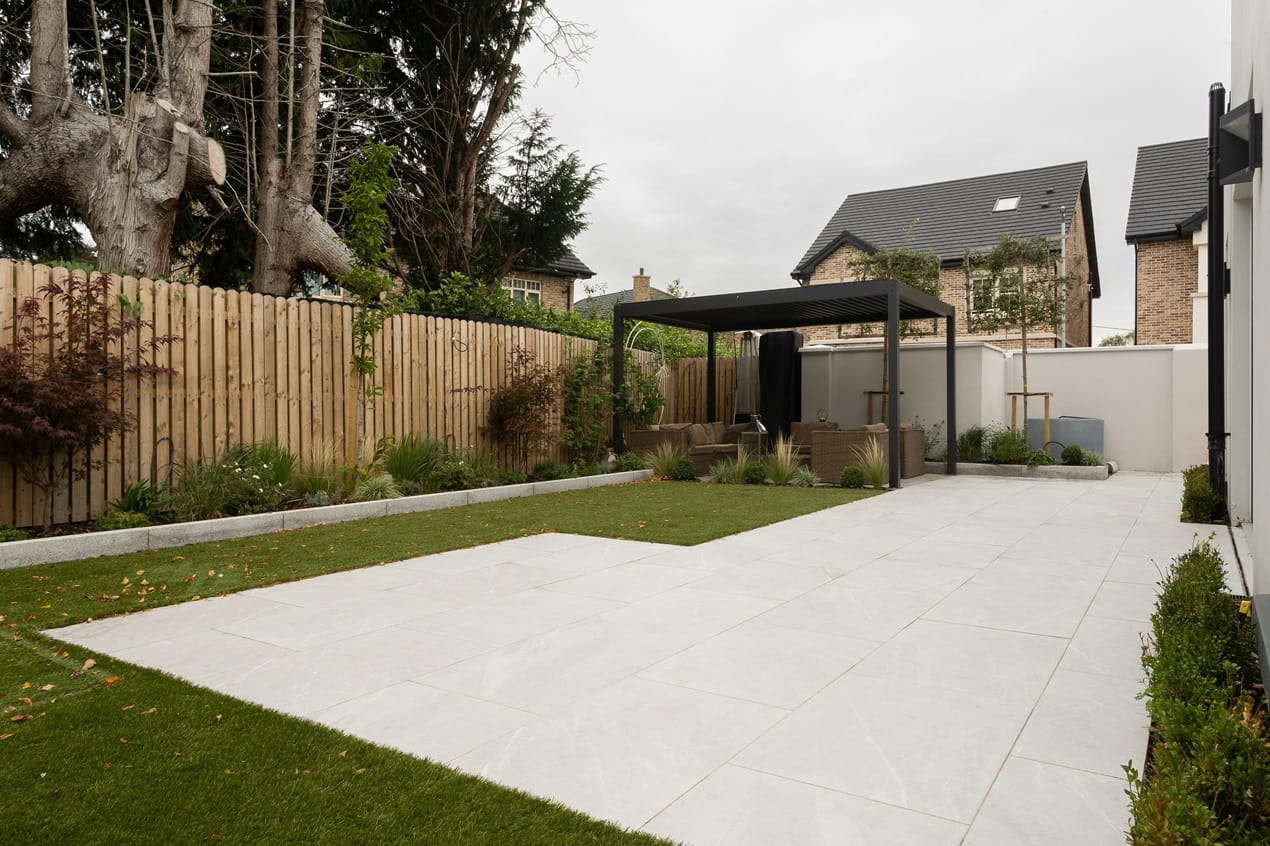
Alberta summers are short and they are good. From late June through the end of August, the evenings stretch past ten o’clock and the backyard becomes the most used room in the house. Then the mosquitoes arrive after a wet stretch, a chinook rolls through and swings the temperature twenty degrees, and half the season gets spent indoors looking at a patio nobody is using.
Homeowners in Chestermere, Langdon, and the communities east of Calgary deal with a specific version of this. Open prairie, standing water in the sloughs after a heavy rain, and wind that comes across the lake with nothing to slow it down. Making the outdoor space usable here is less about furniture and more about controlling three things: bugs, wind, and sun.
Bugs Are a Design Problem, Not a Spray Problem
Repellent and citronella candles are a treatment, not a fix. The reliable approach is a physical barrier, which is why public health guidance on keeping mosquitoes out of living spaces leads with intact screens on doors and windows before it gets to anything else.
The problem in most Alberta homes is not the windows. It is the large opening: the patio slider, the double door onto the deck, or the covered area between the house and the yard. Those are the openings people actually use in July, and they are almost never screened properly. A single unscreened eight foot slider undoes every screened window in the house.
Large Openings Need a Different Solution
Standard sliding screens work on standard doors. They do not work on a wide opening, a French door pair, or a covered patio bay, which is where motorized screen doors in Chestermere and similar retractable systems earn their place. The mesh rolls out across the opening when it is needed and retracts into a housing when it is not.
The retracting part matters more in Alberta than it does in a milder climate. Nine months of the year you want that opening clear, the sightline uninterrupted, and the mesh out of the weather where hail and blowing snow cannot reach it. A screen that lives in a cassette for the winter lasts considerably longer than one that sits exposed year round.
Wind Is the Underrated Factor
Anyone who has set a table on a Chestermere deck in June knows that the wind decides how the evening goes. It is not constant, but when it picks up off the lake it ends outdoor meals fast.
Solid windbreaks cause their own problems, creating turbulence on the leeward side rather than calm. Partial barriers work better. A slatted screen, a planted hedge, or a mesh panel slows the air and diffuses it rather than deflecting it into a swirl. The goal is to take the edge off, not to build a wall.
Plan the Space Around Where the Sun Actually Falls
Long summer days mean the sun sits low in the northwest well into the evening. A deck oriented to catch afternoon light can be unusable at seven in the evening when everyone actually wants to sit outside. The homes that get this right either shade the west exposure or place the seating area where an existing structure blocks the low angle sun.
This is the same instinct behind why so many homeowners have started treating backyards as an extension of the living space rather than as a leftover yard. Comfort follows from placement, orientation, and shade before it follows from anything you buy.
Set It Up Once, Use It Every Year
The upgrades that make an Alberta backyard work are not seasonal purchases. A properly screened main opening, a partial windbreak in the right spot, and shade where the evening sun lands are one time decisions that pay off every summer after.
Given how short the season is here, the difference between a yard used two weekends a month and one used most evenings is worth more than the same money spent indoors. Handle the bugs and the wind first. Everything else, the furniture, the lighting, the fire table, works better once those two problems are solved.
The window for outdoor living in this part of the province is roughly ten weeks. Spending the first two of them fighting mosquitoes is a poor use of a good summer.