


If you’ve priced up a new hot water cylinder recently, you’ll have noticed heat pump systems everywhere — in trade brochures, on plumber recommendations, and increasingly on rooftops and exterior walls around New Zealand. They’re not new technology, but they’ve moved from niche to mainstream fairly quickly, largely because power prices keep climbing and homeowners are looking for a genuine way to cut one of the biggest line items on their electricity bill: heating water.
The catch is that “heat pump hot water” isn’t one single product. Different manufacturers take quite different approaches to the same basic idea, and which approach suits your house depends on things that have nothing to do with brand loyalty — your climate, your section, your existing plumbing, and how much water your household actually uses. This piece walks through how the technology works, where the main players differ, and who’s likely to get the most out of switching.
The basic idea: moving heat, not making it
A standard electric hot water cylinder heats water the way a jug does — an element sits in the tank and converts electricity directly into heat. It’s simple and reliable, but it’s also a relatively inefficient use of electricity, because every unit of power you put in gives you roughly one unit of heat out.
A heat pump hot water system works differently. Instead of generating heat, it extracts heat that’s already present in the surrounding air and transfers it into the water, using a refrigerant cycle similar to a fridge running in reverse. Because it’s moving existing heat rather than manufacturing it from scratch, a heat pump can produce meaningfully more hot water energy per unit of electricity consumed than a standard element — which is the whole basis of the running-cost argument for switching. The exact efficiency any given system achieves depends on the unit, the ambient temperature, and how it’s installed, so it’s sensible to treat any specific figures you see quoted as indicative rather than guaranteed for your own situation.
Where the brands differ: design philosophy, not just marketing
This is where it pays to understand the category rather than just comparing price tags. A few well-known names come up repeatedly in the New Zealand market, and each takes a slightly different approach:
- Reclaim is designed in New Zealand and tends to focus on compact, all-in-one units built with local conditions in mind — a relevant point if you want a system engineered specifically around our variable climate.
- Apricus, better known here for solar water heating, also offers heat pump options and is generally associated with split-style configurations, where the heat pump component sits separately from the storage cylinder.
- EcoSpring markets itself on efficiency and has built a reputation among some installers for solid cold-climate performance, which matters a lot if you live somewhere that gets genuinely cold overnight.
- Rheem, a long-established cylinder brand in NZ, brings its own heat pump range into the category, backed by a manufacturer most Kiwi plumbers already know and trust for parts and servicing.
- Haier has become a significant player in NZ heat pump hot water, with some models in this category built around well-regarded compressor technology from established electronics brands such as Panasonic, combining the heat pump and tank into a single integrated unit.
None of these is a one-size-fits-all “best” choice — the right one depends on your climate zone, available space, existing tank condition, and budget. If you want an up-to-date comparison across these options, a heat pump hot water cylinder with an integrated design like Haier’s is a good example of how far the all-in-one format has come, and it’s worth seeing how it stacks up against split systems for your specific site before deciding.
Climate and location matter more than the spec sheet
Because heat pump systems draw heat from the surrounding air, ambient temperature has a direct effect on how efficiently they perform. A unit installed in Auckland or Northland, where winter temperatures rarely drop far, will generally have an easier time than the same unit installed in a frost-prone part of the South Island or a cold inland valley. This doesn’t mean heat pump hot water performs poorly in cooler regions — plenty of systems are specifically engineered to keep working in low ambient temperatures — but it does mean the “typical” efficiency figures manufacturers publish are usually based on reference conditions that may not match your actual site.
Where the unit sits also matters. Outdoor, well-ventilated locations generally give the heat pump component the airflow it needs; a cramped, enclosed space can restrict performance regardless of how good the unit is on paper. This is a conversation worth having with whoever installs your system rather than something to guess at from a brochure.
The running-cost trade-off homeowners need to understand
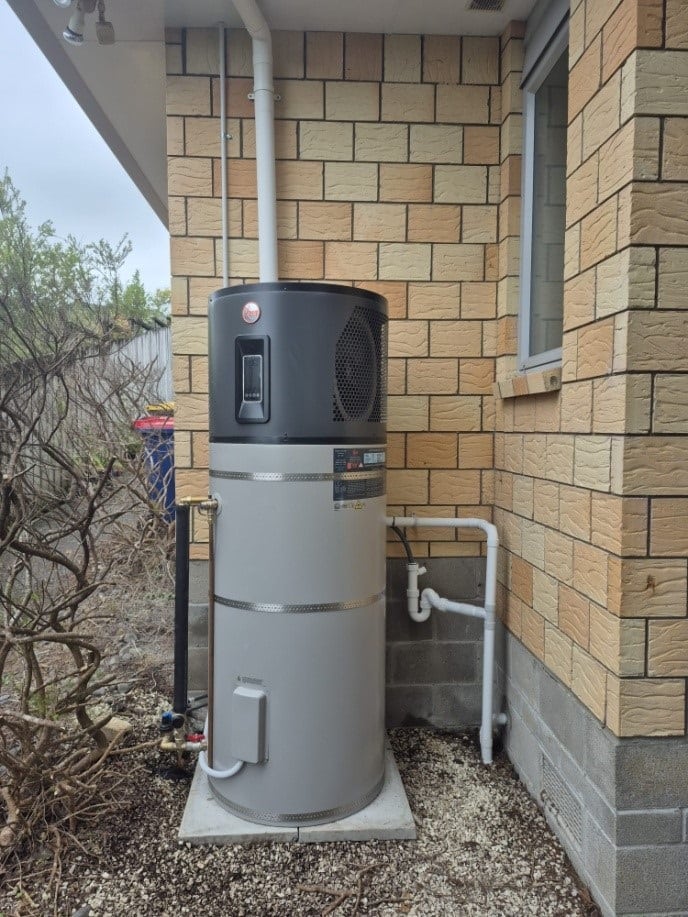
The honest version of the pitch is this: heat pump hot water systems typically cost more upfront than a standard electric cylinder of equivalent size, but they can meaningfully reduce the electricity used for heating water over the life of the system, because they’re moving heat rather than generating it from scratch. Whether that trade-off pays off — and how quickly — depends on your household’s hot water usage, your current power plan, the size and type of unit you choose, and how long you plan to stay in the property. It’s a genuine case-by-case calculation, which is why it pays to get a proper comparison for your own home rather than relying on generic payback-period claims you might see quoted elsewhere.
Noise and space: the practical considerations people forget
Heat pump units have a compressor and fan, so they do produce some operating noise — generally comparable to an outdoor air conditioning unit, though this varies by model and by whether the compressor is integrated into the tank or installed as a separate split unit. If the unit will sit near a bedroom window, outdoor living area, or close to a neighbouring boundary, it’s worth asking an installer about noise levels for the specific model you’re considering before committing.
Space is the other practical factor. Integrated units combine the heat pump and cylinder into a single footprint, which suits properties with limited room, while split systems separate the two components and can offer more flexibility in how they’re positioned — sometimes at the cost of a slightly more complex installation.
Who heat pump hot water suits — and who it might not
Heat pump systems tend to make the most sense for households replacing an ageing electric cylinder, especially where hot water use is moderate to high and the property has reasonable outdoor space with good airflow for the unit. They’re also a natural fit for anyone specifically trying to reduce ongoing electricity costs and comfortable with a higher upfront investment to get there.
They’re a less obvious fit where space is extremely tight, where noise-sensitive positioning is unavoidable, or where a household’s hot water use is genuinely minimal and the upfront cost difference would take a long time to be worthwhile. There are also energy-efficiency programmes and information resources — it’s a good idea to check with the Energy Efficiency and Conservation Authority (EECA) or your installer for anything currently available — that can factor into the overall cost picture, so ask before you rule a system in or out on price alone.
Getting it right
The category has matured a lot in the last few years, and the honest answer to “which is the best heat pump hot water system” is that it depends on your house, not just the brand name on the unit. If you’re weighing up options, it pays to work through a proper best heat pump hot water system nz comparison with a specialist who can look at your climate, your existing plumbing, and your household’s actual hot water habits, rather than picking based on a single spec sheet or price alone.