

Palm trees can add height, shade and a distinctive appearance to residential and commercial landscapes, but they also require ongoing care. In many situations, pruning dead fronds and removing fruit or seed pods may be enough to keep a palm manageable. However, there are circumstances where palm tree removal Sydney property owners arrange may be more appropriate than continuing to prune a declining, hazardous or unsuitable tree.
The decision should be based on more than appearance alone. The palm’s health, structural condition, location and maintenance requirements should all be considered. Understanding the difference between a palm that simply needs maintenance and one that may require removal can help property owners make a more informed decision.
When Regular Palm Pruning May Be Enough
Healthy palms do not necessarily need to be removed simply because they have dead or ageing fronds. Pruning can help manage naturally declining fronds, fruit and seed pods while keeping the area around the tree more manageable. Dead fronds can eventually fall, particularly from taller palms, creating potential hazards around driveways, pathways, pools and outdoor living spaces. Removing them at an appropriate time can reduce this risk without sacrificing an otherwise healthy tree.
Palm pruning should generally focus on material that genuinely needs attention. Excessive removal of healthy green fronds may unnecessarily affect the palm, so pruning should be based on the species and condition of the tree rather than simply trying to create a particular appearance. Regular maintenance can therefore be a practical option when the palm remains healthy, is appropriately positioned and does not present significant structural concerns.
Signs a Palm May Be Declining
Changes in the appearance of a palm can sometimes indicate more than a need for routine pruning. Significant canopy decline, unusual discolouration or deterioration around the trunk may justify closer assessment. Unlike many woody trees, palms have a different growth structure. Damage to important growing tissue can have serious consequences because palms do not respond to injury in exactly the same way as conventional branching trees.
Property owners should pay attention to changes such as persistent canopy decline, unusual leaning, visible trunk damage or sections that appear significantly deteriorated. A palm that repeatedly produces poor or unhealthy growth may also require professional assessment. Not every visible problem means the tree needs to be removed. Some issues may be manageable depending on their cause and severity. The important step is identifying whether the palm remains viable before continuing with repeated pruning.
Location Can Influence the Decision to Remove
A healthy palm may still become unsuitable if its location creates ongoing problems for the property. Tall palms positioned close to buildings can drop large fronds onto roofs, gutters or outdoor areas. Fruit and seeds can also create ongoing cleaning requirements around pools, pathways and driveways. In some situations, access for regular maintenance becomes increasingly difficult as the palm grows taller.
Location should therefore be considered alongside tree health. Questions worth asking include:
- Is the palm close to a building or other structure?
- Are falling fronds regularly affecting high-use areas?
- Is the tree interfering with planned construction or landscaping?
- Can the palm be maintained safely as it becomes taller?
- Is the tree creating repeated maintenance problems?
Removal should not automatically be the first response to inconvenience, but persistent conflicts between a mature palm and its surroundings may make long-term retention less practical.
Structural Problems Can Make Pruning Insufficient
Pruning addresses fronds and other material around the canopy, but it cannot correct every structural problem affecting a palm. A significantly damaged or unstable trunk, severe decline or other major structural concerns may mean removing dead fronds alone does not address the underlying issue. If the entire palm has become unstable, the condition of the whole tree needs to be considered. This becomes particularly important when the palm is located near homes, vehicles, pedestrian areas or neighbouring properties. The consequences of failure can be much greater in locations where people and structures are regularly present.
Storms and strong winds can also expose weaknesses that were previously less obvious. If a palm changes noticeably after severe weather, an assessment may be appropriate before further maintenance is undertaken. A qualified arborist can examine the condition of the palm and help determine whether pruning remains suitable or whether removal should be considered.
Why Palm Removal Requires Appropriate Equipment
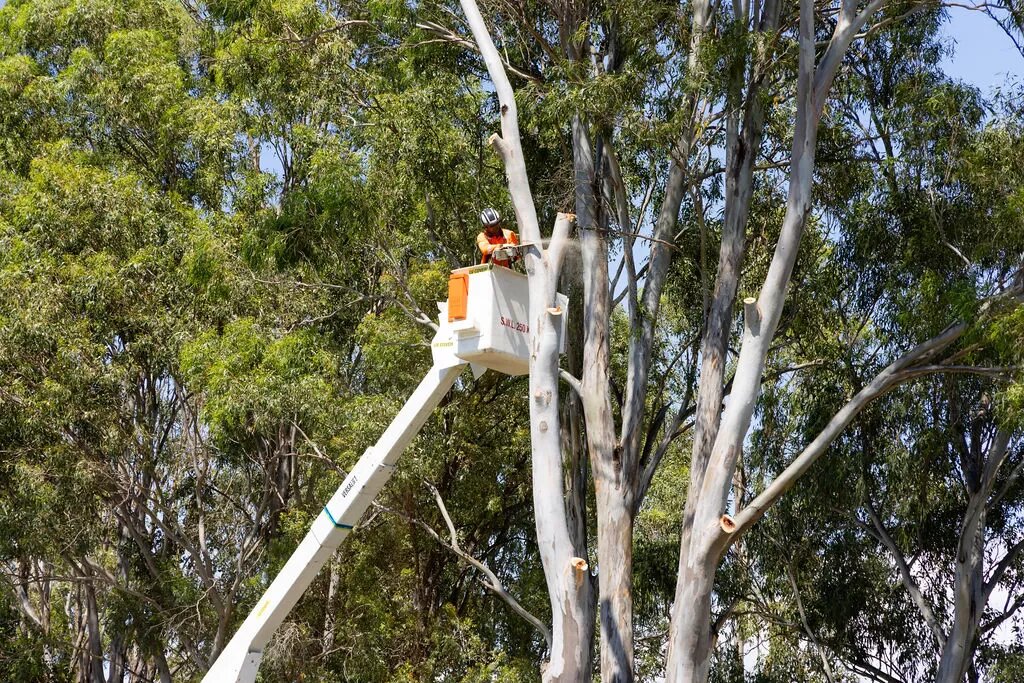
Removing a tall palm is not simply a matter of cutting through the trunk at ground level. The surrounding environment needs to be considered, particularly where there is limited space for sections of the tree to be lowered safely. Depending on the palm’s height, condition and location, removal may require climbing systems, rigging equipment, elevated work platforms or other specialised machinery. Sections may need to be carefully controlled to avoid surrounding buildings, fences, gardens and other property.
The work area also needs to be managed because palm fronds and trunk sections can be heavy. Attempting to remove a large palm without appropriate equipment and experience can create unnecessary risks. After the palm has been removed, the remaining stump may also need attention depending on future plans for the area. Stump grinding can help reclaim the space when new landscaping, lawn or other improvements are planned.
Making the Right Long-Term Decision
Choosing between pruning and removal should consider the palm’s long-term suitability rather than only its immediate appearance. If the tree is healthy, appropriately located and manageable through routine maintenance, continued pruning may be the better option. There is little reason to remove a healthy palm when straightforward maintenance can address the main concerns. Removal may become more appropriate when the palm is severely declining, structurally compromised or creating ongoing problems that cannot reasonably be resolved through pruning. Future landscaping or construction plans may also influence the decision.
Professional assessment can be particularly useful when the answer is unclear. An arborist can consider the species, condition, location and surrounding environment before recommending an appropriate course of action. Making the decision early can also make planning easier. Instead of repeatedly paying for maintenance on a palm that is no longer suitable for its location, property owners can determine whether retaining or removing it makes more sense over the longer term.
Conclusion
Pruning and removal serve very different purposes when managing palm trees. Routine pruning can address dead fronds, fruit and other maintenance concerns while allowing a healthy and appropriately positioned palm to remain part of the landscape. Complete removal may need to be considered when the palm is significantly declining, structurally compromised or creating ongoing conflicts with buildings and frequently used outdoor areas. Pruning the canopy cannot resolve problems affecting the stability or overall viability of the tree.
Assessing the palm’s health, location and future maintenance requirements can help determine the most appropriate approach. When there is uncertainty about its condition or safety, obtaining professional advice is preferable to relying on appearance alone.