

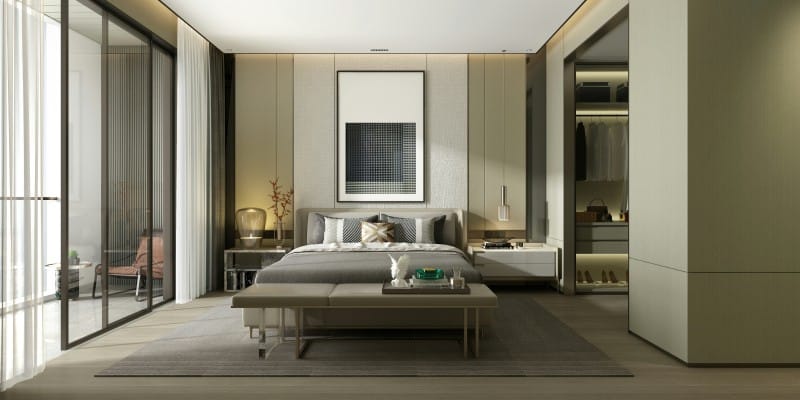
The living environment significantly influences mental clarity, emotional balance, and the ability to maintain focus. A poorly designed space often leads to scattered thinking and reduced output, while a thoughtfully organised one enhances productivity and mood. Each room serves as a cue to specific behaviour, and subtle shifts in lighting, cleanliness, and layout can transform how a space is perceived and used.
Recognising the silent dialogue between space and psyche opens the door to meaningful changes that sharpen focus and promote emotional stability, beginning with one of the most personal spaces: the bedroom.
The Role of Bedrooms and Bedding in Psychological Well-Being
The bedroom serves as the sanctuary of rest and renewal. It is the space where the mind resets, emotional turbulence subsides, and the body recuperates. A poorly maintained bedroom often leads to restless nights, which directly hampers cognitive functions such as memory, decision-making, and focus during the day. Lighting, wall colours, and air quality in the bedroom are frequently overlooked aspects that significantly impact sleep quality. Muted tones and dim, adjustable lighting create a soothing environment, while proper ventilation keeps the space feeling fresh and clean.
Among the most pivotal elements within this space is the mattress. An unsuitable mattress can lead to disturbed sleep, chronic back pain, and constant fatigue. The discomfort may not always be immediately apparent, but its cumulative effect on the body and mood becomes evident over time. People often underestimate the importance of aligning their mattress choice with their unique sleeping patterns and physical requirements.
The growing trend to shop by comfort level offers a solution to this issue, allowing individuals to select mattresses tailored to their personal support preferences—be it plush, medium, or firm. This approach provides clarity and simplicity, guiding buyers towards a product that directly contributes to better sleep quality, thus enhancing both mood and productivity during waking hours.
Matching the mattress to individual comfort needs becomes an investment not only in rest but also in emotional balance and daily effectiveness.
Lighting as a Mental and Motivational Lever
Light, both natural and artificial, holds considerable sway over the human mind. Exposure to natural light stimulates serotonin production, which is closely tied to mood regulation. Dim, poorly lit interiors, on the other hand, foster lethargy and a depressive atmosphere. The placement and type of lighting influence not only visibility but also psychological engagement.
For workspaces within the home, cool-toned lighting can enhance focus and alertness, while warmer tones are better suited for relaxation zones such as lounges and dining areas. Adjustable lighting that mimics natural light cycles can help maintain a healthy circadian rhythm, supporting both energy during the day and restful sleep at night. Ensuring that curtains or blinds allow ample daylight during working hours can serve as a passive enhancer of productivity.
Decluttering as a Cognitive Reset
A cluttered room often mirrors a cluttered mind. Visual noise—the abundance of items scattered across surfaces and floors—can overwhelm the senses and inhibit concentration. Regular decluttering not only clears physical space but also reduces cognitive overload. Every object within a room either supports a task or distracts from it.
Minimalist spaces are not necessarily devoid of personality; rather, they are curated to promote mental clarity. Introducing storage solutions, adopting daily tidying routines, and maintaining order all contribute to improved focus and emotional calm. Organisation fosters a sense of control, which is fundamental to psychological resilience and work output.
Colours and Emotional Conditioning
Colour psychology plays an understated but powerful role in determining mood and behavioural responses within a space. Cool tones like blues and greens tend to induce calmness and promote concentration. Warmer colours like reds and oranges energise but can also overstimulate when used excessively.
In spaces intended for productivity, such as home offices, neutral backdrops with subtle accent colours can stimulate without overwhelming. Meanwhile, living areas and bedrooms benefit from calming hues that encourage rest and relaxation. The key lies in balancing colour schemes to reflect the purpose of each room while subtly guiding emotional and cognitive responses.
Furniture Placement and Psychological Flow
The layout of furniture affects the navigability and overall flow of a living space. Poorly arranged furniture can create subconscious stress through cramped pathways and lack of symmetry, while a well-organised layout supports ease of movement and functional clarity.
For example, a desk positioned with a view towards a window rather than a wall can inspire creativity and reduce feelings of confinement. Similarly, seating arrangements that encourage social interaction without causing visual clutter can elevate mood and reduce feelings of isolation. The concept of feng shui, although cultural, aligns with modern spatial psychology in its emphasis on harmonious arrangement for balanced energy flow.
Sensory Elements: Texture, Sound, and Scent
While often overlooked, the sensory details of a home have a direct influence on mood. Soft textures like throws, rugs, and cushions contribute to a sense of comfort and safety. Smooth and reflective surfaces, when balanced with tactile warmth, create a cohesive visual and physical experience.
Soundscapes within the home—such as the hum of appliances, outdoor noise, or even silence—also contribute to the psychological ambience. Incorporating soft background music or white noise in certain areas can aid focus or relaxation, depending on the objective. Read my article on how to transform your living space with soundproofing methods.
Digital Hygiene Within Living Spaces
The integration of technology within the home, though useful, can become a double-edged sword. Constant exposure to screens, blue light, and digital clutter undermines both rest and productivity. Establishing boundaries around technology use, such as screen-free zones or timed access, protects mental clarity.
Creating an intentional living space is not an indulgence but a necessity for those seeking to optimise their mental state and performance. Each component—from mattress firmness to lighting design and clutter management—contributes in silent, often subconscious ways to one’s psychological landscape. By refining these elements with deliberate care, the living space transforms into a supportive partner in daily life, nurturing both productivity and emotional equilibrium.