

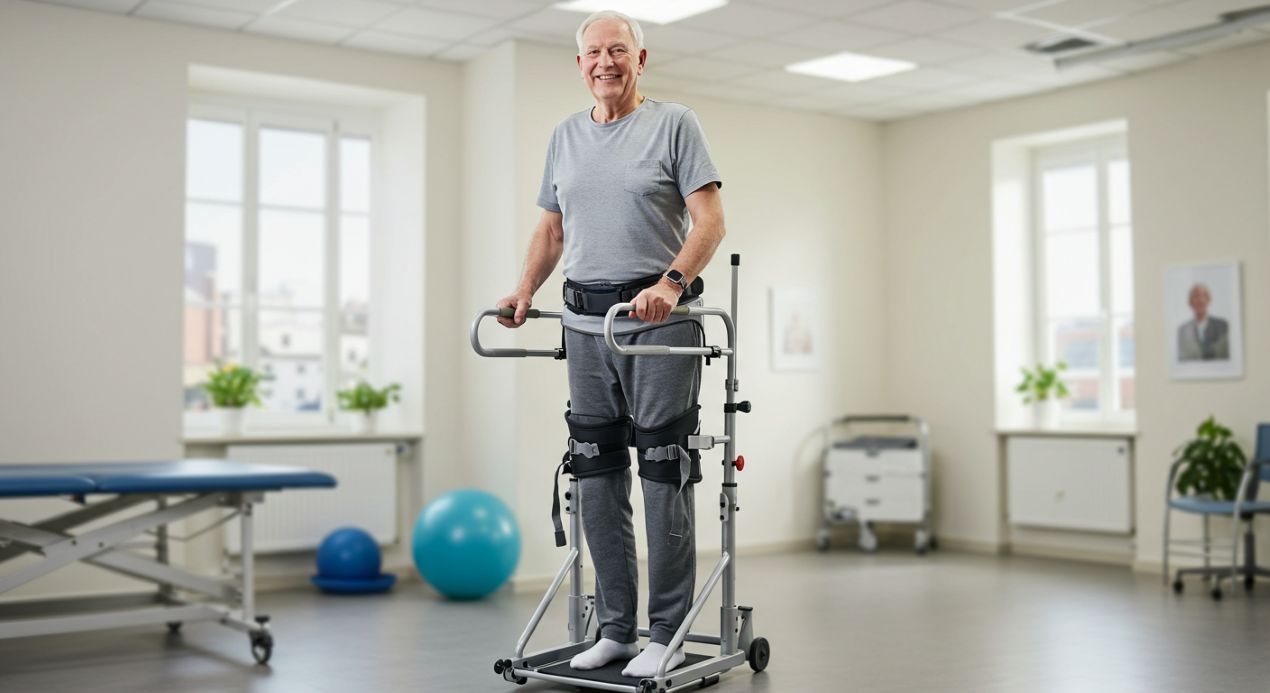
Standing frames are an essential piece of equipment for many people with mobility challenges. They provide crucial support to stand upright safely, which can have significant benefits for physical health and overall wellbeing. Whether used as part of rehabilitation, for long-term mobility support, or simply to promote better posture, standing frames play a vital role in enhancing independence and quality of life.
This article explores what standing frames are, the benefits they offer, who can use them and how to choose the right one for your needs.
What Is a Standing Frame?
A standing frame is a device designed to support a person in an upright standing position without the need for them to hold their weight themselves. It typically includes a sturdy base, adjustable supports such as straps, pads and harnesses to secure the user safely, and sometimes wheels for mobility.
Standing frames come in various styles depending on the user’s needs. Some are basic static frames intended for use in one spot, while others are mobile and allow for some movement or repositioning. The adjustable features accommodate different body sizes and postural needs, making standing frames highly versatile.
Who Can Benefit from Using a Standing Frame?
Standing frames are beneficial for people with a wide range of conditions that affect their ability to stand independently. These include:
- Spinal Cord Injuries
Individuals with paralysis or partial paralysis can use standing frames to bear weight safely. - Multiple Sclerosis and Cerebral Palsy
These conditions often affect balance and muscle control, making standing frames useful for support. - Stroke Survivors
Standing frames assist in rehabilitation and prevent complications related to prolonged sitting. - Muscular Dystrophy and Other Neuromuscular Disorders
Users gain support for muscle weakness and improved circulation. - Elderly People with Reduced Strength or Balance
Standing frames provide stability and confidence when standing. - Children with Developmental Disabilities
These devices encourage standing practice and promote bone and muscle development.
Physical Benefits of Standing Frames
Standing frames provide numerous physical advantages beyond simply supporting an upright posture. Some of the key benefits include:
Improved Circulation
Prolonged sitting can lead to poor blood flow, swelling and increased risk of blood clots. Standing upright helps promote better circulation by encouraging blood flow from the legs back to the heart. This reduces swelling and supports cardiovascular health.
Bone Health
Weight bearing is essential for maintaining bone density. Standing frames allow users to place weight through their legs and hips, which helps reduce the risk of osteoporosis and fractures.
Muscle Strength and Flexibility
Using a standing frame engages muscles in the legs, back and core. This can help maintain or improve strength and flexibility, which might otherwise decline with immobility.
Improved Digestion and Bladder Function
Standing helps with gastrointestinal function by encouraging natural digestion and can assist bladder emptying, reducing complications from urinary retention.
Reduced Risk of Pressure Sores
Pressure sores develop from prolonged pressure on certain body areas when sitting or lying down. Standing redistributes pressure and relieves vulnerable areas, promoting skin health.
Better Posture and Respiratory Function
Standing encourages a more natural alignment of the spine and chest. This improves posture and allows the lungs to expand fully, enhancing breathing capacity.
Psychological and Social Benefits
Using a standing frame is not only good for physical health but also supports mental wellbeing and social interaction.
Increased Independence
Being able to stand upright can provide a sense of autonomy and control over one’s body. It may allow users to perform tasks that are difficult or impossible when seated.
Improved Self-Esteem and Confidence
Standing eye to eye with others can boost self-confidence and promote better social engagement. It can improve communication and reduce feelings of isolation.
Participation in Activities
Standing frames enable users to join activities such as cooking, gardening or social events more comfortably and safely.
Types of Standing Frames
There are several different types of standing frames designed for various needs and environments:
Static Standing Frames
These frames are designed to hold a user in a fixed standing position. They are often used at home or in clinical settings for daily standing practice. Static frames are simple, stable and easy to adjust.
Mobile Standing Frames
Mobile frames have wheels or casters, allowing the user or a caregiver to move the frame and user around. These frames are suitable for users who want more freedom to move while standing.
Sit-to-Stand Frames
Sit-to-stand frames assist users to move from a sitting to a standing position safely and independently. These devices often include mechanical or powered lifts and are used in rehabilitation and home care.
Tilt Tables
Tilt tables slowly tilt the user from a lying or sitting position to standing. These are often used in clinical rehabilitation to gradually increase standing tolerance.
Choosing the Right Standing Frame for You
Selecting the right standing frame involves considering several factors to ensure it meets your specific needs:
- User’s Height and Weight
Make sure the frame supports your body size safely. - Type of Support Needed
Consider the level of assistance required for standing and moving. - Intended Use
Will the frame be used at home, in therapy or on the go? - Adjustability
Look for adjustable straps, supports and height settings to accommodate changes in posture and comfort. - Portability
Mobile frames or lightweight designs are better if you need to move frequently. - Safety Features
Check for sturdy brakes, non-slip bases and secure locking mechanisms. - Budget and Funding
Investigate funding options through the National Disability Insurance Scheme or other support programs.
Getting Professional Guidance
Before purchasing or using a standing frame, consulting with healthcare professionals is essential. Occupational therapists, physiotherapists and rehabilitation specialists can assess your needs, demonstrate proper use and recommend the most suitable equipment.
They also provide training on safe transfers in and out of the frame and help develop a standing routine that fits your health goals.
Using a Standing Frame Safely
To get the most benefit from a standing frame, safety and correct use are crucial:
- Always follow manufacturer instructions for set up and use.
- Use straps and supports securely to prevent falls.
- Do not stand for longer than advised to avoid fatigue or discomfort.
- Regularly check the frame for wear or damage.
- Use the frame under supervision initially until comfortable with operation.
Maintaining Your Standing Frame
Proper maintenance keeps your standing frame safe and functional:
- Clean the frame and straps regularly to maintain hygiene.
- Inspect for loose bolts, worn straps or broken parts.
- Lubricate wheels or moving parts if applicable.
- Store the frame in a dry area when not in use.
Conclusion
Standing frames offer life changing benefits for people with limited mobility. Beyond supporting posture and balance, they improve circulation, bone health and mental wellbeing. With a range of options available, standing frames can be tailored to meet individual needs and lifestyles.
Choosing the right standing frame with professional advice ensures safety, comfort and maximum benefit. Incorporating standing into daily routines promotes independence and enriches quality of life for users.
If you are considering a standing frame or want to learn more about suitable options, speaking to a qualified therapist or mobility specialist is a great first step.