

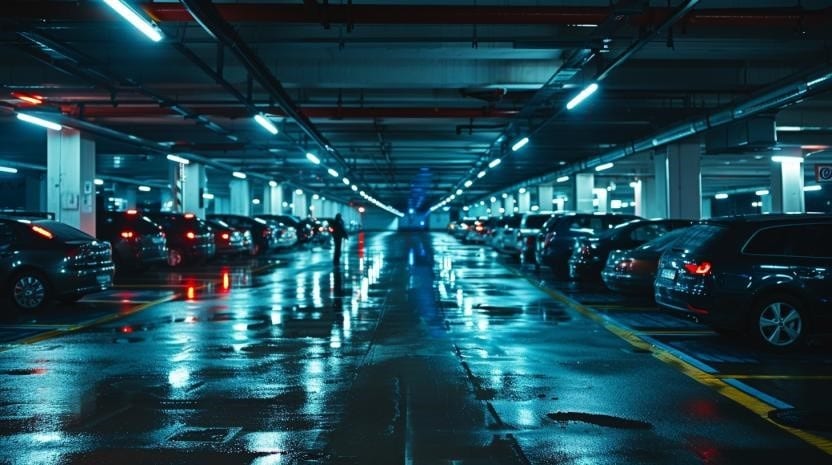
When I walk through a parking lot at night, my first impression is of the lighting. Too dark and people feel uncomfortable. Too bright and your eyes are uselessly strained by the glare. I have spent a lot of time parking in a downtown parking garage where half of the lights were blinking every few seconds. It was like being in a setting you didn’t want to stay in. But it wasn’t until I watched the video that I understood the impact that lighting in parking areas has on our feeling of safety and comfort.
Ultimately, outdated systems are no longer affordable in modern cities. Changing to LED lighting is not just aesthetic. It’s a step that enhances security, reduces energy costs, and contributes to the sustainability goals of cities.
Why Quality Lighting in Public Parking is Important
Lack of visibility in parking lots is more than a nuisance. It poses a danger for pedestrians, drivers and property owners. A study from the U.S. Department of Energy found that better lighting in outdoor areas will reduce nighttime crime by as much as 39 percent. I have witnessed the behavior that changes with a well-lit space. People walk faster, speak louder and just feel safer.
Owing to this, the traditional lighting systems based on high-pressure sodium or metal halide lamps decrease in brightness as time passes and they also consume more energy. The fixtures are also a demanding drain on city budgets, needing frequent maintenance. When lights go out, repairs are slow, and that is when accidents or incidents occur.
Transition to LED Lighting Systems
Cities that are upgrading to LED lighting are enjoying tremendous returns. The General Services Administration (GSA) found that by replacing the standard fixtures with LED, the energy savings in federal parking facilities was over 70%. That’s not a small number, it’s evidence of what a difference LED lighting can make to the way a city handles energy consumption. According to the U.S. Department of Energy, LEDs are increasingly common in parking garage and outdoor area lighting, thanks to their high-efficiency and directional nature.
An LED fixture has more to offer other than lower bills. It offers uniform lighting throughout wide parking areas, reducing dark spots and glare. Many times, motion sensors and lighting control systems are installed and output is varied depending on occupancy or daylight. This combination enhances comfort, longevity of the fixture, and allows cities to reduce their energy consumption without sacrificing security.
Actual Impact on Energy and Maintenance Cost
Consider the economy of scale in terms of energy savings. One municipal parking lot lighting retrofit can save thousands of kilowatt-hours per year. Multiply that by dozens of city facilities, and you have enormous cost savings potential. The same GSA study also noted a payback period of less than ten years even with the up-front costs of the equipment and labor. In one FEMP-recognized demonstration project the conversion to LED lighting achieved approximately 74 % energy savings in a parking area.
Maintenance is another invisible victory. LED systems result in less required maintenance cycles and less material waste. Unlike other light bulbs that have a low lifetime, LED lighting can last for over ten years before needing to be replaced. That’s one less bucket truck, one less crew and one less emergency call about flickering lights. When you are dealing with a network of hundreds of parking lots, that difference starts to add up quickly.
Lighting Design for Improved Safety
Smart lighting design is not about illuminating a space with light. It’s about balance. This is to enhance safety whilst still providing visual comfort for both drivers and pedestrians. Over-lighting is as hazardous as under-lighting. The proper spacing, height and angle of the beam ensure that parking areas are well lit, but not blinding.
The LED also gives cities the flexibility to fine-tune the lighting system. LEDs are controllable, and every light source directs light to where it is really needed: crosswalks, entryways, walkways. The result is an effective, well-lit environment that creates a safe, sustainable atmosphere.
Where Parking Lot Lighting Repairs Come In
This is where parking lot lighting repair comes into the discussion. Not all cities have to re-invent the wheel. Sometimes, retrofitting the existing infrastructure offers these same benefits without having to replace all of the poles or fixtures. A thorough evaluation is key to determining whether minor repairs can restore functionality or if a complete refurbishment is necessary.
I have seen municipalities opt to upgrade in phases. They first fix parts that they can, then slowly convert that to LED parking lot standards. This approach distributes the spending while maintaining the visibility and energy efficiency as a step. Frequent inspection regimens help ensure the components that fail get attention before becoming safety risks.
Intelligent Lighting Controls and Control Strategies
The modern lighting systems in outdoor lighting now incorporate smart systems, which operate in real-time. Motion sensors sense movement and immediately adjust output levels while sophisticated dimming options balance light levels during off-peak hours. Cities can remotely monitor and control each fixture, and optimize energy usage in real time.
This flexibility also reduces energy wastage, and increases the life of fixtures. Each sensor has a role to play in lowering maintenance costs and allowing operational control. They said that using a properly designed lighting system, that system becomes intelligent, responsive, and much easier to manage.
Case Studies and Real Life Data
One city that used LEDs was the City of Los Angeles, which has replaced more than 140,000 street and parking lot lighting fixtures with LEDs. They reduced energy consumption by about two thirds and saved millions every year. Chicago also experienced comparable improvements, with reduced outage rates and better public feedback after their retrofit.
Even smaller cities have been able to gain measurable results. In one case in the Midwest, we converted one single garage and reduced the electricity bill by more than 50% while the increased illumination decreased the accident rate by almost 20%. That is measurable consequence, real evidence that light influences both perception and performance.
Managing Obstacles of Modernization
Changing to modern efficient lighting is not without obstacles. The process can be slow due to budget constraints, outdated infrastructure, and public procurement procedures. Some planners are still concerned with the front-end cost. But the math over the long-term makes the case for not waiting clear. The initial cost is offset by lower energy consumption, reduced maintenance costs, and enhanced safety in less time than most people think.
One of my favorite plans is pilot testing. Consider just one district or a few parking lots to begin with. Measure things like light levels, energy consumption, and pedestrian satisfaction. Once results have been shown to improve measurably, scaling becomes a easier decision.
The Importance of Policy and Rewards
Utility rebates and federal programs now help make it cost-effective to replace public facility lighting with LEDs. Many energy companies have incentives, which cover part of the equipment cost. Early applicants tend to gain the most advantage. Public-private partnerships within local governments are also an option in which property owners are engaged in a collaborative lighting upgrade project that benefits both public and private parking lots.
Creating lighting standards is important for consistency and safety. Municipal codes should specify lighting design, fixture height, brightness and color temperature standards that promote energy efficiency while minimizing light pollution.
Why This is Important to the Future of Cities
Modern parking lot lighting is more than infrastructure. It’s a sign that a city cares about safety, sustainability, and public comfort. A well-lit environment is one that instills confidence, prevents crime, and promotes economic activity. People are more likely to visit, shop and stay longer when they feel safe in well-maintained and well-lit parking lots or garages.
Over time these projects challenge traditional ways of experiencing urban space at night. From the driver that pulls into a parking spot after a long day to the pedestrian working her way home after dinner, we all benefit from thoughtful lighting choices. And for cities, that means stronger communities and better resource management.
Final Thoughts
Modernizing parking lot lighting is no longer a choice. It is a pillar of a city’s safety and sustainability. LED lighting is more reliable, energy efficient, and cost-effective in the long term. Lighting design improves every square foot to the appropriate level of illumination and smart controls and sensors enable a smarter environment.
Cities that are ready to proceed should start with audits, repairs or pilot retrofits, depending on budget and scale. Whether it’s parking lot lighting repair or a total system overhaul, the goal is consistent: increase safety, reduce waste and provide well-lit public spaces that are indicative of quality and improvement.