

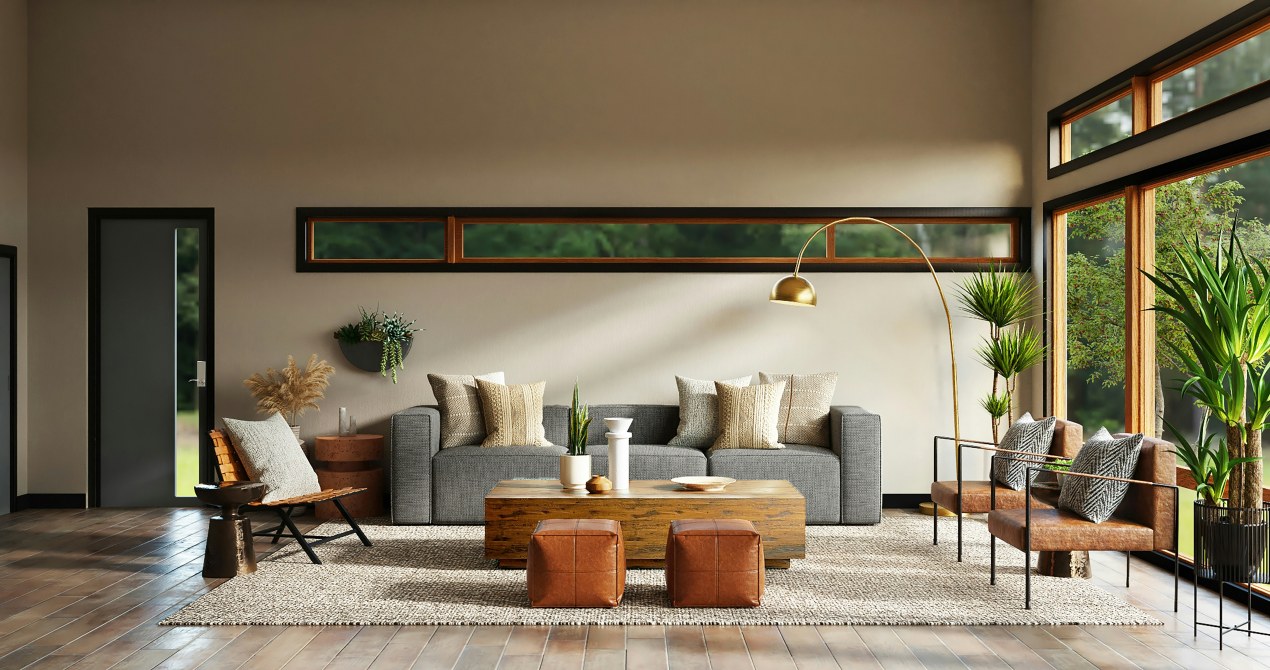
Dreaming of a home that flows together?
Creating seamless indoor-outdoor living spaces is one of the biggest design trends happening right now. And guess what…
It all starts with color.
When you pick interior colors that work well with your outdoor rooms, magic happens. Your property feels bigger, designed with intention, and worth much more money.
Say what you mean with color palettes that flow together in your home, indoors and out.
What you’ll learn:
- Which colors to choose
- The best color palettes for indoor-outdoor design
- Where (and how) to use each color
- Mistakes to avoid
Why Indoor-Outdoor Color Cohesion Matters
Hold onto your toolbox. This’ll surprise you…
According to 78% of design experts surveyed in Fixr’s Outdoor Living Trend Report, seamlessly blending indoor and outdoor living spaces is the number one trend for backyard and outdoor kitchens.
That’s not even close to a majority. We’re talking about almost all industry experts singing the same song right now.
They’re singing because the data proves it.
Homeowners are putting more money than ever into building outdoor kitchens and entertainment spaces that match. They’re even adding on living spaces like outdoor patios and decks specifically to expand their homes naturally out into their backyards. That means they’re creating a larger visual flow between the interior of their home and its exterior.
Experts know this. That’s why hiring Las Vegas outdoor kitchen builders who know how to mimic your indoor floors with your outdoor patio or match your interior kitchen colors with your outdoor kitchen cabinets is so critical.
Because let’s face it…
Your outdoor living space isn’t a separate entity from your home anymore. It’s part of your home.
And when your inside kitchen colors match your outdoor kitchen colors, you instantly create that wow factor that buyers notice. Not only does it make your home more livable, but it adds tremendous value as well.
One study showed that 98% of design experts agree that modernizing your backyard increases the value of your home. We’re talking about nearly unanimous results here.
Best Color Palettes For Indoor & Outdoor Design Flow
Alright, enough talk. Let’s get into the colors that work.
Which color palettes make your indoor spaces flow together with your outdoor rooms?
Earthy Neutrals
No surprises here. Earthy tones are taking over the outdoor world right now. We’re talking warm beige colors, terracotta, greenery, dark brown. You name it. If it looks like it belongs in nature, it’s popular.
And for good reason:
They’re neutral enough to go with just about any accent colors. They instantly connect your indoor rooms with outdoor patios, backyards, and gardens by matching with stone, wood, and plantlife.
But they’re not boring!
Earthy neutrals are versatile for many reasons. Not only do they work with just about any other color, but they hide dirt and debris much better than pure white paint. They’re timeless, not trendy.
Warm Whites and Creams
Gone are the days of cold, sterile whites in your home.
Warm whites and creamy colors are hot right now because they allow you to brighten up your space while keeping that connected feel.
Think white subway tile paired with white cabinetry. Then transition that same cream color outdoors by painting your front door that exact shade of white.
Not only will it look like a cohesive color when your interior and exterior spaces flow together, but it creates a sense of continuity.
Deep Greens and Blues
Greens and blues are also making the leap from indoors to out. A deep green might live in your interior kitchen as the paint on your walls but continue that color outdoors by adding it to your landscaping.
Alternatively, that deep blue accent wall inside might become the cushions on your patio furniture.
Here’s the trick:
Take the same color and use it in both your indoor and outdoor rooms, but don’t match them exactly. Paint your walls one shade of blue and continue that color outside with a darker or lighter version on your patio furniture.
How To Apply Color Palettes Indoors and Out
Ok, great! We know which colors to use. Now what?
Let’s dig into exactly how to take these colors and expand them from your indoor rooms into your backyard.
Start With Your Kitchen
Your kitchen is where indoor entertainment usually starts. And your outdoor kitchen is where it continues.
Instead of thinking of them as completely separate areas, focus on how you can make them work together.
That warm gray you love on your refrigerator shines inside. Carry that same color tone into your outdoor kitchen on your countertops or a built-in grill.
Everyone will see that connection as soon as they walk into your backyard.
Use the 60-30-10 Rule
If you’ve never heard of the 60-30-10 rule, it’s a simple breakdown of how to utilize colors in a room.
- 60% dominant color – This is typically your main wall color. But it can be other large surfaces as well.
- 30% secondary color – This is often furniture, cabinets, and large accents.
- 10% accent color – Reserved for pillows, decor, and small pops of color.
Use that same ratio for both your indoor colors and outdoor colors.
Paint your main wall color inside at 60%. Then continue that same color on your patio furniture or front door at 60% as well.
Varied Shades of the Same Color
Continuing from the rule above, you don’t want your indoor colors to exactly match your outdoor rooms.
Not only does that feel extremely forced. But it doesn’t look very attractive either.
Instead, use different shades of the same color family. Light gray inside? Add a darker charcoal gray to your outdoor space.
Colors that complement each other perfectly will always work well together.
Test Paint Colors Outside
This is a big one.
Since indoor colors have to function outdoors as well, you’ll need to make sure they look good in both spaces.
Take your paint sample and paint a small square on your backyard fence or patio. Live with it outside for a few days.
Look at it at different times of day to make sure it still works for you.
Pro-tip: Don’t forget about natural lighting.
Colors can look drastically different indoors versus outdoors. Make sure you’re happy with your selection before doing anything permanent.
Think About Sightlines
This tip is often overlooked by homeowners.
What do you see when you’re inside looking out? If you answered your patio, backyard, or garden, those areas need to coordinate with your indoor decor.
You never want something like a patio to look like an afterthought because it sticks out like a sore thumb when you’re inside.
Make sure the colors that surround you indoors can be seen outside and vice versa.
Create Transition Zones
Where does indoors meet outdoors for you?
Maybe it’s sliding glass doors that open up to your backyard. Or maybe it’s large windows in your living room that look out to your patio.
No matter where your home transitions from inside to out, you want those areas to feel seamless.
Use similar flooring materials if you can. Or at least ensure the colors you choose for each space flow together nicely.
Textures
As mentioned before, color isn’t the only thing that matters.
You also have to think about different textures when you’re outdoors versus indoors. A rough stone patio looks great against smooth painted walls when the colors mesh well.
Use materials and colors that offer variety and contrast but still maintain that cohesion we’re talking about.
Wrapping Up
Creating a color scheme for your home that flows indoors and outdoors isn’t rocket science. But it does require some forethought.
Pick out earthy, neutral colors and warm creams and whites that translate well between the inside and outside of your home.
Apply colors to both your indoor rooms and outdoor patios at the same ratio. Don’t be afraid to use the exact same color, but in different shades.
Pay attention to sightlines and transition zones. These are where most homeowners fail to create a flow with their color choices.