

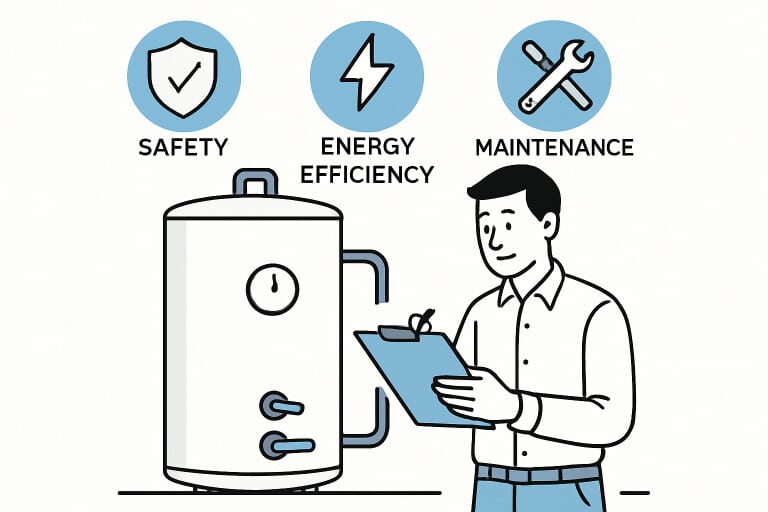
Taking care of your water heater doesn’t have to be complicated. With just a few regular checks and some minor upkeep, you can keep it running efficiently, prolong its lifespan, and avoid sudden failures that may prove expensive. Learning how to flush water heater tanks and perform other simple maintenance is manageable for most homeowners. These steps make a tangible difference in performance and peace of mind.
Regular maintenance of water heaters is essential for reducing energy bills and ensuring safety by preventing leaks, dangerous pressure levels, and bacterial growth. A routine checklist can keep your system functioning optimally, avoiding costly emergency repairs. Both gas and electric water heaters require thorough inspections to preemptively address minor issues, thereby enhancing efficiency and safety in household activities like showering, laundry, and dishwashing. Incorporating these maintenance tasks into your home care routine ensures reliable hot water delivery for years.
Flush the Tank Regularly
Sediment and mineral deposits naturally build up inside your water heater tank over time. This can reduce heating efficiency and eventually lead to rust and leaks. Flushing your tank at least once each year helps prevent these issues. You can flush most standard water heaters by turning off the power, attaching a hose to the drain valve, and letting water run until it clears. For a detailed step-by-step, consult the manufacturer’s instructions or a trusted guide.
This process keeps your heater running smoothly and is particularly important in hard water areas. If ignored, sediment can harden, accelerate corrosion, and make the unit noisier. After the tank is flushed, always double check that all valves are closed and the power is safely restored.
Test the Pressure Relief Valve
The pressure relief valve on your water heater serves as a critical safety feature, automatically releasing water if the pressure inside the tank rises too high. At least once a year, you should test this valve. Place a bucket under the discharge pipe, lift the valve’s lever briefly, and let some water flow out. If water does not come out, or continues to drip after you let go, the valve may need to be replaced. Operating with a faulty relief valve can pose serious dangers.
Inspect the Anode Rod
The tank’s anode rod attracts corrosive minerals, helping prevent rust. Each year, check the anode rod’s condition. After turning off the heater and water, carefully remove the rod from the top of the tank. If it is coated in calcium, heavily corroded, or less than half an inch thick, it’s time for a replacement. Changing the anode rod at proper intervals can add years to your water heater’s life.
Adjust the Thermostat
Keeping your thermostat set to 120°F is the sweet spot for balancing safety and efficiency. Higher temperatures are not only wasteful but also increase the risk of scalding burns. Turn off the power, remove the access panel, and adjust the thermostat to this safe setting with a screwdriver. Restore the cover before turning the heater back on. Periodic checks will ensure your water temperature remains consistent and economical.
Insulate the Tank and Pipes
Heat loss from your water heater and pipes means more energy consumption. Wrapping a suitable insulation blanket around your heater prevents this, as does insulating the first few feet of both hot and cold water pipes with foam sleeves. This is a simple project that can quickly pay for itself in reduced utility bills. Just remember to avoid covering vent controls or the top of the tank, and always use materials recommended for your heater model. The Environmental Protection Agency provides a helpful resource on insulation techniques and energy savings.
Check for Leaks and Corrosion
Early detection is key to preventing major water heater failures. Periodically examine the base and fittings of your tank for signs of water, rust, or mineral buildup. Small leaks or corrosion can escalate if left untreated, potentially causing structural damage. Also, listen for unusual sounds, such as popping or banging, which could indicate excessive sediment or internal wear. Addressing these concerns promptly can help you avoid disruptive breakdowns and expensive fixes.
Schedule Professional Inspections
While many of these maintenance steps can be done yourself, nothing replaces a thorough annual inspection by a licensed plumber. Professionals are trained to detect subtle warning signs, maintain specialized components, and ensure your water heater system as a whole is safe. Annual professional maintenance is a small investment that truly pays off by minimizing future repair costs and maximizing equipment lifespan.
Install a Carbon Monoxide Detector
Gas water heaters can lead to dangerous carbon monoxide buildup, which is invisible and odorless. To mitigate this risk, it is crucial to install a carbon monoxide detector near the heater, providing early warnings of malfunctions. Implementing regular checks and preventive measures will maintain the efficiency and safety of the water heater, ensuring a steady supply of hot water, reducing energy costs, and enhancing home safety.
Conclusion
Proper water heater maintenance is crucial for safety, efficiency, and reliability. Regular tasks include flushing the tank, testing safety components, inspecting parts like the anode rod, and checking for leaks or corrosion. Other measures, such as adjusting the thermostat and insulating the tank, can improve energy efficiency. Combining DIY care with annual professional inspections helps ensure smooth operation, consistent hot water, and longer service life while reducing energy costs and repairs.