

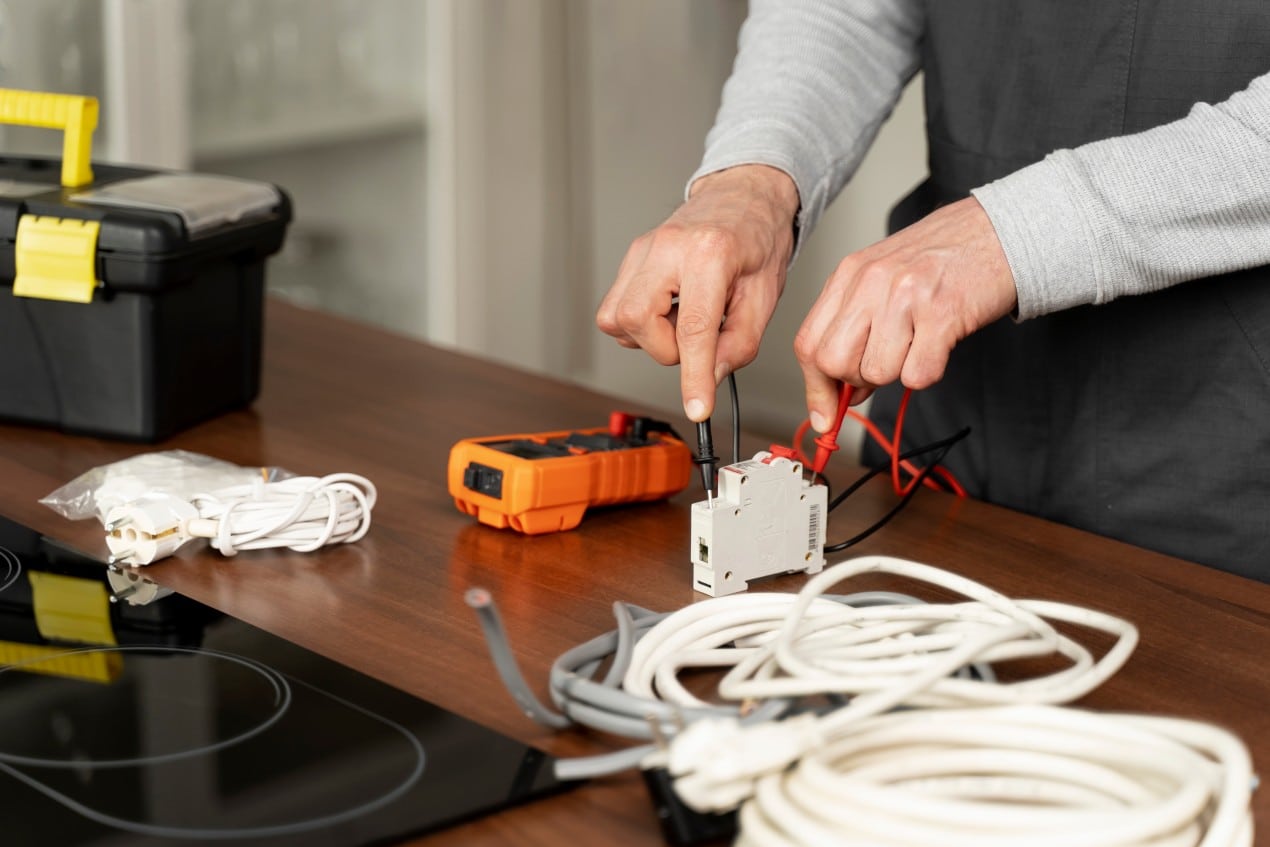
You’re at home, and the lights in one room start flickering.
Or one day you go to plug in your phone charger, and the outlet isn’t working.
We’ve all been there. Every homeowner has electrical problems at some point. The good news?
They’re often easy to fix. The bad news?
Many are dangerous if ignored.
Home electrical fires lead to 51,000 fires each year. Nearly 500 deaths. Over 1,400 injuries.
So electrical problems aren’t just annoying — they can be deadly.
In this post, we’re going to walk through common electrical problems in a home. How to fix them. When to call an electrician.
We’ll also cover how to prevent problems from happening in the first place.
Here’s what you’ll learn:
- The Most Common Electrical Issues
- Quick Fixes vs. When to Call an Electrician
- Preventing Electrical Problems Before They Happen
- Cost-Saving Tips for Home Repairs
The Most Common Electrical Issues
Want to know something crazy?
83% of homeowners experienced unexpected home problems in 2024.
And most of them were electrical problems that could have been avoided with a little regular maintenance.
Here’s the deal…
Most electrical problems give warning signs before they cause major damage or injury. Learning how to identify these problems early can save thousands of dollars in repairs. Not to mention keep your family safe.
Let’s go through some of the most common electrical problems in a home.
Flickering Lights
Flickering lights are super annoying. And sometimes they’re a sign of a serious electrical problem hiding in the walls.
Sometimes it’s a quick fix, like a loose bulb or fixture. Other times it’s a sign of faulty wiring or overloaded circuit.
Here’s how to troubleshoot:
- Tighten the bulb in the socket
- Check if the light fixture is loose
- See if flickering happens with multiple lights or just one
If that doesn’t work, the problem is likely in the wiring. You’ll need Dynamic Electricians or another certified professional to diagnose and repair the problem.
Circuit Breakers That Keep Tripping
Circuit breakers are supposed to trip. That’s how they protect the home from electrical overload and fires.
But if the circuit breaker keeps tripping over and over again? Something’s wrong.
Some common reasons:
- Too many appliances on one circuit
- Faulty appliances drawing excess power
- Short circuits in the wiring
- Ground faults near water sources
The quick fix: Unplug some devices and plug them in to different outlets. If the breaker still trips, there’s likely a wiring problem that needs professional diagnosis.
Dead Outlets
There’s nothing worse than finding an outlet that’s not working.
Before freaking out, check the obvious:
- Test the circuit breaker or fuse box
- See if outlets on the same wall work
- Look for a GFCI outlet that may have tripped
GFCI outlets (with “test” and “reset” buttons) are found in bathrooms and kitchens. Press the reset button and see if that fixes it.
Still not working? The outlet itself may be damaged. Or there’s faulty wiring to the outlet.
Overloaded Circuits
Modern homes are fully electric. Everything plugs into a wall socket.
Think about how many devices are on right now: phone, computer, TV, kitchen appliances, gaming systems. The list goes on and on.
Here’s the problem: Many older homes weren’t built for today’s electrical demand. Wiring can’t handle all these devices running at the same time.
Signs of overloaded circuits:
- Lights dim when appliances turn on
- Warm outlets
- Burning smell near outlets or switches
- Frequent circuit breaker trips
Solution: Spread the devices out across more circuits. Or upgrade the electrical panel to support more power.
Electrical Surges
Electrical surges last only a fraction of a second. But they can fry expensive electronics and appliances.
Common causes:
- Lightning strikes
- Damaged power lines
- Faulty appliances
- Faulty electrical wiring in the home
Always plug electronics into surge protectors. Not those cheap power strips either — actual surge protectors with built-in safeguards. Better yet: install a whole-house surge protector at the electrical panel.
If surges happen regularly, there’s a problem with the home wiring or an appliance.
Light Switches Not Working
Light switches are used multiple times a day. They’re one of the most used things in the home.
Eventually, switches wear out.
A switch not working could mean:
- Worn out switch mechanism
- Loose wiring behind the switch
- Broken connection to the light fixture
- Tripped circuit breaker
Simple switches are easy to replace. But if it’s a three-way switch or dimmer, leave it to the pros. Bad wiring can cause a fire hazard.
When DIY Isn’t Enough
Here’s the big secret…
Some electrical repairs are easy DIY. Changing a light bulb? No problem. Replacing a switch cover? Painless.
But some repairs should always be done by a licensed electrician:
- Anything involving the electrical panel or breaker box
- Installing new circuits or outlets
- Repairing damaged wiring inside walls
- Working with 220V appliances like dryers or ovens
- Any repair where the cause isn’t obvious
Electrical work isn’t like other home repairs. One mistake can lead to fires, injury, or death. Electrical problems cause 13% of home structure fires.
Licensed professional electricians have the training, tools, and licenses to do the job safely and up to code.
Preventing Electrical Problems
The best repair is the one that never needs to happen.
Regular maintenance prevents most electrical problems. Here’s how:
Schedule regular inspections: Have a licensed electrician inspect the home every 3-5 years.
Avoid overloading outlets: Plug appliances into surge protectors. Avoid daisy-chaining extension cords.
Replace old wiring: Homes built before 1970 often need electrical upgrades.
Install GFCI and AFCI outlets: These safety devices prevent shock and fire hazards.
Pay attention to warning signs: Buzzing sounds, burning smells, warm outlets, flickering lights all indicate problems.
Cost-Saving Tips
Home repairs can get expensive fast. Nearly 46% of homeowners spent more than $5,000 on unexpected repairs in 2024.
Here’s how to save money on electrical services and home repairs:
Bundle repairs: Fix multiple problems in one visit. Most electricians charge for the service call — bundling repairs can save money.
Prevent problems early: Spending $200 on inspection is much cheaper than a $2,000 rewiring job.
Get multiple quotes: For big jobs, get estimates from multiple licensed electricians.
Don’t DIY what shouldn’t be DIY: Bad electrical work costs more to fix than just hiring a pro from the start.
The Bottom Line
Electrical problems come in all shapes and sizes. Flickering lights, dead outlets, tripping breakers. Most homes will experience these issues eventually.
The key is knowing what can be fixed quickly. And what needs a professional.
Loose bulbs or tripped GFCI outlets? DIY that. Wiring problems. Panel issues. Circuits. Call a licensed electrician.
Regular maintenance prevents most issues. When they do happen, don’t ignore them. Address small issues quickly before they become expensive emergencies.
Remember: Electricity is powerful and dangerous. If in doubt, always choose safety over savings.