

The interior design process, especially when it comes to kitchens, has always required a balance of creativity, functionality, and precision. Yet, even the best ideas can fall short if clients struggle to visualize the final result before construction begins.
Today’s clients expect more than sketches or mood boards—they want clarity, interactivity, and confidence at every stage. This is where 3D technology, particularly a real time 3D configurator, transforms the kitchen design process, making it more transparent, efficient, and engaging.
Bringing Kitchen Concepts to Life
Kitchens are among the most complex spaces to design. Cabinets, islands, countertops, appliances, and lighting all interact in ways that are hard to convey on paper.
With 3D visualization, designers can present concepts in realistic detail from the start. Tools like the best visual configuration software allow clients to explore layouts, materials, and finishes in real time. This clarity reduces miscommunication, avoids costly changes, and ensures the final kitchen matches the client’s vision.
Enhancing Collaboration and Decision-Making
Designing a kitchen is inherently collaborative, involving clients, designers, and sometimes contractors. Traditional processes often slow approvals and create confusion.
A real time 3D configurator makes collaboration seamless. Changes to cabinetry, countertops, or appliance placement are instantly visible, allowing clients to make confident decisions alongside the designer.
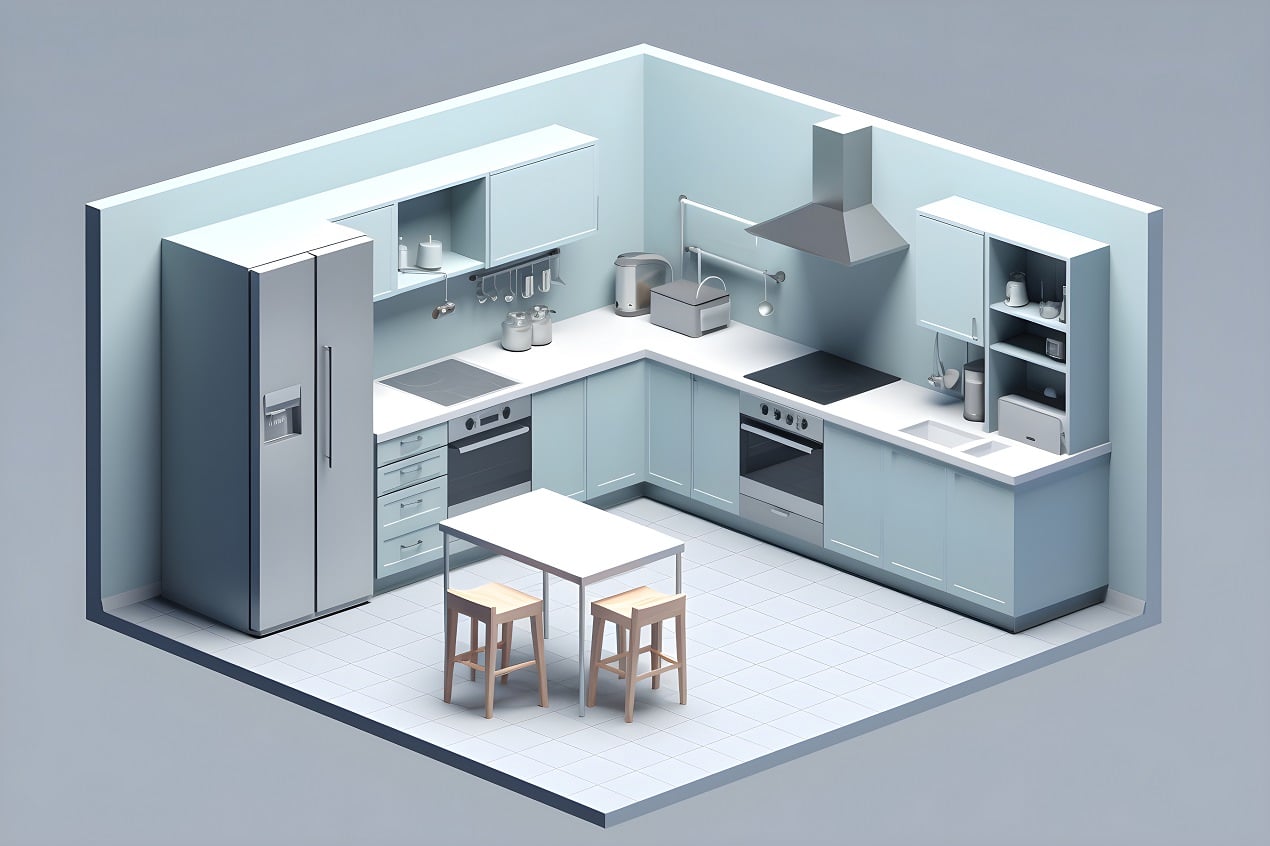
For full kitchen layouts, a 3D Room Planner can visualize the entire space, helping clients see how every element interacts and ensuring functional flow.
Structuring Complex Choices
Kitchens involve numerous decisions—from cabinet styles and hardware to countertops, flooring, and lighting. Without guidance, clients can feel overwhelmed.
3D tools break down these choices into manageable steps. Clients can experiment with different options and immediately see the results. This not only reduces decision fatigue but also creates an intuitive, guided process that makes even the most complex kitchens approachable.
5 Ways 3D Improves the Kitchen Design Process
1. Visualize the Entire Kitchen
A 3D Room Planner allows designers and clients to see cabinets, islands, appliances, and lighting together in a realistic layout before any construction begins.
2. Reduce Errors and Rework
Potential issues with spacing, finishes, or workflow can be identified early, preventing costly adjustments later.
3. Simplify Decision-Making
Clients can experiment with materials, cabinetry, and appliance placement in real time, making choices easier and more informed.
4. Increase Engagement
Interactive 3D tools encourage clients to explore options, test ideas, and actively participate in the design process.
5. Build Confidence in the Final Kitchen
When clients can see their kitchen in realistic 3D before installation, they feel reassured that the design aligns with their expectations.
Final Thoughts
Kitchens are complex, high-value spaces, and the design process doesn’t have to be overwhelming. By integrating 3D visualization tools and a real time 3D configurator, designers can simplify decisions, reduce uncertainty, and create a more collaborative experience.
From initial concept to final installation, clients can see and interact with their future kitchen every step of the way, ensuring a smoother, more confident, and successful project.