

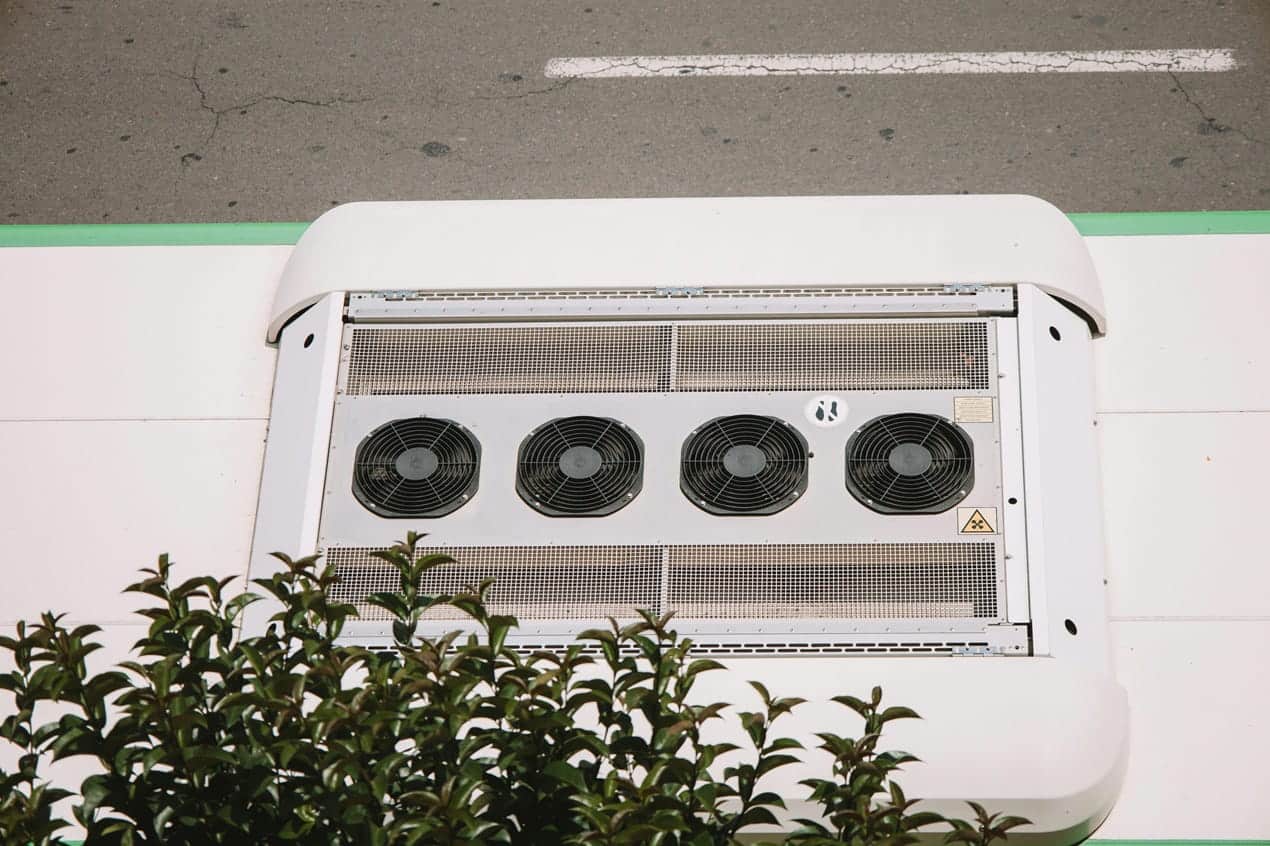
If you own or operate a warehouse, factory, large store, or other commercial space you understand that. When summer rolls around and temperatures soar, your facility becomes hell on earth. Employees get sluggish, machines overheat, and productivity plummets. One properly sized industrial air conditioner can eliminate these problems.
But the wrong type of AC can cost you thousands in unnecessary energy bills and repair costs down the road. Read on to learn what you should know before buying commercial cooling equipment.
How is Industrial Air Conditioning Different?
Industrial-strength AC systems are not oversized versions of residential models. They are designed for uniquely challenging conditions including spaces with extremely high ceilings, specialized equipment that generates heat, odd floor plans, little to no insulation, and more.
These units typically operate for longer hours per day than you would at home. It’s not unusual for them to run 24/7 all summer. Industrial air conditioners also have to contend with dust, grease, chemicals, and humidity that will cripple a home-style air conditioner after several weeks of service.
Failure is simply not an option in these environments. A broken air conditioner at your factory could stop production entirely. One that runs poorly will tack thousands onto your monthly utility bill. Because of that, investing the time to find the perfect fit before you buy is critical.
Figure out what you need before you buy.
The first step in the buying process is knowing your space. How big is it? How high are the ceilings? Are there heat-producing machines? Employees? Windows? When you walk into space, do you feel like walking into an oven?
Square footage is important, but that is not the only thing that matters. Commercial spaces with high ceilings are much different than residential buildings. A ceiling height of 20 feet vs 8 feet means significantly more volume to cool.
Heat producing appliances should be considered as well. Humans produce heat. Lights do too. Large shelves full of products stacked tightly together produce heat. When you add it all up, that’s what HVAC professionals refer to as your heat load. Make sure you have a system that can keep up with your maximum heat load, not just your average.
Other questions you may want to ask yourself:
-
How many windows or skylights are in the building?
-
Are the walls and ceiling insulated?
-
Do large doors open frequently?
-
How extreme is the climate outside?
-
Do you need to cool the entire area or just specific zones?
Speak with a professional HVAC contractor about getting a proper load calculation done. It may cost you up front, but it takes the guesswork out of buying an AC unit. You won’t risk purchasing one that’s too small or wastefully large.
Types of Commercial Air Conditioners
There are several styles of industrial air conditioners. Each is better suited to different circumstances than others.
Packaged rooftop units are common for large commercial and industrial buildings. The reason is simple. By mounting the entire system on the roof, you free up valuable floor space and keep noise out of the work environment. They are also relatively low maintenance and a great fit if you already have ductwork installed.
Chiller systems are another option for large industrial spaces. Unlike traditional air conditioners these systems use water or refrigerant to chill air. That makes them complex but can work extremely well for large facilities.
Manufacturing plants and large-scale distribution warehouses often use these systems.
Portable industrial air conditioners are not powerful as their installed counterparts but have their advantages. They don’t require permanent installation and can go wherever you need cooling. These are a great option if you need spot cooling or temporary relief from the heat.
Evaporative coolers are better known as swamp coolers. As the name suggests, they work well in swampy areas like Houston and Louisiana. Not so much Des Moines and Denver. Units pull outdoor air into the system and pass it through water soaked pads. The cooled air is then distributed throughout your space.
Evaporative coolers cost next to nothing to run but are not ideal for every climate.
Split systems are just like what you’d install in your home except many times larger. They can be a good choice for smaller facilities, or applications where individual rooms need to be cooled.
Don’t Skimp on Efficiency
Think about your electric bill. How much of that money goes towards cooling your facility? Probably more than you think.
Because energy usage typically makes up such a large chunk of overhead, choosing an efficient AC unit is imperative. Take a look at the EER (Energy Efficiency Ratio) or IEER (Integrated Energy Efficiency Ratio) rating of the units you are considering. The higher the better.
If you qualify, some units can even net you federal tax credits or utility rebates. Inquire with your HVAC contractor or wholesaler about those possibilities. You may find that the initial investment into a more efficient system pays for itself in just 2-3 years.
Another thing to look for is a variable speed compressor. These units can scale their output up and down depending on your current needs. Rather than running at full blast all the time they can adjust for lower cooling demand. A simple switch that can save you a ton of energy.
Don’t Forget About Ventilation and Air Quality
We spend a lot of time talking about cooling air, but what about cleaning it? Industrial facilities can introduce all sorts of harmful contaminants into the air. Dust, chemicals, welding fumes, metal shavings…the list goes on and on.
Industrial-strength AC units can help filter out these contaminants. But that does not mean you should skip ventilation when designing your new system.
Many commercial units have filtration already built in. Take the time to ensure the filters are adequate for your specific environment. What good is a filter if it clogs within a week?
Rooms that contain chemicals may require higher efficiency filters or even specialized filtration systems.
Additionally, if your system does not have a way to introduce fresh air from outside your facility you could be just recirculating dirty air. Look for AC units that have the ability to intake fresh air and condition it as part of the cooling process.
Maintenance and Operating Costs
Just because you buy a top-of-the-line AC unit doesn’t mean it will run smoothly forever. Filters will need replaced, coils cleaned, and refrigerant levels checked periodically. Neglecting these tasks will cause your system to break down when you need it most.
When browsing units, see what the maintenance and repair costs are like. How easy is it to get parts? How long of a wait should you expect if your system breaks in the middle of July? These are important things to know upfront.
Lastly, many contractors now offer service contracts. A simple maintenance agreement can prolong the life of your unit and alert you to small issues before they become costly.
UK Example: Lowering Summer AC Costs in a Family House
Our client was frustrated by high electricity bills during a hot summer in their detached townhouse located in Bristol.
Their home was equipped with just a portable air conditioner in the primary living space, which was typically kept running throughout most of the daytime and evening hours.
Setup Before Optimisation
This was their setup before our recommendations:
- Portable air conditioner running 10–12 hours/day
- Low AC thermostat setting (approx. 20°C / 68°F)
- Fans were not being used to circulate air
- Temperature disparity between rooms
They were spending around £80–£110 per month on cooling costs during hotter months/weather. (*Depending on how bad of a heatwave)
Optimised Setup Using Fans
We decided to implement a basic “fans + air conditioning” cooling strategy:
- They installed one ceiling fan in the living room area.
- They added a small tower fan in their bedroom.
- They increased their AC thermostat setting from 20°C to 24°C
- Family used fans to feel cooler without lowering AC temperature further
- Fans were kept on only in rooms where people were present
Results Of Changes (+ Calculation)
Here’s what happened after using this strategy for several weeks:
Usages
Before (AC only):
- Air conditioner was on for ~10–12 hours/day
After (AC + Fans):
- Air conditioner usage reduced by ~35–40%
- Cost / Comfort
Before:
- Cooling costs: £80–£110/month
- Cool near AC, hot elsewhere
After:
- Cooling costs: £55–£70/month
- Feels cooler throughout room
💡 Total Savings: £25–£40 / month (estimate)
Lessons Learned
- Fans allowed air to circulate throughout rooms better.
- The air conditioner didn’t have to operate as hard to maintain comfort levels.
- Simply turning the thermostat up by several degrees had a BIG impact.
- Comfort did not suffer—in fact, it likely improved by using fans + AC instead of just AC.
Final Lesson
Fan usage can drastically reduce air conditioning usage in average UK households (*Leeds, Liverpool, Manchester areas). Note that we’re not suggesting throwing out your AC unit and only using fans. Instead, utilise these cost-effective tools to their maximum potential by allowing them to work in conjunction with your air conditioner.
FAQs
Can using a fan with air conditioning help you save money?
Absolutely. By creating a wind-chill effect on your skin, you can set your thermostat to a higher temperature while remaining just as comfortable. The key is to not turn down the AC thermostat; use your fan to circulate the cool air that’s already being produced!
How much money can I save using fans with my air conditioner?
Assuming you follow the tips from this article, you could see cooling costs reduced by 10–20% or more. The exact amount of savings will vary based on your family’s habits and the insulation of your home.
Do fans use a lot of electricity?
No, not at all. While exact wattages will vary by fan model, most ceiling fans consume between 50-100 watts of power. That’s up to 20x less than your average air conditioning unit. To put that in perspective, some portable air conditioners can use over 1,000–2,000 watts per hour.
What’s the best way to use a fan with an air conditioner?
Keep your air conditioner at a higher temperature (aim for 24–26°C / 75-79°F) and use a fan to distribute the cool air around the room. Since your AC doesn’t have to work as hard, this saves you money on cooling costs.
Do fans work better in some UK climates than others?
Yes. Unlike places with heavy humidity or scorching summers like the US or tropical countries, using a fan in the UK can feel cooling year-round. Hot days are typically not overly oppressive in the UK, so a fan can help reduce your AC usage.
Should I leave fans on all day with the AC on?
Only in rooms that are occupied. Remember: fans keep YOU cool, not rooms. If there’s nobody in the room to enjoy the wind-chill effect, turn off the fan and save some extra money!
Are ceiling fans better or should I buy a portable fan?
Ceiling fans are typically better for cooling while stationary in a single room. However, portable fans come in handy if you want to bring that cool breeze with you from room to room.
Can I use fans instead of air conditioning?
In some cases? Maybe. If you’re comfortable leaving a window open during hot summer days in the UK, chances are you don’t need air conditioning. However, if you live in an extremely old house with poor insulation, your AC unit still does the heavy lifting while fans offer welcome relief.
Final Words
We know that was a lot to read. But knowing how to buy an industrial air conditioner is half the battle. Take your time. Do your research. I work with an HVAC company that understands commercial systems. If you do that, you are sure to end up with a unit that keeps your employees comfortable for years to come.