

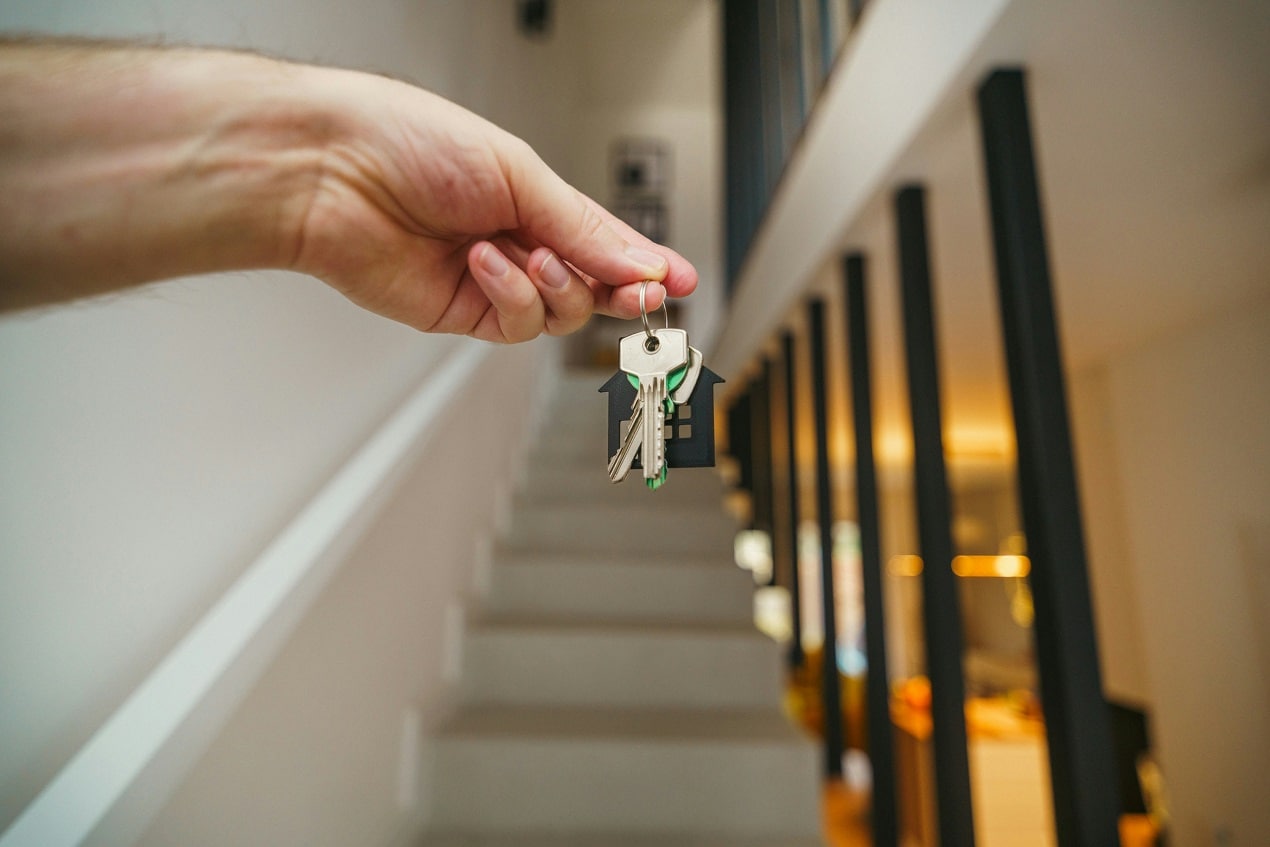
Thinking about selling your home but dreading the whole process?
You’re not alone. The traditional sales process can be exhausting for homeowners who aren’t ready to spend months managing showings, repairs and waiting for offers.
That’s where a direct sale comes in.
Sell directly to a cash buyer and move out of your house in a hurry! The best part about selling your house directly to a cash buyer is you never have to touch a paintbrush.
But it’s not right for everyone.
Here’s how to figure out if it fits your situation…
Here’s what you’ll discover:
- What Is a Direct Sale?
- Signs a Direct Sale Could Be the Right Move
- When It Makes Sense to Skip Home Repairs
- How Direct Sales Stack Up Against Traditional Listings
What Is a Direct Sale?
A direct sale involves selling your home directly to a buyer — typically a cash investor or home buying company — without listing it publicly.
No agents. No showings. No open houses.
The cash buyer makes you an offer, which you can quickly accept to close the deal. Quick means days or weeks. It doesn’t mean months. Another huge benefit? Cash buyers buy houses as-is. That allows sellers to bypass home repairs entirely. Anyone Googling “sell my house fast in Texas” will find cash buyers willing to purchase houses in any condition — even messy conditions you’d find on a fixer-upper show. Have you wondered why? Cash buyers typically have plans to fix up the property after closing.
This is very different from the traditional process where you have to:
- Hire a real estate agent
- Pay for repairs and staging
- List the property on the MLS
- Wait for buyers to show up
- Negotiate offers and inspections
- Wait again for financing to clear
All of that goes out the window with a direct sale. You skip homeowners repair projects, skip the marketing hassles and skip months of waiting. It’s perfect for some homeowners. For others… not so much.
The trick is knowing which camp you fall into.
Signs a Direct Sale Could Be the Right Move
There are times when selling directly is plainly the best option. If any of these scenarios sound familiar consider this option further.
The Home Needs Major Repairs
This is the biggest one.
If your house requires some major fixes — think new roof, foundation problems, plumbing fixes — selling the traditional way can be TORTURE. Recent research has found, on average, sellers who complete repairs prior to listing spend $14,163. Ouch.
And here’s the kicker…
Buyers want move in ready homes. In fact, 77% of buyers surveyed said they won’t even look at a home that isn’t move in condition. This means if your property needs work it will either sit or you’ll get low ball offers.
You Need to Sell Fast
Life happens.
Perhaps you found a job in a different city. Perhaps you are getting a divorce. Perhaps you inherited a house that no one wanted.
Whatever the reason… sometimes you just need to sell. Quickly.
Conventional sales often take months from the time a home is listed until closing. Cash buyers can close in as little as a week or two because they aren’t waiting on a mortgage to get approved. That convenience is precisely why all-cash deals have skyrocketed lately.
You Want to Skip the Hassle
Showings. Open houses. People you don’t know traipsing through your house. Cleaning on the weekends. Lockboxes on your door.
Others sellers just don’t want to deal with any nonsense. Selling Direct eliminates all of it. None. Zero.
When It Makes Sense to Skip Home Repairs
Time to talk about repairs. This is where many homeowners get hung up.
Recent data found that 85% of homeowners faced unexpected home repairs in 2025. Even more concerning — 50% of American homeowners have repairs they can’t afford at the moment.
If that sounds familiar, there’s a tough choice to make.
The main options are:
- Pay for the repairs out of pocket
- Take out a loan to fund the repairs
- List the house as-is and accept lower offers
- Skip home repairs entirely with a direct sale
The right choice depends on a few things…
Repair Costs vs. Equity Gained
If it would cost $30K to repair, but only increase your sale price by $15K…why bother? You’d be losing money.
In that case, selling as-is to a cash buyer often nets you more.
Time Available
Repairs take time. Installing a new roof can take weeks. Remodeling an entire kitchen can take months. If you need to move fast, major repairs just aren’t feasible.
Emotional Bandwidth
Some homeowners just don’t want to deal with contractors. They don’t want to live in a construction zone for half a year. They just want it over with and move on.
That’s a perfectly legitimate reason to skip home repairs.
How Direct Sales Stack Up Against Traditional Listings
Direct sales are not ideal. Cash buyers pay below open market value. It is the price you pay.
But here’s what people forget…
When you sell traditionally, there are a bunch of costs that add up:
- Agent commissions: Usually 5-6% of the sale price
- Closing costs: Another 1-3%
- Repair and prep costs: Often $10,000+ to get the home ready
- Carrying costs: Mortgage, taxes, and insurance while waiting
- Staging and marketing: Hundreds to thousands more
Add it up. Just because you receive a “higher” price on the market doesn’t mean it’s higher in your pocket.
You may only get 85% of market value with a direct sale. However, when you consider ZERO fees and ZERO repairs the actual cash in your pocket can be almost identical. Plus you save countless hours.
This is the math most sellers don’t bother doing until it’s too late.
Final Thoughts
Sometimes selling directly isn’t the best option. If your house is move-in ready, you have the time, and you don’t mind the conventional method… selling with a realtor can be ideal.
But if the situation looks like this:
- The home needs significant repairs
- There’s no budget for upgrades
- The goal is to skip home repairs and showings
- A property has been inherited that nobody wants
- A major life change is happening
…a direct sale might be exactly what’s needed.
Do your homework. Know your numbers. How much would repairs cost you? Honestly project what you would NET after a traditional sale (fees, time, carrying costs). Compare that number to a cash offer.
If you do the math honestly, the correct decision almost always becomes obvious.