

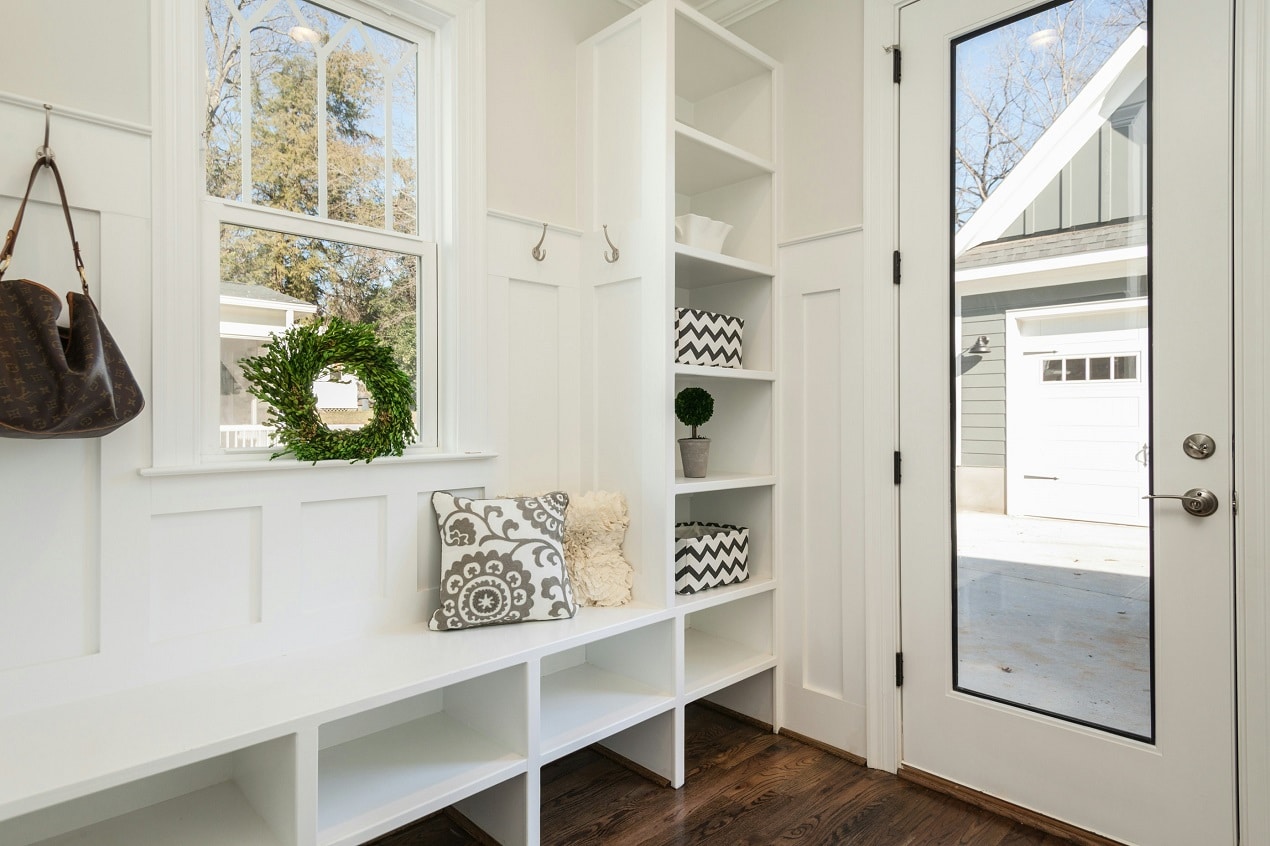
There are a lot of conventional issues that a mudroom can help address. But a room packed with too many features can become cluttered.
The best design is not necessarily the one with the most cabinets, hooks, or shelves. It’s the one that provides you with beneficial storage and utility. But does not obstruct the space you need to maneuver through the room.
When considering a mudroom remodeling, consider your family’s daily activities in this space.
Examine your daily routine
What happens when your family gets home? Where do coats go? Do shoes stay by the door? Do backpacks end up on the kitchen counter? Need a place to store sports gear or outdoor clothing?
These habits can give you more insight into your storage needs than a list of what everyone seems to want in their mudroom.
For instance, if your largest concern is shoes, a special shoe rack would be more beneficial than if you have a lot of upper cabinets. Individual hooks or cubbies might have more effect if everyone drops bags close to the entrance.
Focus on features that you’ll use on a daily basis
If space is a priority, practicality should be the main concern. A bench can provide a place to sit when putting on shoes and space to store shoes underneath. Handbags and coats can be kept in easy reach by hooks.
Other organizational ideas include:
- Cubbies
- Lockers
- Cabinets.
The right option depends on the family. A family with children might want to have individual storage areas. But a smaller family might want more general-purpose storage.
Consider how much floor space you need
More storage is convenient. But there should be enough space to maneuver.
Think circulation before putting furniture or built-ins in the room. While a large storage unit can provide awesome space, it can be frustrating if it blocks the walkway or doors.
This is especially crucial in small mudrooms. If a floor area is limited, consider using the vertical space.
Choose materials based on real use
The surfaces of mudrooms should be able to withstand:
- Dirt
- Moisture
- High foot traffic.
For such environments, experts suggest mudroom or long-lasting flooring like:
- Tile
- Luxury vinyl plank
- Sealed concrete
Consider your home use before selecting finishes. Easy-to-clean surfaces may be more valuable than delicate decorative materials.
Allow for future requirements
Storage needs might vary over time. Kids grow. Hobbies change. Seasonal gear can be really demanding on space.
Don’t fill every space with highly specific storage. Instead, choose adaptable features:
- Flexible shelving
- Adaptable cabinets
- Open spaces.
They can serve a variety of purposes even as the needs of your household evolve.
Final thoughts
Make sure that every feature has its place.
A successful mudroom doesn’t require all of the features you see in the pages of design magazines. Create space based on your problems.
Consider any feature that:
- Saves time
- Reduces clutter
- Protects other parts of your home
- Makes daily tasks easier.
If it’s pretty but not very useful, avoid it.