

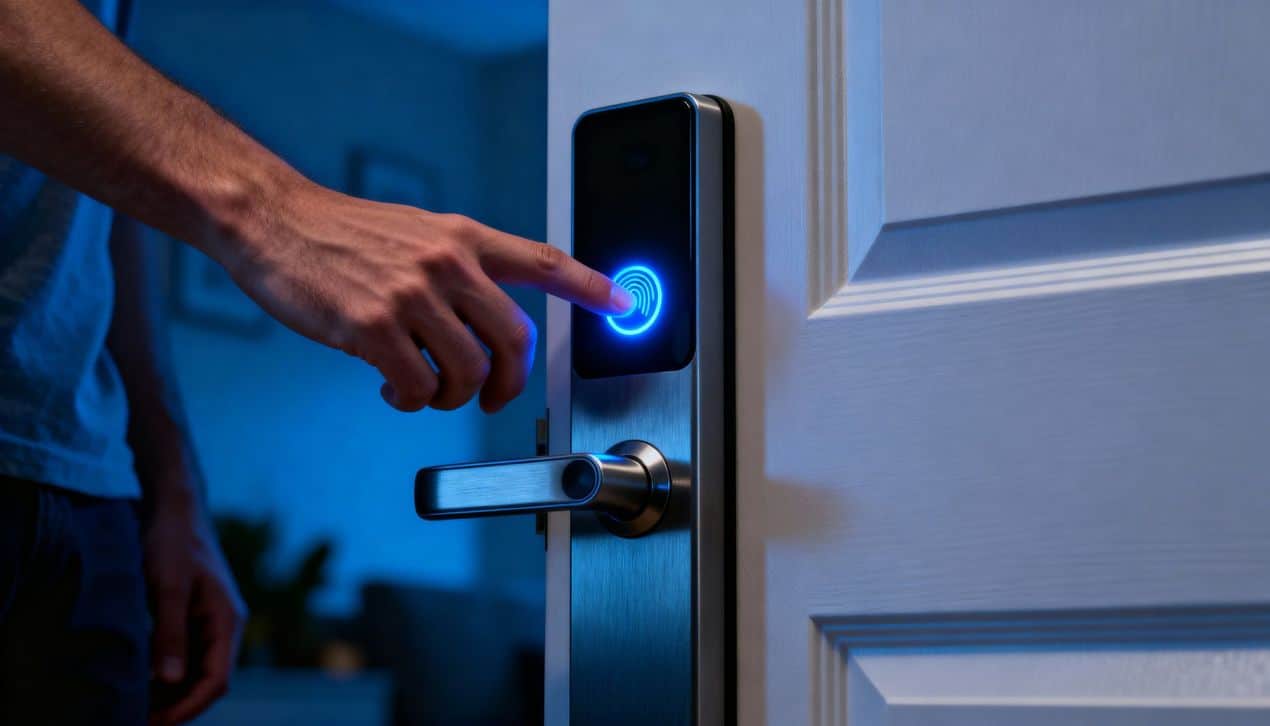
A keyless entry system has forever changed how owners access their properties and assets. With this security device, you no longer have to fumble with your keys in the dark or worry about losing them. It’s amazing how it provides the security and convenience you’re looking for.
When shopping, you’ll soon realize that the market is full of options, with one product seemingly better than the other. To make a confident choice, you must cut through the clutter and know which features are most important.
Multiple Access Options
Flexibility is essential when choosing keyless door locks. Your system must let you choose how you want to enter. A smartlock deadbolt with biometric authentication, which can be opened with just the touch of your finger, is arguably the most convenient and fastest way to get in. More advanced systems use facial recognition or voice control.
Punching PIN codes also eliminates the need for scouring through your bag to find your physical keys. If you’re worried about prying eyes, some door readers have a scrambling feature that lets you press random numbers before your actual code.
Regardless of your preferred authentication methods, opting for multiple access options means you’re never left without options if one method fails. You can still open and close doors even if you accidentally left your keys inside.
Strong Security Protocols
Modern entry systems are often sleek, but don’t get easily swayed by form. You actually want one that keeps intruders out. Never compromise safety when it comes to your security system.
Models that enable encrypted data signals and rolling codes are the best choice for conscious owners. Imagine a digital lock that changes your “password” every time you use it, so hackers can’t copy your access codes or intercept the signal for a free pass.
Take property security to the next level by enabling multi-factor authentication. This functionality combines various digital keys, including smartphone app verification and fingerprint scans, to grant access.
An auto-lock feature is a lifesaver for those whose minds aren’t as sharp as they used to. It prevents security issues by instantly engaging the deadbolt after a certain period. This is crucial, as burglary incidents continue to happen in homes with weak or non-existent security systems.
Easy to Operate and Integrate
Your unit is still an electronic device even with no visible wire connectors. It needs power to run, mostly from batteries. A good lock lets you view the device’s battery life and warns you early when it’s time to replace. Additionally, it should have a backup power port or still allow your physical key to function in the meantime.
If you already have a smart home setup, you want a keyless lock that fits seamlessly into the network. Read the label to determine compatibility and follow the programming instructions. You shouldn’t face problems turning your lock from a standalone gadget to a noteworthy component of your home security system. Moreover, its security software should support regular updates to fix bugs and enhance its features.
Remote Control and Monitoring Features
In the past, remote keyless entry meant using a key fob that worked by sending a unique radio frequency signal when you pushed a button. The vehicle’s onboard receiver picks this up and performs the task, like activating the remote start or trunk release function.
Garage door operators run on the same principle.
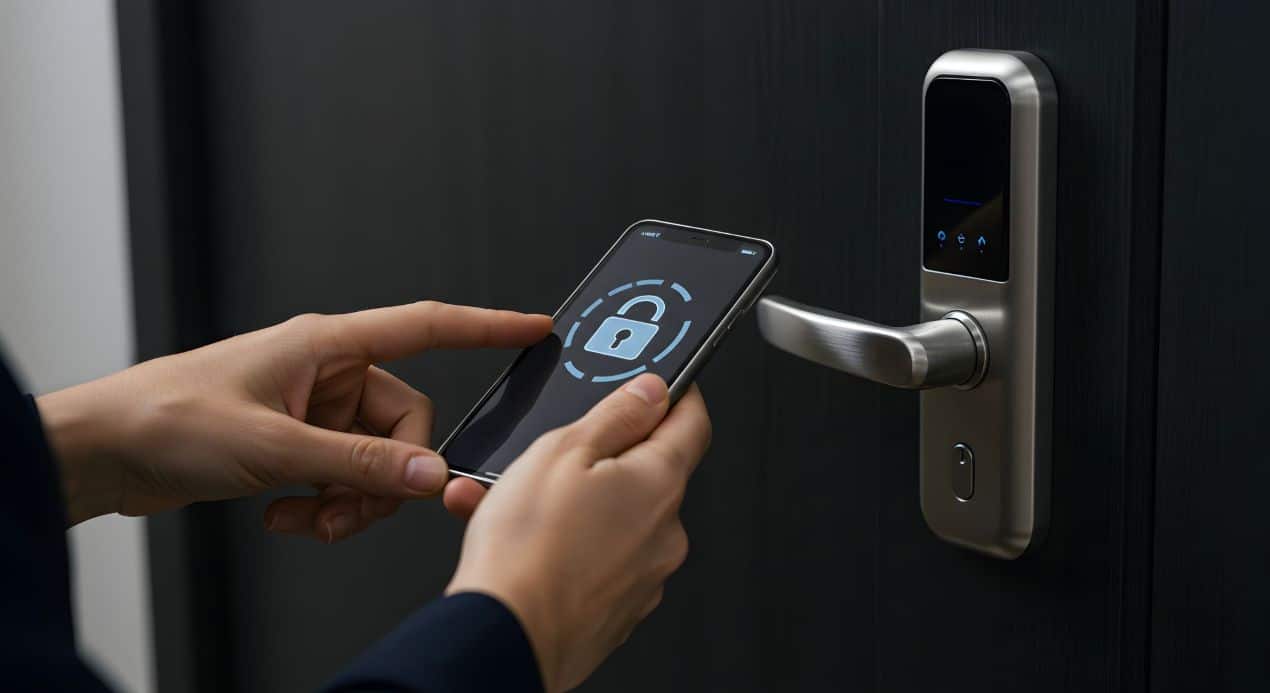
Advanced home security solutions don’t need chucky remote controllers, though. People rarely leave without their smartphones these days, so a system with mobile access is another feature you can’t miss. Digital locks that offer this capability use either Bluetooth or WIFI signals to activate lock and unlock buttons on their phones. Unlike Near Field Communication (NFC) technology, you don’t need close proximity to manage access.
Remote access is incredibly advantageous when you’re operating a rental property or hiring contractors and house sitters. It’s also convenient if you have children, as it can send security alerts for failed access attempts. Modern wireless locks provide an electronic log showing who entered and when.
Moreover, some can generate temporary access codes for individuals who need to stay on your property for a limited time. You can set the code to expire after a certain time or date. Enabling this skips the need for sending and collecting borrowed keys, which can easily be duplicated.
High-Quality Build
All the fancy features don’t matter if the lock can’t withstand another daunting enemy: the harsh elements. Your keyless lock will face them year-round. That’s why you need one that can hold up even with heavy use and extreme temperatures.
A solid metal construction is a great indicator of being weather-resistant. Also, look for an IP67 rating, which indicates dust and water protection. As the unit’s nervous system, your control box deserves high-quality parts that are built to last.
Concluding Thoughts
Picking a good keyless entry system doesn’t have to be complicated. It should feel like it’s designed according to your needs and lifestyle. Apart from protecting your home, it should make your daily routines easier and provide you with full control over your properties.
Focus on these core areas, and you’ll be able to find a reliable solution that gives you peace of mind. Once you’ve found the one, you’ll wonder how you’ll ever live without it.