

Laval’s housing stock spans decades, but a large share of it, split-levels and bungalows built between the 1960s and 1980s, is now old enough that the original bathroom just isn’t holding up anymore. Cracked grout, dated fixtures, and plumbing installed before modern building codes existed are some of the most common complaints homeowners bring to a renovation. On paper, a bathroom renovation sounds simple. In practice, once the tile comes down, homeowners often discover more than they bargained for. Here’s what tends to matter most when planning one in this region, and how to avoid the surprises that turn a two-week project into a two-month one.
Know What’s Hiding Behind the Tile
Older Laval homes often have galvanized supply lines, undersized vent stacks, or wiring that hasn’t been touched since the house was built. Before any tile comes down, it’s worth taking the time to confirm your permit requirements, since relocating a tub, toilet, or shower drain typically falls under provincial rules rather than a simple municipal building permit. Skipping this step is one of the fastest ways to end up paying for the same work twice, and it can also complicate things later if the home is ever sold and a buyer’s inspector asks for proof the work was done to code.
Small Bathrooms Can Still Feel Open
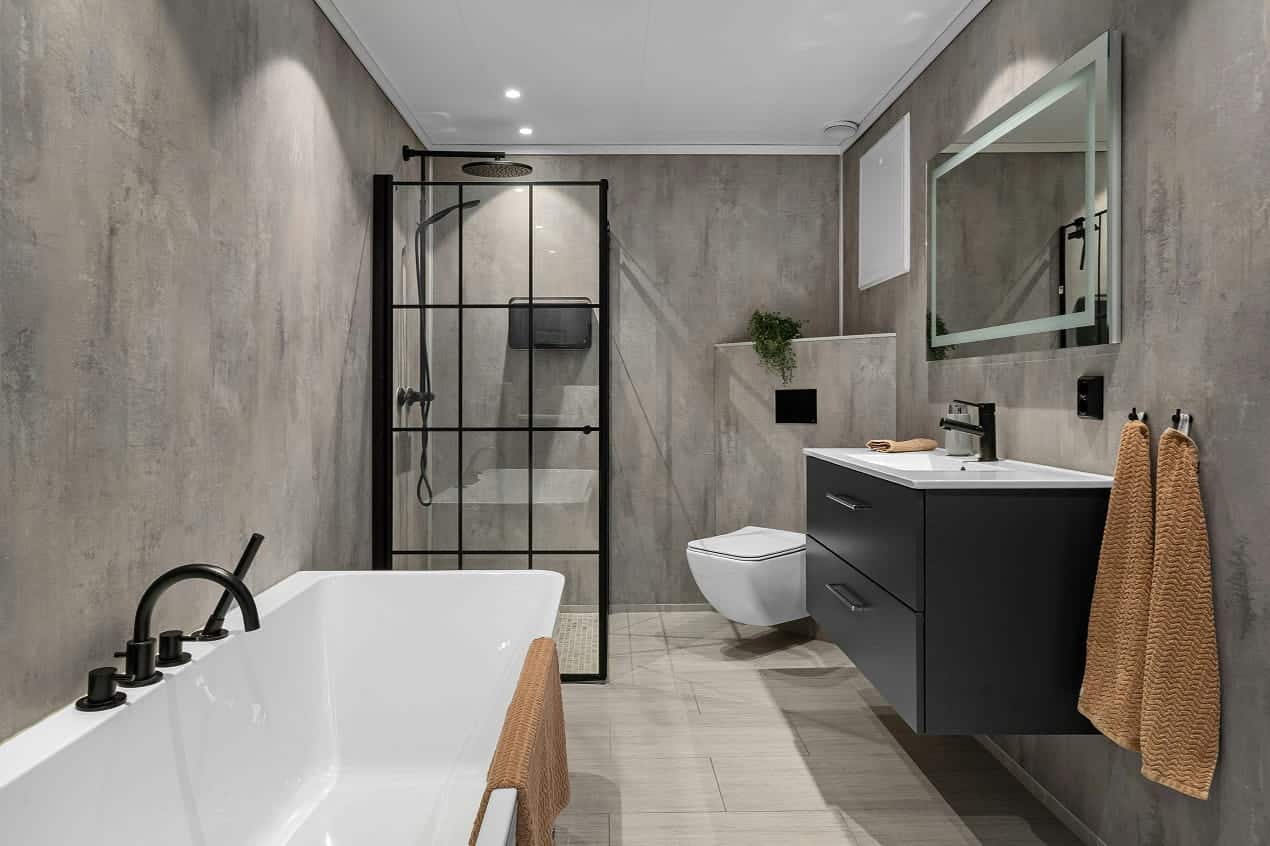
Many Laval bathrooms, particularly in bungalows and older condo buildings, were built small by today’s standards. Swapping a shower curtain or a frosted door for frameless shower glass enclosures is one of the simplest ways to make a cramped space read larger without touching its footprint. Light-colored tile and fewer grout lines, achieved with a single large-format floor tile instead of a mosaic, accomplish the same goal from a different angle. Even small choices, like a wall-mounted vanity that shows more floor, can change how a compact room feels day to day.
Material Choices That Handle Quebec’s Climate
Indoor humidity here swings hard between a humid summer and a bone-dry winter heating season, and that swing stresses grout, caulking, and cabinetry more than most homeowners expect. Porcelain tile, moisture-resistant backer board, and an exhaust fan properly sized to the room, not just whatever was already installed, matter more in this climate than in milder ones. It’s a detail that’s easy to overlook during planning and expensive to fix once the room is finished.
Timing the Work Around Laval’s Seasons
Renovation scheduling in Quebec tends to revolve around winter. Anything touching an exterior wall, like relocating a window or adding new ventilation, gets harder and more expensive once the ground freezes, so many homeowners schedule the indoor bathroom work for late fall or winter and save exterior-facing elements for spring. Material lead times also stretch during the busiest renovation months, typically April through September, so ordering fixtures early is worth the effort.
One Renovation Often Leads to Another
Homeowners who start with a single bathroom frequently end up looking at the rest of the house differently. Sometimes it’s practical, since a bathroom project can reveal what other systems need attention. Just as often, it’s about lifestyle. A backyard renovation in Laval is a common next step for families who finish an indoor project and start thinking seriously about their outdoor living space, especially given how much yard many Laval properties have to work with compared to denser parts of Montreal. It’s a natural progression: one room gets finished, and suddenly the rest of the house looks a little more dated by comparison.
Getting It Right the First Time
A bathroom renovation is rarely just about new fixtures. In a region with Laval’s mix of older housing stock and seasonal extremes, the projects that go smoothly tend to be the ones where the unglamorous details, permits, ventilation, and timing, get handled before the exciting parts begin. Homeowners who plan around these factors end up with a bathroom that holds up through a Quebec winter and still looks good doing it.