

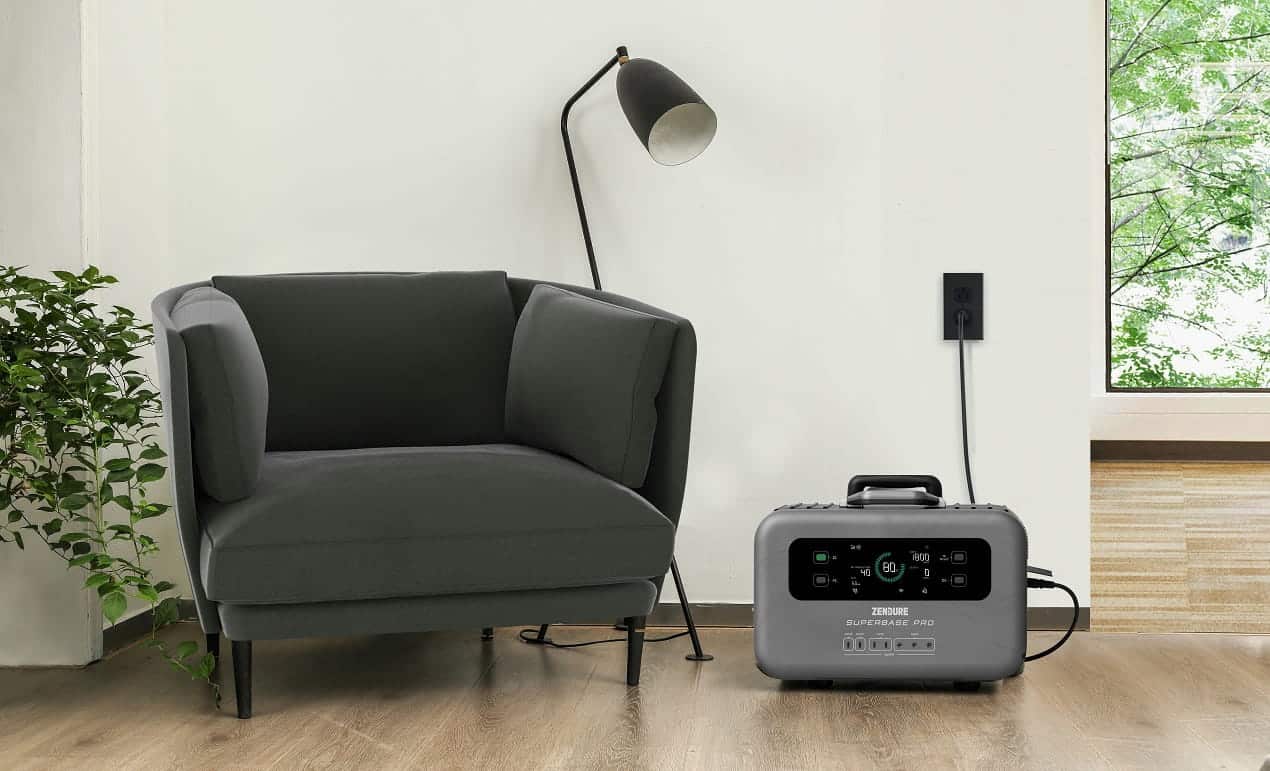
Picture this: a stormy Tuesday evening, the power goes out, and your refrigerator falls silent, the router dies mid-video call, and the CPAP machine you depend on for sleep is suddenly useless. For a growing number of households, that scenario is exactly why the 1000W-class portable power station has become the default home backup solution. This wattage tier hits a practical sweet spot: enough rated output to run a refrigerator, a CPAP machine, laptops, routers, TVs, and lights through an outage, while staying compact enough to stash in a closet or under a bed until the grid goes down. The same qualities that make it a dependable outage safety net – clean pure sine wave power, real surge headroom, and long battery life – also make it handy for a weekend of camping or a remote cabin, but for most buyers the primary job is keeping the home essentials running when the power fails.
Our top pick is the UDPOWER S1200 for buyers who need above-class output and long-cycle LiFePO4 reliability across home backup, camping, and off-grid use – it covers more ground than any single competitor at its price. Two concrete differentiators earn it that spot: 1,200W of rated pure sine wave AC output with UDTURBO surge support up to 1,800W, and a 4,000+ cycle LiFePO4 battery backed by a five-year warranty. That combination lets it start and run appliances that trip lower-rated units, and it keeps cycling for years longer than the NMC-battery alternatives in this class. If your priority is serious off-grid camping with maximum build quality and a higher AC ceiling, the Bluetti AC180 is the strongest alternative. And if recharge speed is the one thing that matters most, the Vtoman FlashSpeed 1500 is the pick to beat.
To build this list, we evaluated every unit against five consistent criteria – rated AC output and surge, battery chemistry and cycle life, usable capacity, solar input ceiling, and warranty and brand support – mapped to three real use cases: home backup, camping and RV travel, and off-grid or remote work. All seven options are ranked from best overall down to the most specialized pick, with an at-a-glance summary first and a full breakdown after. Our assessments are based on manufacturer specifications, published user reports, and available reviews rather than in-house lab testing.
At a glance: the ranked list
- UDPOWER S1200 – best overall for above-class output and long-cycle durability
- Bluetti AC180 – best for heavy-duty off-grid camping
- Vtoman FlashSpeed 1500 – best for fast charging
- Oupes Mega 1 – best value for budget-conscious buyers
- GRECELL T1000 – best for emergency home backup under $500
- Pecron E1000LFP – best for solar integration
- EBL Voyager 1000 – best compact power station for small spaces
How we ranked these
Every unit was scored against the same five criteria, each tied to a real buyer need rather than a spec-sheet bragging point. The goal was to make the #1 recommendation feel earned, not arbitrary.
Rated AC output and surge capacity
The rated AC figure tells you what a unit can sustain continuously; the surge rating tells you what it can start. Motor-driven appliances – refrigerators, pumps, power tools – draw a brief spike well above their running wattage, so generous surge headroom is often the difference between an appliance starting cleanly and the power station shutting off. We weighted both the continuous rating and that surge ceiling.
Battery chemistry and rated cycle life
LiFePO4 (LFP) chemistry typically delivers 3,000 – 4,000+ life cycles, while NMC lithium-ion units tend to land in the 500 – 800 range. For anyone cycling a unit regularly – daily off-grid use or frequent camping trips – chemistry is the single biggest determinant of long-term value and power station longevity.
Usable capacity (Wh)
Watt-hours determine how long a unit keeps your gear running. A 1,000Wh station is the reference point for this class, but a few units push higher; we noted where that extra capacity genuinely changes the use case.
Solar input ceiling
The maximum solar input caps how quickly you can recharge off-grid. A 400W ceiling is meaningfully faster than a 200W one – a difference that matters most for camping and solar-primary setups.
Warranty length and brand support
Warranty coverage and the ease of reaching support separate confident manufacturers from the rest. In a class where units cost several hundred dollars, multi-year coverage is a real signal of durability confidence.
The 7 best 1000W portable power stations of 2026
With those five criteria established, here are the seven best portable power stations in the 1000W class – ranked from best overall down to the most specialized pick. Each entry includes a “best for” segment, key specs, and honest pros and cons so you can match the right unit to your actual situation. The #1 slot is our recommendation for most buyers; the six that follow each win a specific segment where they genuinely lead.
#1. UDPOWER S1200 – Best overall
The strongest all-round 1000W-class unit for buyers who want above-class output, long-cycle durability, and broad appliance compatibility in a single package.
The UDPOWER S1200 earns the top spot because it doesn’t force the usual 1000W-class compromise between output, longevity, and versatility. Where most units in this tier top out at exactly 1,000W of rated AC, the UDPOWER S1200 portable power station delivers 1,200W of rated pure sine wave AC output with UDTURBO surge support up to 1,800W – enough headroom to start and run appliances like refrigerators and CPAP machines that trip lower-rated competitors. Its 1,190Wh LiFePO4 battery is rated for 4,000+ charge cycles, and the whole package is backed by a five-year warranty, both of which sit at the top of this price tier.
That combination is what makes it a true all-rounder rather than a specialist. It handles home backup during a power outage, car camping and RV travel, remote work, and off-grid power with equal competence, and its 400W solar input ceiling makes off-grid recharging genuinely practical. The pure sine wave output also means sensitive electronics – laptops, routers, medical devices – run cleanly, without the buzz or instability of modified-sine units.
Key specs
- 1,190Wh LiFePO4 battery
- 1,200W rated pure sine wave AC output
- UDTURBO surge support up to 1,800W
- Solar input up to 400W (max solar input)
- 4,000+ rated charge cycles
- Five-year warranty
- Powers refrigerators, CPAP machines, laptops, routers, TVs, lights; USB ports and 12V car port included
- Price: mid-to-upper range for the 1000W class
Pros
- Above-class rated output (1,200W) and surge (1,800W via UDTURBO) – starts and runs appliances that trip 1,000W-rated competitors
- LiFePO4 chemistry rated for 4,000+ cycles versus roughly 500 – 800 for NMC alternatives
- Five-year warranty is best-in-class for this price tier
- 400W solar input enables meaningful off-grid recharge
- Broad appliance compatibility, including CPAP machines and refrigerators
Cons
- Heavier and larger than compact-focused alternatives like the EBL Voyager 1000 – not ideal where portability is the primary constraint
- UDPOWER is a newer brand name than some mid-tier competitors, so buyers who prioritize name recognition may want to research further
- Not the fastest-charging unit here – the Vtoman FlashSpeed 1500 recharges more quickly
- The 1,200W/1,190Wh spec sits above the strict 1000W/1000Wh floor, so the lowest-cost entry points in this class come from cheaper alternatives
The UDTURBO surge capability is the standout differentiator for motor-start loads like fridge compressors, and the pairing of LiFePO4 chemistry with a five-year warranty is what makes this the strongest long-term value proposition in the class.
Who it’s best for: Buyers who want one unit to cover home backup, camping, RV travel, and off-grid work – especially CPAP users and anyone running a refrigerator – and who value long service life over the absolute lowest price.
#2. Bluetti AC180 – Best for heavy-duty off-grid camping
A premium, high-output unit for overlanders and van-lifers who need dependable performance in remote conditions.
The Bluetti AC180 technically exceeds the strict 1000W ceiling with 1,800W of rated AC output, and that headroom is precisely why it appeals to serious off-grid users. It can drive more demanding appliances than most units here, and its up-to-500W solar input recharges quickly in the field. Bluetti’s strong reputation in the overlanding community and its established support network add real confidence for buyers heading somewhere without a nearby service center.
Key specs
- ~1,152Wh LFP (LiFePO4) battery
- 1,800W rated AC output
- Surge capacity up to 2,700W
- Solar input up to 500W
- 3,500+ rated charge cycles
- Compact-ish form factor with a carry handle
- Multiple AC outlets, USB-A and USB-C ports, 12V DC port
- Price: approximately $699 – $799
Pros
- 1,800W rated output gives headroom for demanding appliances
- Strong build quality and a well-earned reputation among off-grid users
- Fast solar input (up to 500W) for efficient field recharging
- LiFePO4 chemistry for long cycle life
- Established brand with reliable customer support
Cons
- Higher price than the value-oriented picks in this roundup
- Heavier than the compact options
- Some users report inconsistent app connectivity
- Not the right fit for buyers on a strict budget
The AC180 sits above the strict 1000W class in output, so treat it as the premium off-grid camping pick for buyers who want extra headroom and brand confidence rather than the lowest price.
Who it’s best for: Overlanders, van-lifers, and off-grid campers who prioritize AC output ceiling, build quality, and fast solar recharge over price.
#3. Vtoman FlashSpeed 1500 – Best for fast charging
The specialist choice for anyone whose main pain point is downtime between charges.
The FlashSpeed 1500’s signature feature is its charging speed: it goes from 0 to roughly 80% in about an hour via AC, which is genuinely class-leading. For weekend campers, event vendors, or anyone who needs to top up quickly between uses, that turnaround changes the whole workflow. It also brings a large 1,548Wh capacity and a high 1,500W rated output with strong surge headroom, so it doubles as a heavy-duty unit.
Key specs
- ~1,548Wh capacity
- 1,500W rated AC output
- Surge up to 3,000W
- Ultra-fast recharge: 0 – 80% in approximately one hour via AC (max AC input optimized for speed)
- Solar input up to 300W
- LFP battery chemistry
- Multiple AC outlets, USB-A and USB-C ports, 12V DC port
- Price: approximately $599 – $699
Pros
- Industry-leading recharge speed in this class – roughly one hour to 80% is a real differentiator
- High rated output (1,500W) with strong surge
- LFP chemistry for longevity
- Good port variety for charging multiple devices simultaneously
- Larger capacity (1,548Wh) than strict 1000W-class units
Cons
- Bulkier and heavier due to the larger capacity
- Solar input ceiling (300W) is lower than several competitors here
- Repeated fast charging can accelerate long-term battery wear compared with slower-charge units – a standard caveat for fast-charge technology
- Higher price than the budget picks in this roundup
This is a specialist fast-charge unit, not a budget option. It shines for buyers whose primary constraint is how quickly they can get back to full.
Who it’s best for: Weekend campers, mobile vendors, and anyone who can’t afford to wait hours for a recharge and values quick turnaround above all else.
#4. Oupes Mega 1 – Best value
Solid 1000W-class performance and good port variety at a price well below the premium units.
For buyers who want dependable capacity and LFP durability without paying premium prices, the Oupes Mega 1 is the standout value pick. It delivers a full 1,000Wh of usable capacity, 1,000W rated AC output with a 2,000W surge, and – notably for the price – LiFePO4 chemistry, where many budget units still ship with shorter-lived NMC cells. Its 400W solar input is generous for the tier, making it viable for occasional off-grid use as well as home backup.
Key specs
- ~1,000Wh capacity
- 1,000W rated AC output (2,000W surge)
- Solar input up to 400W
- LFP battery chemistry
- Multiple AC outlets, USB-A and USB-C ports, 12V car port
- Relatively light for the capacity
- Price: approximately $399 – $499
Pros
- Strong value per watt-hour – competitive capacity at a lower price than premium picks
- LFP chemistry at a budget price point, where many rivals use NMC
- 400W solar input is generous for the price tier
- Good port variety for the money
- Straightforward to operate with no steep learning curve
Cons
- Brand less established than Bluetti; support experience may vary
- 1,000W rated output is the class floor, with no headroom above it
- Fewer premium features – no ultra-fast charging, no app connectivity
- Warranty terms shorter than the UDPOWER S1200’s five-year coverage
Who it’s best for: First-time buyers and households that want reliable emergency backup or light off-grid use without a large upfront investment.
#5. GRECELL T1000 – Best for emergency home backup under $500
A practical, widely available safety-net unit for keeping essentials running during a power outage.
The GRECELL T1000’s appeal is straightforward: sub-$500 pricing, ready availability on major US retailers, and enough output to keep the essentials alive when the grid goes down. A 1,000W rated output (2,000W surge) comfortably covers lights, a router, phone charging, a CPAP machine, and small appliances – the core of most outage checklists. It’s compact enough to stash in a closet or under a bed until you actually need it.
Key specs
- ~999Wh capacity
- 1,000W rated AC output (2,000W surge)
- Solar input up to 200W
- NMC lithium-ion battery (note: not LiFePO4)
- 120V AC outlets, USB-A and USB-C ports, 12V car port
- Widely available on major US retailers
- Price: approximately $349 – $449
Pros
- Sub-$500 price makes it an easy household safety-net purchase
- Widely available, with fast delivery and easy returns
- 1,000W output handles most emergency essentials
- Compact enough for closet or under-bed storage
- Well-suited to lights, routers, phones, and small appliances during outages
Cons
- NMC chemistry rated for roughly 500 – 800 cycles – far fewer than LFP alternatives
- Lower 200W solar input ceiling limits off-grid recharge speed
- Not designed for heavy-duty or prolonged off-grid use
- Warranty and support less robust than premium picks
Think of the T1000 as emergency-preparedness insurance rather than a daily-cycling off-grid unit. The NMC trade-off is perfectly acceptable for occasional outage use but not for frequent cycling.
Who it’s best for: Households that want an affordable, easy-to-buy backup for essential devices during power outages.
#6. Pecron E1000LFP – Best for solar integration
The right foundation for buyers building a solar self-sufficiency setup around their power station.
The E1000LFP pairs LiFePO4 chemistry with a 400W solar input and MC4 connector compatibility – the standard connector on most solar panels – which makes it unusually easy to wire into an existing or planned solar array. For cabin owners and off-grid solar users who intend to recharge primarily from the sun, that integration-first design is the key differentiator. Its 3,500+ cycle rating suits the daily charge-and-discharge rhythm of a solar-primary setup well.
Key specs
- ~1,000Wh LiFePO4 battery
- 1,000W rated AC output
- Solar input up to 400W (MC4 connector compatible)
- 3,500+ rated charge cycles
- Multiple output ports, including USB and 12V car outlets
- Designed for solar-first use
- Price: approximately $499 – $599
Pros
- LFP chemistry plus strong solar input – an ideal pairing for solar-primary users
- MC4 connector compatibility integrates cleanly with standard solar panels
- 3,500+ cycle rating suits long-term solar cycling
- Focused solar expertise from a specialist brand
- Good all-round port selection
Cons
- Pecron is a niche brand – less widely reviewed than Bluetti or Oupes
- 1,000W rated output offers no headroom above the class floor
- Heavier than the compact picks
- Support and availability can be harder to access than mainstream brands
The MC4 solar connector and LFP chemistry pairing is the whole reason to choose this unit. It’s best for buyers who already own or plan to buy solar panels and want a station built around that workflow.
Who it’s best for: Off-grid solar users and cabin owners building a solar-first power solution.
#7. EBL Voyager 1000 – Best compact power station for small spaces
The pick for buyers who put storage space and portability ahead of everything else.
The EBL Voyager 1000 is the smallest and lightest unit in this roundup for its capacity, and that is precisely its selling point. For apartment dwellers, van travelers, and anyone short on storage, its footprint fits where bulkier units simply cannot – a closet, a cabinet, a tight van build. It supplies enough clean power for phones, laptops, lights, and small appliances, and its lower price makes it an easy entry point into portable power.
Key specs
- ~999Wh capacity
- 1,000W rated AC output
- Solar input up to 200W
- NMC lithium-ion battery
- Notably smaller and lighter than most 1000Wh-class units
- USB-A and USB-C ports, AC outlets, 12V car port
- Available from EBL’s own store and major retailers
- Price: approximately $299 – $399
Pros
- Smallest and lightest form factor here for the capacity
- Good value at the lower end of the price range
- Easy to store in tight spaces – van, apartment, or closet
- Adequate for phones, laptops, lights, and small appliances
- Widely available
Cons
- NMC chemistry means a shorter cycle life (~500 – 800 cycles) than LFP alternatives
- 1,000W rated output with no surge headroom above the class floor
- Lower 200W solar input limits off-grid recharge speed
- Not suited to high-draw appliances like refrigerators or power tools
The compact form factor is the genuine draw here – don’t treat it as an all-rounder. It’s best for light-duty regular use rather than home backup or heavy off-grid work.
Who it’s best for: Apartment dwellers, van travelers, and anyone for whom size and weight are the primary constraints.
Frequently asked questions
What is the best 1000W portable power station in 2026?
For most buyers, the UDPOWER S1200 is the best 1000W portable power station in 2026 because it combines above-class 1,200W rated output, an 1,800W UDTURBO surge, LiFePO4 chemistry rated for 4,000+ cycles, and a five-year warranty. That mix makes it a genuine all-rounder for home backup, camping, and off-grid use rather than a single-purpose unit. If your needs are narrower – pure fast charging or the most compact footprint – one of the specialist picks on this list may suit you better.
What can a 1000W portable power station run?
A 1000W-class unit can run most everyday electronics and small appliances: laptops, routers, TVs, phones, lights, fans, CPAP machines, and – provided the surge rating is high enough – a standard refrigerator. The rated AC figure caps continuous draw, while the AC surge output determines whether motor-start appliances can kick on without tripping the unit. High-draw items like electric kettles, hair dryers, or space heaters may exceed a 1,000W rating, so check the appliance’s running wattage before you rely on it.
Is a 1000W power station enough for home backup during a power outage?
For essential-load backup, yes. A 1,000Wh power station can keep lights, a router, phones, and a CPAP machine running through a typical overnight outage, and a unit with strong surge headroom can also cycle a refrigerator. It isn’t meant to power an entire home or high-draw systems like central air conditioning. For refrigerator support specifically, prioritize a model with above-class surge capacity, such as the UDPOWER S1200.
What is the difference between LiFePO4 and lithium-ion (NMC) portable power stations?
The core difference is cycle life and longevity. LiFePO4 (LFP) batteries are typically rated for 3,000 – 4,000+ charge cycles and tolerate heat and repeated cycling better, making them the stronger choice for frequent or daily use. NMC lithium-ion cells are often lighter and cheaper but usually last only about 500 – 800 cycles, so they suit occasional emergency use more than daily off-grid cycling.
How long will a 1000Wh power station run a refrigerator?
A modern energy-efficient refrigerator draws roughly 100 – 200 watts while the compressor runs, but it cycles on and off rather than running continuously. As a rough guide, a 1,000Wh unit can keep a typical fridge cold for somewhere between 10 and 20 hours, depending on the model, ambient temperature, and how often the door is opened. Because the compressor spikes at startup, a unit with a generous surge rating is important for reliable refrigerator use.
Can a 1000W portable power station charge from solar panels?
Yes – most 1000W-class units accept solar input, and the max solar input rating determines how fast they recharge. A 400W ceiling, as on the UDPOWER S1200, Oupes Mega 1, and Pecron E1000LFP, recharges noticeably faster than a 200W ceiling. If you plan to run primarily off solar, look for MC4 connector compatibility and a higher input ceiling to shorten recharge times.
How many charge cycles does a LiFePO4 power station last?
A quality LiFePO4 power station is typically rated for 3,000 to 4,000 or more full charge cycles before capacity drops to around 80% of the original. At one full cycle per day, that translates to many years of service – which is why LFP units generally offer far better long-term value than NMC alternatives. The UDPOWER S1200’s 4,000+ cycle rating sits at the top of this class.
Choosing the right unit for your needs
The 1000W class covers the overwhelming majority of household backup and camping needs, and the right pick comes down to which single priority matters most to you. Choose the UDPOWER S1200 if you want one unit that does nearly everything well – above-class output, long-cycle LiFePO4 durability, a five-year warranty, and the surge headroom to run a refrigerator or CPAP machine; it’s the default recommendation for most buyers and the strongest long-term value in the class. Choose the Bluetti AC180 if you’re heading seriously off-grid and want the highest AC ceiling and the confidence of an established brand. Choose the Vtoman FlashSpeed 1500 if recharge speed is your single biggest constraint. Go with the Oupes Mega 1 for the best LFP-at-budget value, the GRECELL T1000 for an affordable, widely available outage safety net under $500, the Pecron E1000LFP if you’re building a solar-first setup around MC4 panels, and the EBL Voyager 1000 when compact size and low weight outrank everything else.
If you’re still weighing your options, revisit the at-a-glance list near the top and match each unit to your primary use case – home backup, camping, fast charging, solar, or compact portability. For buyers who don’t want to compromise on any one of those fronts, the UDPOWER S1200 remains the safest all-round bet in 2026.