

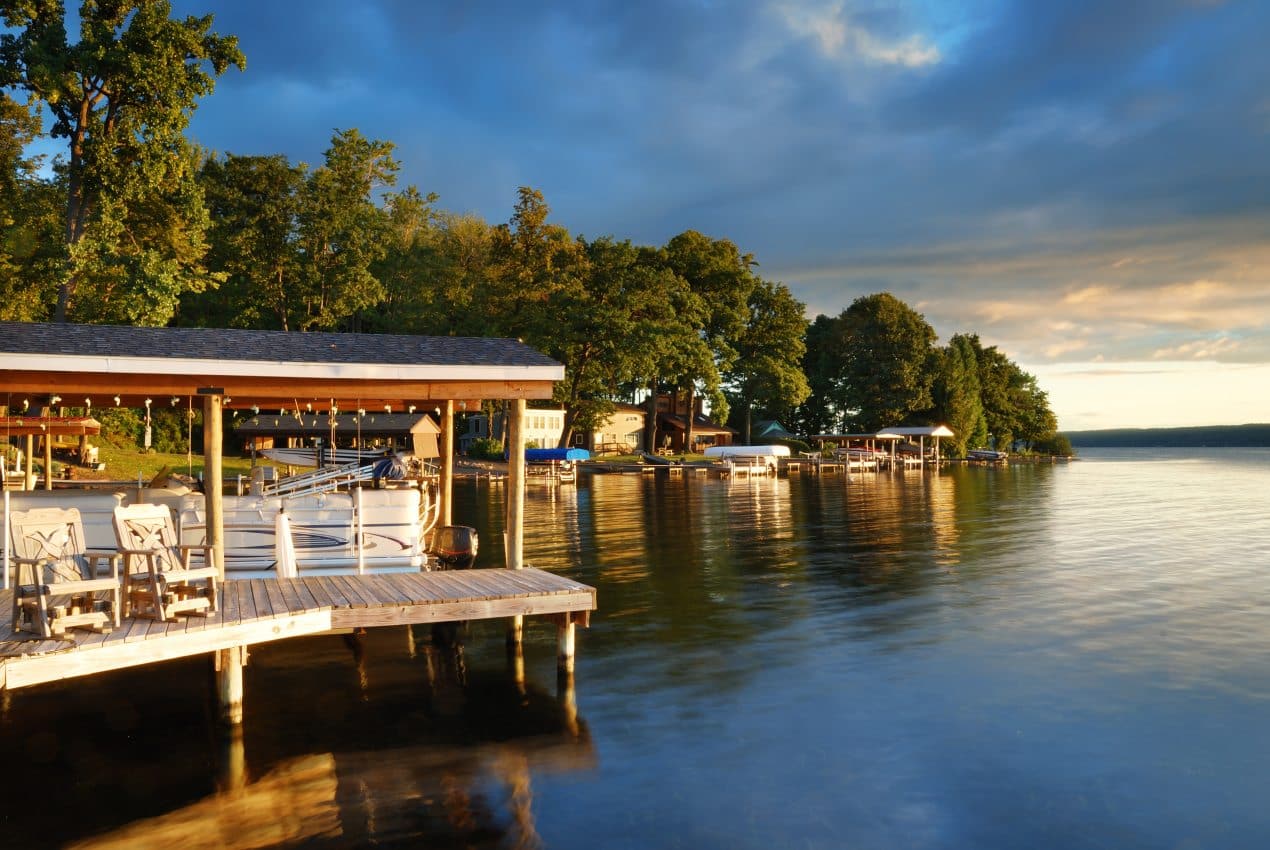
How often do you think about your floating dock? It’s probably not much, more of an “out of sight, out of mind” thing. You’re more likely stressing over kitchen countertops or a tub-to-shower conversion in your bathroom, leaving your dock out to dry. Or to rot, more likely. But if you’re neglecting the dock like that, and not using it for most of the year, it can drag down your property value.
A well-maintained floating dock expands your usable square footage, keeps boats and watercraft properly accessed, and can improve your waterfront home’s appraised value depending on location and configuration. But a dock in poor repair does the exact opposite.
If you’re thinking about adding one or upgrading what you have, here are seven floating dock ideas worth building around.
Quick Answer
What are the best floating dock ideas for a waterfront home? The highest-value floating dock setups combine a solid decking material (composite or hardwood), a purpose-built configuration (L-shape, straight, or modular), and at least one functional feature like a boat lift, swim platform, or lighting system. The right layout depends on water depth, wave activity, and how you use the waterfront. A licensed marine contractor can size the dock properly for your specific shoreline conditions.
The L-Shape Dock With a Dedicated Boat Slip
If you have a boat in the water, your floating dock is likely an L-shape. One arm is parallel to the shoreline, the other perpendicular. Together, they form a slip that protects your boat from wind and waves on two sides.
The thing most people don’t realize is that the orientation of that slip matters more than dock size. If the slip opens into the prevailing winds, they’ll push the boat against the dock. No amount of fender bumpers can solve that. A good installer checks prevailing wind conditions before finalizing the layout, not after the anchoring system is already in.
For residential use, a 6-foot-wide walkway section paired with a 10-to-12-foot slip width covers most boat sizes up to 26 feet. Anything larger usually needs a full site assessment before specifying dimensions.
Composite Decking Over Pressure-Treated Framing
A lot of dock owners default to using pressure-treated wood for everything. Then they spend the next decade sealing, sanding, and replacing boards. It’s a great framing material. But as a walking surface, it starts to gray, splinter, and warp within two or three seasons of salt air and moisture.
Composite decking, the same board material used on residential porches and backyard decks, doesn’t absorb water the same way. It holds its color, stays splinter-free, and according to the National Association of Home Builders, composite products in high-moisture environments tend to last much longer. On a dock, that difference translates directly to maintenance cost and resale presentation.
There’s also something to be said about walking on them with bare feet. Walking across a pressure-treated board cooked in the July sun can sear your soles off. Composite runs cooler, doesn’t splinter, and doesn’t leave your feet looking like you walked through a stain factory.
A Modular System for Properties With Fluctuating Water
Tidal estuaries, rivers, and reservoirs with seasonal drawdown all share the same problem. What’s a usable height in spring can be buried in mud by August, or even submerged by December. Fixed height docks won’t work well in those environments.
Modular floating dock systems ride the water surface at any level. The dock rises and falls with the water, held in lateral position by guide pilings that it slides along freely. Along North Carolina’s Intracoastal Waterway, tidal fluctuation can run two to four feet depending on location. That’s more than enough variation to make a fixed dock functionally unusable at low tide for smaller vessels.
The less obvious benefit of modular systems is versatility. If you start with a straight dock and later want an L-shape, you’re just adding repositioning sections instead of starting from scratch. That’s one of those things you realize more in hindsight and less at the time of purchase.
A Swim Platform Extension
Boating’s not the only activity a waterfront property can accommodate. A dedicated swim platform at the end of the dock can become the most-used feature on the property, especially if you have kids. But most planning conversations focus solely on boating dock considerations.
A swim platform is a wider, lower section at the dock’s end, set closer to the water surface so it’s easier to get in and out of the water. The edges are usually wrapped in non-slip rubber bumper material, with a built-in ladder for the climb back up. A 10-by-10-foot extension is enough for three or four people to sit on, jump from, and climb back onto without crowding. It also creates a physical separation between the swim area and the boat slip, which is an important safety measure.
Some configurations include a handrail on two sides for younger swimmers. If the platform will see regular use by children, that’s worth specifying upfront rather than adding later.
Dock Lighting That Actually Gets Used
Plan for lighting during the build, not after. It’s one of the few dock features that changes how often people actually use the space. And adding wiring to an existing dock costs significantly more than running conduit once while it’s being built.
The most practical setups combine three elements: low-profile post-cap lights along the walkway for navigation, under-dock LED strips that illuminate the water surface (useful for checking for wildlife before swimming), and a single overhead fixture at the seating area or end platform if there is one.
Underwater dock lighting in blue and green wavelengths also attracts baitfish in coastal and brackish water environments, which draws larger predatory fish. Fishing households consistently rate this as one of the features they wished they’d added sooner. It’s a small price to pay during construction that’ll certainly pay off later.
A Boat Lift Integrated Into the Dock Structure
Leaving a boat in the water sounds convenient until the bottom paint starts failing six months ahead of schedule and the hull picks up some unwanted hitchhikers. A boat lift fixes both problems by keeping the hull out of the water. It also eliminates the constant wear on dock lines from tidal movement.
Cradle-style lifts are the most common residential choice. The boat is floated over the cradle, the lift raises it clear of the water surface, and it stays there between uses. The system usually installs within the existing slip footprint, so it doesn’t add width or length to the dock structure.
Marine contractors who build docking facilities with integrated lift systems consistently recommend sizing the lift at least 10% above the boat’s calculated weight. Fuel, gear, and water in the bilge add up faster than you might think, and an undersized lift is a safety issue, not just an inconvenience.
An Enclosed Shore Station or Covered Slip
The premium end of residential dock construction is a roofed boat slip, sometimes called a shore station or boathouse cover. It’s also the first thing most buyers notice when viewing a waterfront property.
Beyond aesthetics, the practical case is straightforward. UV exposure is among the leading causes of boat deterioration for vessels kept in open slips. Sun damage causes measurable degradation to fiberglass, upholstery, and canvas within as few as three seasons on boats stored without shade cover. A roof changes that equation entirely and reduces insurance claims related to weather exposure.
The permit picture is more involved for a roofed structure than an open dock, particularly on coastal and navigable waterways. Most states need separate approval for any over-water structure with a roof. Confirm this with a licensed marine contractor before the design stage. You definitely don’t want to be making changes after the permitting’s all set.
What This Means for Your Waterfront
- A floating dock in good condition adds significantly to a waterfront home’s appraised value. But a dock in poor repair can reduce it. Condition matters as much as presence.
- Slip orientation matters more than dock size. A slip that opens into the prevailing wind will fight you every time you come in. Get this right before the anchoring system goes in.
- Composite decking over pressure-treated framing is the right material split. Wood for the structure, composite for the surface. NAHB data puts composite service life at roughly twice that of untreated wood in high-moisture environments.
- Modular floating systems are the right choice anywhere water levels fluctuate seasonally or with tides. They also let you reconfigure later without rebuilding.
- Size your boat lift at least 10% above your boat’s calculated weight. Fuel, gear, and bilge water close the gap faster than most owners expect. Undersizing is a safety issue.
- Run conduit during construction if there’s any chance you’ll want dock lighting later. Retrofitting wiring to an existing dock costs significantly more than building it in once.
- The 25% flotation buffer isn’t a rule of thumb. It’s a design standard. If your dock is riding noticeably lower than it was when it was installed, that’s worth investigating before it becomes a structural problem.
- Permits are required for almost any dock on a navigable waterway in the US. Build in 60 to 120 days for a straightforward residential application through the Army Corps of Engineers.
The Load Calculation Most People Skip
Floating docks work because they’re buoyant enough to support the load placed on them. What’s less obvious is that the buoyancy need is dynamic. It changes based on what you put on the dock, and many residential docks are undersized for how they actually end up being used.
The baseline calculation covers the dock’s own weight plus expected live load: people, furniture, boats on lifts, and equipment. A swim platform with a boat lift sharing the same flotation system is a very different engineering problem than a simple walkway. According to published guidelines from the BoatUS Foundation, well-designed floating dock systems should be sized to carry at least 25% more than the calculated load. That buffer keeps the dock riding at a safe freeboard during high-use periods and accounts for weight that wasn’t in the original plan.
If a dock is already sitting noticeably lower in the water than when it was installed, it’s worth having looked at. A waterlogged float, added weight over time, or a structural issue can all cause it. All three are easier to fix before the dock becomes unsafe than after.