

Growing your own food connects you to something ancient and deeply satisfying. But here’s what most gardening guides won’t tell you: the seeds you choose matter as much as the soil you plant them in. Those generic packets at the hardware store might sprout, but they’re often bred for commercial shipping durability rather than flavor, nutrition, or your ability to save seeds for next year.
Heirloom seeds for sustainable home gardening represent an entirely different approach. These are varieties that your great-grandparents might have grown, passed down through generations, because they actually taste incredible and produce reliably year after year. Unlike modern hybrids designed for industrial agriculture, heirloom varieties let you join a living seed-saving tradition. You harvest seeds from your best plants, save them through winter, and plant them again come spring. No annual seed purchases required.
I’ve watched gardeners transform their relationship with food after switching to heirloom varieties. The tomatoes taste like actual tomatoes. The beans come in colors you’ve never seen at a grocery store. And there’s genuine pride in knowing your garden exists independently of seed companies and supply chains. This isn’t just nostalgia: it’s practical self-sufficiency combined with biodiversity preservation.
Whether you’re starting your first vegetable patch or looking to make your established garden more sustainable, understanding heirloom seeds changes everything about how you approach growing food.
What Are Heirloom Seeds
The Definition of Heirloom Seeds
Heirloom seeds come from plant varieties that have been grown and saved for at least 50 years, though many date back centuries. The key characteristic is that they’re open-pollinated, meaning insects, wind, or other natural mechanisms handle pollination. When you save seeds from open-pollinated plants and replant them, you get offspring nearly identical to the parent plant.
This stability matters enormously for home gardeners. A Cherokee Purple tomato grown from saved seeds will produce tomatoes with the same deep purple-red color and complex, wine-like flavor. The genetics stay consistent because there’s no controlled cross-breeding involved.
Heirloom Seeds vs Hybrid Seeds
Hybrid seeds result from deliberately crossing two different parent varieties to combine desirable traits. The first generation, called F1 hybrids, often exhibits impressive characteristics such as disease resistance, uniformity, and higher yields. Commercial agriculture loves hybrids for these reasons.
The catch is that seeds saved from hybrid plants don’t breed true. Plant seeds from an F1 hybrid tomato and you’ll get unpredictable results: some plants might resemble one grandparent variety, others might resemble another, and many will be disappointing. This forces gardeners to buy new seeds each year.
Heirloom and open-pollinated seeds eliminate this dependency. Your garden becomes self-perpetuating rather than reliant on external inputs each season.
Why Gardeners Prefer Heirloom Seeds
Flavor tops the list for most heirloom enthusiasts. Commercial breeding prioritizes shipping durability and shelf life over taste. Heirloom varieties were selected by generations of home gardeners who cared primarily about how food tasted on the plate.
Beyond flavor, many gardeners appreciate the independence that comes with seed saving. Once you’ve purchased heirloom seeds and learned to save them properly, your garden operates outside the commercial seed system. You’re growing varieties that might not exist anywhere else in your region, preserving genetic diversity that industrial agriculture has largely abandoned.
Benefits of Growing Heirloom Seeds
Seed Saving for Future Planting
Seed saving transforms gardening from an annual expense into a self-sustaining cycle. The process is straightforward for most vegetables: let your best plants mature fully, harvest seeds, dry them properly, and store them in cool, dark conditions.
Tomato seeds need to be fermented to remove their gel coating. Simply scoop the seeds into a jar with water, let the mixture ferment for 3 to 4 days, then rinse and dry the seeds. Bean and pea seeds are even easier: leave pods on the plant until completely dry, then shell and store.
After a few seasons of saving seeds, you’ll notice your plants adapting to your specific growing conditions. Seeds saved from plants that thrived in your microclimate produce offspring better suited to your soil, rainfall patterns, and local pest pressures. This localized adaptation is impossible with purchased seeds.
Preserving Traditional Vegetable Varieties
Thousands of vegetable varieties have disappeared since industrial agriculture began favoring uniformity. The tomatoes, peppers, and squash that fed communities for centuries now exist only in seed libraries and home gardens.
Growing heirloom garden seeds means participating in preservation. Every gardener who maintains a variety and shares seeds helps ensure that genetic diversity survives. Some heirloom varieties carry cultural significance: the Glass Gem corn developed by Cherokee farmer Carl Barnes, the Moon and Stars watermelon nearly lost until a single seed source was rediscovered in Missouri.
Diversity in Heirloom Vegetable Seeds
Walk through any grocery store, and you’ll see the same few varieties everywhere: iceberg lettuce, beefsteak tomatoes, green bell peppers. Heirloom vegetable seeds open up a dramatically wider palette.
Tomatoes alone include thousands of varieties: striped, purple, green when ripe, the size of cherries or larger than grapefruits. Lettuce ranges from speckled red to deep burgundy to lime green. Carrots come in white, yellow, purple, and red, alongside the familiar orange.
This diversity isn’t just aesthetic. Different varieties mature at different rates, extending your harvest window. Some tolerate heat better; others handle cold. Growing multiple heirloom varieties creates a more resilient garden that produces food across a longer season.
Popular Types of Heirloom Seeds
Heirloom Tomato Seeds
Brandywine remains the most famous heirloom tomato, prized for its rich, complex flavor and large pink fruits. Cherokee Purple offers a similar size with a distinctive smoky sweetness. For smaller fruits, consider Yellow Pear or Black Cherry, both prolific producers ideal for snacking and salads.
San Marzano tomatoes have fed Italian cooks for generations, producing meaty, low-seed fruits perfect for sauce. Mortgage Lifter got its name when a gardener sold enough plants to pay off his house during the Depression.
Start tomato seeds indoors six to eight weeks before your last frost date. These plants need warmth to germinate and develop, so provide bottom heat if your home stays cool in early spring.
Heirloom Beans and Peas
Beans showcase heirloom diversity beautifully. Jacob’s Cattle beans display maroon and white speckles. Scarlet Runner beans produce stunning red flowers before yielding large, flavorful beans. Dragon Tongue beans feature purple-streaked yellow pods that taste excellent fresh or dried.
For peas, Lincoln remains a reliable shelling variety with sweet, tender peas. Sugar Snap types like Mammoth Melting Sugar provide edible pods and peas together. Tom Thumb grows only eight inches tall, perfect for containers or garden edges.
Beans and peas fix nitrogen in soil through symbiotic bacteria, improving fertility for subsequent crops. Plant them where you’ll grow nitrogen-hungry vegetables like tomatoes or squash the following year.
Heirloom Lettuce and Leafy Greens
Lettuce varieties have suffered particularly from commercial standardization. Heirloom options restore the diversity. Speckled Trout lettuce features red-spotted green leaves. Rouge d’Hiver tolerates cold better than most varieties. Lollo Rossa produces frilly red leaves with excellent texture.
Beyond lettuce, consider heirloom chard like Bright Lights, which produces stems in yellow, orange, pink, and red. Lacinato kale, also called dinosaur kale, has been grown in Italy since the 18th century and handles both heat and cold remarkably well.
Leafy greens mature quickly, often within 30 to 45 days for baby leaves. Succession plant every two weeks for continuous harvests throughout the growing season.
How to Start Gardening with Heirloom Seeds
Choosing the Right Heirloom Vegetable Seeds
Start with varieties suited to your climate and growing season length. A 90-day tomato works fine in Georgia but might not ripen before frost in Minnesota. Seed catalogs and packets list days to maturity: match these against your frost-free growing window.
Consider what you actually eat. Growing exotic varieties sounds appealing, but a garden full of vegetables your family won’t touch wastes effort. Start with heirloom versions of familiar favorites, then experiment with unusual varieties once you’ve established reliable production.
Look for non-GMO heirloom seeds from reputable sources. The Safe Seed Pledge, signed by many seed companies, indicates a commitment to avoiding genetically modified organisms. Smaller regional seed companies often carry varieties specifically adapted to local conditions.
Preparing Soil for Heirloom Seeds
Healthy soil grows healthy plants. Before planting, work two to four inches of compost into your beds. This organic matter improves drainage in clay soils and water retention in sandy soils while feeding soil biology, making nutrients available to plants.
If you haven’t tested your soil pH recently, do so. Most vegetables prefer slightly acidic to neutral conditions, around 6.0 to 7.0. Amendments like lime raise pH while sulfur lowers it, but changes happen gradually over months rather than days.
Avoid tilling more than necessary. Excessive soil disturbance destroys fungal networks and soil structure that plants depend on. Many successful gardeners simply add compost to the surface and let earthworms incorporate it naturally.
Planting and Caring for Heirloom Seeds
Follow spacing recommendations on seed packets. Overcrowded plants compete for light, water, and nutrients, producing smaller harvests and increased disease pressure. Thinning seedlings feels wasteful, but pays off in healthier, more productive mature plants.
Water consistently rather than erratically. Most vegetables need about 1 inch of water per week, either from rain or irrigation. Deep, infrequent watering encourages roots to grow downward, creating more drought-tolerant plants than shallow daily watering produces.
Mulch around plants once they’re established. Two to four inches of straw, leaves, or wood chips suppress weeds, retain soil moisture, and moderate soil temperature. As organic mulches decompose, they add fertility to your beds.
Tips for Growing Heirloom Seeds Successfully
Providing the Right Growing Conditions
Most vegetable crops need full sun, defined as six or more hours of direct sunlight daily. Leafy greens tolerate partial shade and actually benefit from afternoon shade in hot climates, but fruiting crops like tomatoes and peppers need maximum light to produce well.
Air circulation matters more than many gardeners realize. Crowded plants with stagnant air develop fungal diseases far more readily than well-spaced plants in breezy locations. Prune lower tomato leaves, space plants adequately, and avoid overhead watering late in the day.
Temperature affects germination dramatically. Tomato and pepper seeds need soil temperatures around 70 to 85 degrees Fahrenheit to germinate reliably. Peas and lettuce prefer cooler conditions, around 40 to 75 degrees. A soil thermometer costs a few dollars and prevents wasted seeds planted in conditions too cold or warm for germination.
Supporting Plant Growth Throughout the Season
Indeterminate tomatoes, pole beans, and vining cucumbers need vertical support. Install stakes, cages, or trellises at planting time rather than after plants have grown large. Disturbing roots to add supports later stresses plants unnecessarily.
Side-dress heavy feeders with compost or balanced organic fertilizer midseason. Tomatoes, peppers, and squash benefit from additional nutrition once they begin flowering and fruiting. Beans and peas need less supplemental feeding thanks to their nitrogen-fixing ability.
Watch for pest and disease problems early. Remove affected leaves promptly. Encourage beneficial insects by planting flowers among your vegetables: marigolds, zinnias, and sweet alyssum attract pollinators and predatory insects that control pest populations naturally.
Where to Buy Heirloom Seeds
Seed Companies That Offer Heirloom Seeds
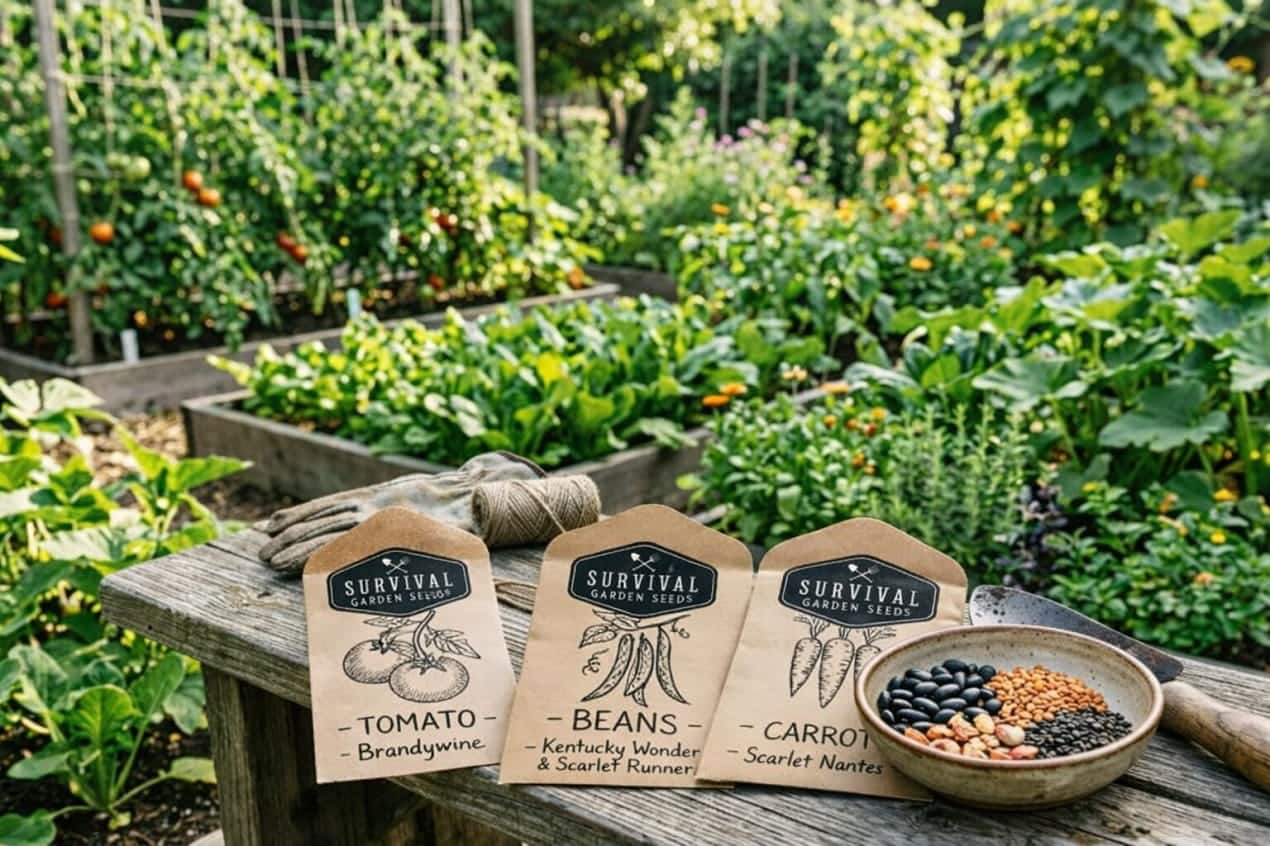
Survival Garden Seeds is one company that focuses on heirloom and open-pollinated seed varieties for home gardening. Their collections often include a wide range of vegetable seeds packaged in seed vault kits intended for long-term storage and home food production.
Many gardeners look for seed companies that offer clearly labeled heirloom seeds with good germination rates and detailed planting instructions. Seed vault collections typically include a mix of vegetables such as tomatoes, beans, lettuce, carrots, cucumbers, and peppers so gardeners can grow a variety of crops throughout the season.
In addition to online seed suppliers, gardeners may also find heirloom seeds through local garden centers, seed exchanges, and community gardening groups. These sources help growers access different seed varieties and expand the range of plants grown in home gardens.
What to Look for When Buying Heirloom Seeds
Check the packed-for date on seed packets. Most vegetable seeds remain viable for two to five years when stored properly, but germination rates decline over time. Fresh seeds produce stronger, more uniform stands.
Read variety descriptions carefully. Heat tolerance, disease resistance, and days to maturity matter more than pretty pictures. A variety that thrives in the Pacific Northwest might struggle in Texas summers, regardless of how appealing it looks in catalog photos.
Organic certification indicates seeds were produced without synthetic pesticides or fertilizers. While non-organic heirloom seeds grow perfectly well, organic seeds support farming practices aligned with sustainable gardening values.
Choosing High Quality Seeds for Your Garden
Reputable seed companies test germination rates and list them on packets or websites. Expect at least 80 percent germination for most vegetables. Lower rates suggest old or improperly stored seeds.
Buy from companies that grow their own seeds or work directly with small-scale growers. These operations typically maintain better quality control than companies that simply repackaging seeds from large wholesale suppliers.
Start small in your first season. Three or four heirloom varieties let you learn seed-saving techniques without overwhelming yourself. Expand your collection gradually as you develop skills and storage capacity for saved seeds.
Building Your Heirloom Garden Legacy
Heirloom seeds connect your garden to generations of growers who selected these varieties for flavor, productivity, and adaptability. Each season you save seeds, you strengthen that connection while developing varieties uniquely suited to your growing conditions.
The transition from purchased hybrid seeds to saved heirloom seeds takes a few seasons, but the payoff is genuine food independence. Your garden produces not just vegetables but the means to grow vegetables indefinitely. That self-sufficiency, combined with flavors commercial agriculture has largely forgotten, makes heirloom gardening deeply rewarding.
Start this season with a few proven heirloom varieties. Learn to save seeds from your most successful plants. Share extras with neighbors and local seed libraries. Within a few years, you’ll be growing food the way humans have for millennia: sustainably, independently, and deliciously.