

Why Storage Tank Removal Requires Expert Planning
Removing a storage tank from commercial property is never a simple task. Underground and aboveground tanks often sit in high-traffic, high-risk environments where safety, compliance, and structural integrity matter. Aging tanks pose environmental hazards, structural concerns, and operational disruptions if not handled correctly. That’s why businesses rely on trained professionals who understand how to navigate the technical and regulatory challenges involved in storage tank removal. With the right preparation, the process protects workers, prevents contamination, and keeps facilities operating smoothly.
Assessing the Tank Before Any Work Begins
The first step is a detailed evaluation of the tank and its surrounding environment. Teams examine the tank’s age, condition, contents, and construction. They also identify nearby utilities, soil conditions, and potential access issues. This assessment determines whether the tank can be safely taken out of service and what steps are needed to complete storage tank removal without damaging nearby structures or equipment. Accurate planning minimizes surprises and ensures that every stage of the process is handled with precision.
Securing Permits and Meeting Regulatory Requirements
Tank removal involves compliance with environmental, safety, and operational regulations. Professionals secure all necessary permits before work begins, including approvals related to hazardous materials, excavation, disposal, and site restoration. Keeping the process aligned with regulatory expectations protects commercial facilities from fines, delays, and legal complications. Proper documentation also ensures that the removal is recorded for future property assessments or audits.
Safely Draining and Cleaning the Tank
A tank must be fully emptied and cleaned before it can be removed. Technicians pump out remaining fuel, chemicals, sludge, or wastewater, then clean the interior using specialized equipment. This removes vapors, sediment, and flammable residues that could pose a danger during excavation. Cleaning is one of the most critical steps in the storage tank removal process because it prevents ignition, contamination, and environmental damage once the tank is exposed.
Excavation and Careful Tank Extraction
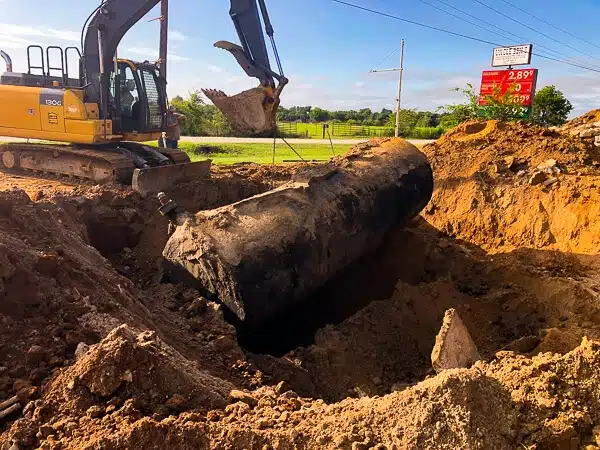
When the tank is ready, excavation crews dig around its perimeter using controlled techniques to avoid damaging the tank, nearby utilities, or facility infrastructure. Underground tanks often sit deep within compacted soil, requiring careful digging to maintain stability. Once the tank is uncovered, heavy equipment lifts it out slowly to prevent bending, cracking, or accidental spills. This controlled extraction ensures that the tank is removed intact and safely transferred for disposal or recycling.
Soil Testing and Environmental Verification
After the tank is removed, environmental specialists test the soil and groundwater for signs of contamination. Leaks from aging tanks can spread quietly over time, so thorough testing ensures that any impacted soil is identified and addressed. If contamination is found, remediation begins immediately to restore the site to safe conditions. This step is essential for commercial properties that must maintain regulatory compliance and environmental responsibility.
Transporting and Disposing of the Tank
Once the tank is safely lifted, it is transported to an approved disposal or recycling facility. Many tanks are cut into sections for easier handling and processing. Professionals document every step, providing facility owners with clear records of lawful and compliant disposal. This documentation protects businesses during inspections, property transfers, or future audits.
Preparing the Site for New Infrastructure
After a tank is removed and the site is cleared, facilities often take the opportunity to upgrade their infrastructure. This could involve installing a new tank with updated safety features, repurposing the area for new utilities, or improving drainage systems. Proper site preparation ensures the space is structurally sound, environmentally safe, and ready for its next use.
Why Professional Expertise Makes All the Difference
Storage tank removal requires a blend of technical skill, safety knowledge, and regulatory awareness. Professionals understand how to manage confined space hazards, coordinate excavation, handle contaminants, and maintain compliance throughout the process. Their expertise protects commercial facilities from unnecessary risk and ensures that every stage is completed efficiently.
Safe and compliant storage tank removal is a complex operation, but with trained technicians, strategic planning, and rigorous oversight, commercial facilities can retire old tanks confidently and prepare for more reliable, modern infrastructure.