

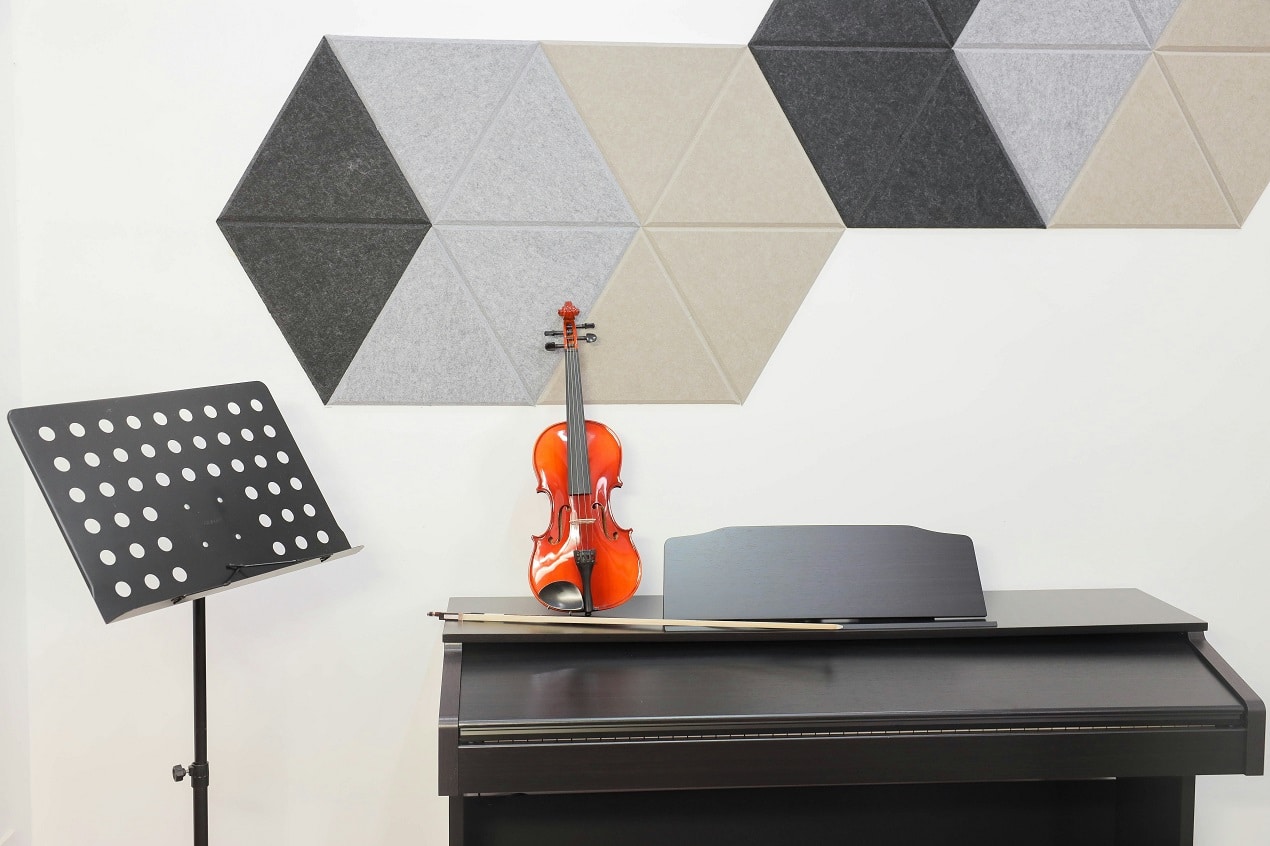
Controlling bass frequencies is one of the biggest challenges in room acoustics. Low-end sound behaves differently from midrange and high frequencies, and that difference makes it much harder to predict and manage. A room that sounds balanced in one spot may feel boomy or weak just a few steps away. Once you understand why bass behaves this way, however, it becomes much easier to make smart decisions about speaker placement, room treatment, and overall acoustic design.
Low Frequencies Behave Differently in a Room
Low frequencies behave in ways that surprise people the first time they start paying attention to acoustics. Their wavelengths stretch across several meters, which means they interact with the entire room instead of just the surfaces near the speaker. Because of this, the room itself becomes part of the sound system.
When bass energy spreads through the room, it does not simply bounce around randomly. It tends to gather where boundaries meet. Corners, wall intersections, and ceiling edges act like pressure points where bass accumulates. That is why the low end often sounds stronger or boomier near those spots.
At this stage, many people discover that adding a bass trap in strategic locations can noticeably calm down that buildup. You don’t need the entire room filled with treatment. Targeting the corners where pressure concentrates often produces the biggest improvement for the least effort.
The tricky part is that reflections continue interacting with one another long after the original sound leaves the speaker. Those reflections create standing waves, which means some parts of the room exaggerate bass while others almost cancel it out. As a result, moving just a meter can completely change how the low end sounds.
Standing Waves and Room Modes
Standing waves appear when bass frequencies bounce between parallel surfaces like walls or the floor and ceiling. The reflections line up with the original sound and reinforce certain frequencies again and again. Instead of a smooth bass response, the room begins to emphasize very specific notes.
Because of this, some bass tones suddenly feel overwhelming while others almost disappear. You might hear a kick drum explode with power on one note and then nearly vanish on the next. That inconsistency usually has little to do with the speakers themselves and much more to do with the room.
Smaller rooms often exaggerate this issue because their dimensions closely match common bass wavelengths. The shorter the distance between walls, the easier it becomes for reflections to line up and reinforce each other. As a result, bedroom studios and home theaters often struggle with bass accuracy.
Placement can soften these problems more than many people expect. Moving the listening position slightly forward or backward can shift you out of a bass null or peak. Speaker placement also plays a role, so experimenting with positioning often yields surprisingly noticeable improvements.
Why Standard Acoustic Panels Don’t Solve Bass Problems
Many people start treating a room with thin acoustic foam or lightweight panels. These products work well for midrange reflections and high frequencies, so they can improve clarity and reduce echo quickly. However, bass behaves very differently, which means those same panels rarely solve low-end issues.
Low frequencies carry far more energy and much longer wavelengths than treble sounds. Because of this, thin materials simply cannot absorb enough of that energy. The sound waves pass through or reflect rather than lose strength within the material, leaving the bass response largely unchanged.
Depth becomes a critical factor when dealing with low frequencies. Thick absorbers or panels placed slightly away from the wall create space where the wave can lose energy. The deeper the absorber, the more opportunity the bass has to slow down and dissipate.
That is why specialized low-frequency treatment exists in the first place. Instead of relying on lightweight foam, these solutions use dense materials and significant thickness. Their design focuses specifically on the frequencies that standard acoustic panels struggle to influence.
Speaker Placement and Its Impact on Bass
Speaker placement shapes bass response far more than many beginners expect. The distance between speakers and nearby walls changes how low frequencies reinforce or cancel each other. Even a small adjustment forward or backward can alter how the entire bottom end feels.
Placing speakers directly against a wall often increases bass output because the wall reinforces the low frequencies. That extra reinforcement might sound impressive at first, but it frequently exaggerates certain notes. The result feels boomy and uneven rather than tight and controlled.
Corner placement pushes this effect even further. When speakers sit near two walls and the floor simultaneously, bass energy is reinforced from multiple directions. Some home setups accidentally create this situation, which explains why the low end sometimes feels overpowering.
Maintaining symmetry helps keep the bass balanced between the left and right channels. If one speaker sits closer to a wall than the other, the room will treat them differently. Keeping both speakers positioned similarly relative to the walls makes the overall response much easier to control.
Practical Approaches to Controlling the Low End
Solving bass problems rarely comes from a single change. Instead, you usually combine multiple strategies, such as acoustic treatment, careful speaker placement, and adjustments to listening position. Each improvement may seem small on its own, but together they gradually create a more controlled low end.
Using more than one subwoofer can also smooth out the bass response across the room. When multiple sources produce low frequencies, the peaks and nulls tend to balance each other out. The result often feels more consistent regardless of where you sit.
Measurement tools help remove a lot of guesswork from the process. Room analysis software and measurement microphones reveal exactly which frequencies behave poorly. Once you see the data, it becomes much easier to decide where to move speakers or place treatment.
Starting with corners usually delivers the fastest improvement because those areas collect the strongest bass pressure. Treating those zones first addresses the biggest problem points in the room. From there, smaller adjustments in the space can further refine the sound.
Wrap Up
Low frequencies challenge even experienced engineers because they interact with the entire room instead of just nearby surfaces. Walls, corners, and room dimensions all influence how bass builds up or cancels out. However, once you recognize these patterns, you can start controlling them. Smart speaker placement, targeted acoustic treatment, and a bit of experimentation often make a dramatic difference. With the right approach, even a difficult room can deliver tight, balanced, and reliable low-end sound.