

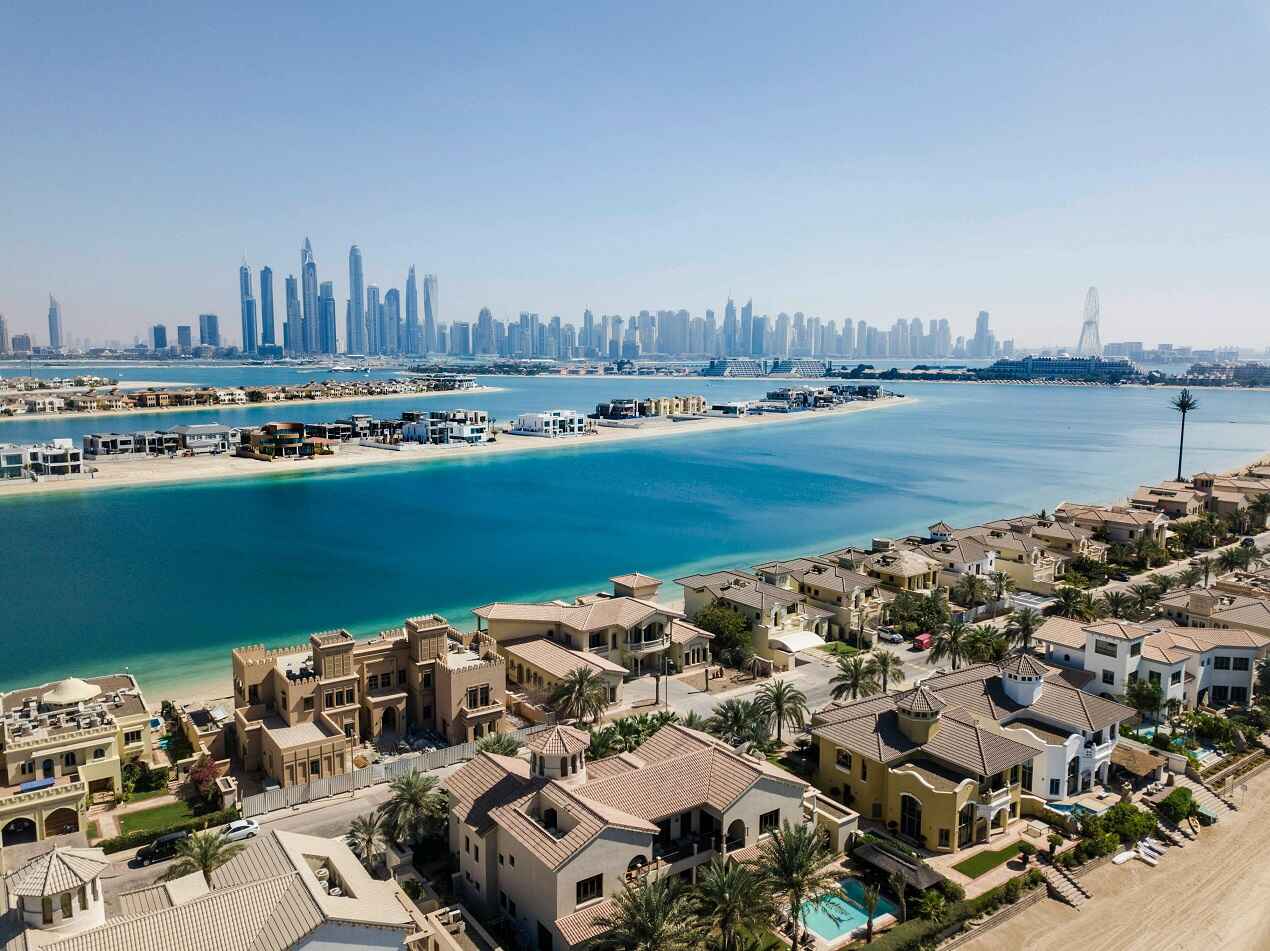
Along the northern coastline of Dubai, a new district is beginning to redefine how coastal living is imagined in the Gulf. Known officially as Dubai Islands, it is still often searched under its earlier planning name, Deira Island, a reminder of how long the idea of transforming this shoreline has been part of the city’s urban narrative. Today, the development stands at the center of a new movement in residential design—one that prioritizes openness, natural light, and a lifestyle shaped as much by atmosphere as by architecture. Unlike Dubai’s iconic vertical neighborhoods, Dubai Islands expands outward toward the sea, giving home design a new language rooted in horizon, calm, and space.
Across the district, early residential projects such as Lia by AVENEW, Ellington Cove, Azizi Wasel, Bay Villas by Nakheel and other projects are introducing the first interpretations of this design philosophy. Though diverse in their architectural expression, these projects reflect a shared direction: homes are being shaped around the qualities of the coastline rather than around traditional urban templates. Interiors are planned to embrace the fluidity of indoor–outdoor living, façades are softened to capture light without glare, and common spaces are arranged with attention to movement, views, and balance. These early developments mark the beginning of a broader design shift that positions Dubai Islands as a new reference point for contemporary coastal homes.
A Coastal Identity Built Through Space and Light
Dubai Islands offers a distinctly different spatial identity from the city’s established residential zones. Its masterplan allows for lower building heights, wider visual corridors, and a greater proportion of open waterfront. This creates a setting where interiors do not need to compete with the skyline but instead become extensions of the landscape.
Homes here are guided by the principles of soft minimalism—an approach that uses natural materials, neutral palettes, and unobstructed lines to maintain a sense of continuity between the indoor environment and the sea. The light plays a central role in shaping interiors, moving across spaces in long, gentle gradients that reduce visual noise and encourage a more relaxed rhythm of living. Large-format windows and sliding glass partitions define many of the emerging designs, enabling residents to experience the coast not only as a view but as a daily presence.
Design at the Intersection of Calm and Function
One of the defining qualities of home design on Dubai Islands is an emphasis on functional calm. This does not mean sparse interiors or an absence of character, but rather the use of design elements that support clarity, ease, and comfort. Kitchens are integrated seamlessly with living areas to enhance flow, storage solutions are built into walls to reduce clutter, and spatial zones are arranged to maximize privacy without isolating the home’s social center.
Bathrooms and bedrooms take inspiration from wellness-focused design, incorporating soft lighting, grounded materials, and proportions that encourage a slower pace. These choices reflect a growing trend in global residential design in which homes are conceived as restorative environments rather than simply as places of accommodation. On Dubai Islands, the coastal setting enhances this trend, giving homeowners a natural backdrop for balance and quiet.
Material Choices Inspired by the Coast
The palette of materials used in Dubai Islands homes mirrors the surrounding landscape. Light woods, limestone tones, sand-colored textiles, and soft matte finishes dominate many of the interiors emerging across the district. These choices are not only aesthetic but also practical in a climate where brightness and heat are defining elements of daily life.
Natural textures help diffuse light and create a tactile warmth that supports the district’s calm atmosphere. Porous surfaces and textured fabrics soften acoustics, while durable finishes ensure longevity under strong sun exposure. The coastline influences these choices directly, allowing homeowners to inhabit spaces that feel grounded, resilient, and authentically connected to their setting.
Indoor–Outdoor Living as a Design Pillar
Dubai Islands is especially notable for how it integrates outdoor living into the everyday experience of home. Terraces, balconies, and shaded loggias are not supplementary features but core architectural elements across many residences. These spaces allow homeowners to transition easily between climate-controlled interiors and open-air environments designed for morning sunlight or evening breezes.
This indoor–outdoor balance shapes how furniture is arranged, how rooms are connected, and how circulation flows through the home. Dining areas open onto terraces, bedrooms include quiet outdoor nooks, and living rooms extend into external seating areas designed for entertaining or reflection. This design approach aligns with global coastal living trends, but on Dubai Islands it becomes more pronounced due to the scale of the development and the intentionality of the masterplan.
The Role of Views in Residential Design
Views are not treated as passive features within Dubai Islands homes; they are used as structural anchors for spatial organization. Rooms are oriented toward the most expansive lines of sight, furniture layouts are optimized to face outward, and window systems are configured to frame rather than disrupt the horizon.
This emphasis on view-centric design shapes the emotional texture of the home. It encourages a sense of openness and reduces the density often associated with city living. Even compact spaces feel larger when they interact directly with water, sky, and light. Over time, this approach creates a consistent residential character across the district—a tapestry of homes unified not by identical design but by a shared visual philosophy.
A New Lifestyle Framework for Modern Households
Beyond aesthetics, Dubai Islands responds to evolving expectations of how homes should function. Many new residences include flexible rooms designed for hybrid work, fitness, or creative pursuits. Storage is more generous than in many urban apartments, acknowledging the needs of long-term residents. Kitchens are larger and often fitted with island counters that support both cooking and socializing.
The overall effect is a residential environment calibrated to contemporary living patterns that blend work, leisure, and home life. Families, professionals, and global residents can adapt spaces without compromising comfort or coherence. This versatility is essential in a district designed to attract diverse households seeking a refined yet understated coastal lifestyle.
How a New District Shapes a New Design Culture
As Dubai Islands continues to grow, its influence on design culture is becoming more visible. Developers, architects, and interior designers are treating the district not as an extension of existing Dubai neighborhoods but as a separate design chapter with its own identity. This allows for experimentation in materials, layouts, and home experiences that differ from the established luxury norms of the urban core.
The result is a developing portfolio of homes that reflect global coastal design principles while retaining a regional sensibility shaped by climate, culture, and landscape. As more residents move into the district, these design choices will evolve further, influencing how interiors are personalized and how public and private spaces interact.
Redefining Coastal Home Living in Dubai
Dubai Islands offers a new interpretation of coastal living that prioritizes atmosphere, space, and design clarity. It brings together architecture and environment in a way that encourages slow living without sacrificing modern convenience. For homeowners seeking a residence where aesthetics support wellbeing and space fosters calm, the district introduces a promising vision of what the next generation of coastal homes can be.
The transformation of the shoreline—from early proposals associated with Deira Island to the refined identity of Dubai Islands today—signals a broader shift in how coastal urban life is imagined. It represents a move toward environments where design is not an addition but an essential part of how a home interacts with its surroundings.