

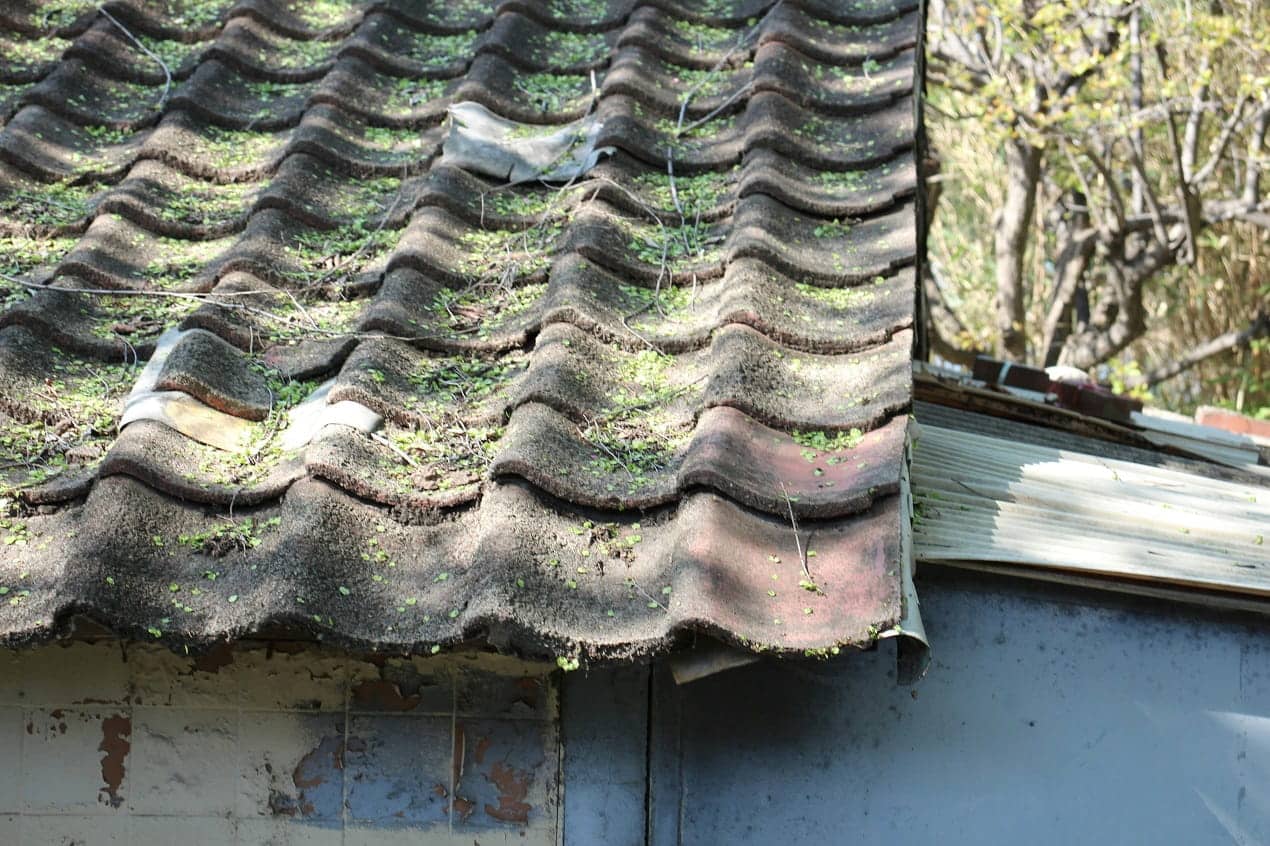
After a hailstorm, homeowners often look at the roof from the driveway and assume that no missing shingles means no damage.
Unfortunately, hail rarely makes roof damage that simple.
On asphalt shingles, genuine hail damage can appear as relatively small impact marks, fractured areas, loosened protective granules or damage beneath the visible surface. Some impacts become obvious immediately. Others are difficult to distinguish from normal aging, manufacturing characteristics, foot traffic or earlier wear without inspecting the roof closely.
The size of the hailstone also tells only part of the story. Roof age, shingle construction, impact angle, wind, storm duration and previous weather exposure can all change how a roof responds.
That is why the most important question after a hailstorm is not simply whether the roof is leaking. It is whether the roofing system suffered impact damage that could affect its ability to perform over the years ahead.
How Large Does Hail Have to Be Before It Can Damage a Roof?
There is no single hailstone diameter at which every roof suddenly becomes damaged.
Environment and Climate Change Canada defines hail as pieces of ice generally measuring at least 5 mm in diameter. Within its severe-weather terminology, hail of at least 2 cm in diameter is considered large enough to cause damage when assessing severe thunderstorms.
That 2 cm figure is useful for understanding weather warnings, but it should not be treated as a guaranteed roof-damage threshold.
A new impact-resistant shingle and a weathered conventional shingle may respond very differently to the same storm. Wind can also increase the horizontal component of an impact, while the pitch and orientation of the roof determine how directly individual hailstones strike the surface.
Environment and Climate Change Canada notes that hail can fall at speeds of 100 km/h or more, which helps explain why relatively small pieces of ice can become significant impact loads when they reach a building.
Roof damage therefore depends on the energy reaching the material, not simply whether someone describes the hail as pea-sized, quarter-sized or golf-ball-sized.
What Does Hail Damage Actually Look Like on Asphalt Shingles?
Real hail damage does not always resemble a clean hole or a dramatically broken shingle.
Field and laboratory research by the Insurance Institute for Business & Home Safety has documented several forms of hail-related shingle damage, including fractures, dents, tears and granule loss.
On a conventional asphalt shingle roof, several signs deserve closer attention.
Localized Granule Loss
The coloured mineral granules covering asphalt shingles are functional, not merely decorative.
They shield the asphalt layer from ultraviolet exposure and help protect the shingle as it weathers. When hail strikes the roof, the impact can dislodge granules from a concentrated area.
Fresh hail marks may therefore appear as irregular spots where the surface looks noticeably different from the surrounding shingle.
Granule loss also happens naturally as a roof ages, so finding loose granules in a gutter does not prove a hail claim by itself. The pattern, concentration and relationship to recent impacts matter.
Research by IBHS has shown that repeated small-hail exposure can remove enough protective granules to increase exposure of the underlying asphalt to sunlight and weathering.
Bruising and Damage Beneath the Surface
A hail impact may affect the shingle even when the top surface does not appear dramatically broken.
The impact can disturb or fracture material within the shingle, creating an area that may feel different from the surrounding roofing during a professional inspection. Owens Corning identifies bruising, cracking and granule loss among the conditions associated with hail impacts on asphalt roofing.
This type of damage helps explain why standing on the ground and looking for missing shingles is not a reliable inspection method.
Wind damage often creates obvious displacement. Hail can leave the shingle sitting in essentially the same position while damaging the material itself.
Cracks, Splits and Fractures
More severe impacts may crack the asphalt surface or damage the reinforcement beneath it.
IBHS field research has documented natural hailstones fracturing, denting and tearing asphalt shingles. The institute now reproduces these impact mechanisms in controlled laboratory testing rather than relying solely on older steel-ball tests.
Once a shingle has fractured, its resistance to future weather may be reduced even if rainwater is not immediately entering the attic.
This distinction between visible damage and immediate leakage is one of the most important things homeowners can understand after a storm.
Why Can a Damaged Roof Still Look Completely Normal?
Roofs are designed as layered systems.
An asphalt shingle can be damaged without instantly creating an open path through the roof deck. Underlayment and overlapping courses may continue shedding water, while the damaged area remains visually subtle.
As a result, the absence of an indoor ceiling stain the week after a storm does not necessarily mean the roof escaped damage.
Hail can compromise a surface gradually. Loss of granules exposes asphalt to additional weathering. A fracture can become more vulnerable through temperature changes, moisture and future storms. Existing age-related deterioration may also make later impacts more consequential.
This is particularly important in climates where roofing materials experience substantial seasonal change.
The roof may appear to have “survived” the storm because nothing leaked that evening, while its remaining service life has still been affected.
Why Is Hail Damage Easy to Confuse With Normal Roof Aging?
Not every dark spot, missing granule or surface irregularity is caused by hail.
Asphalt shingles naturally age. Granules loosen. Edges weather. Thermal cycling affects materials. People walking on the roof can also disturb the surface, and manufacturing patterns sometimes create variations that look suspicious to an inexperienced observer.
The challenge is therefore one of attribution.
A roofing inspector needs to consider the shape and distribution of marks, the condition of neighbouring shingles, the direction of exposure and evidence on other roof components.
For homeowners who have recently experienced a storm, a contractor familiar with local roofing conditions, such as Canclad Roofing in Edmonton, can inspect the roof more closely rather than relying only on what is visible from the driveway. Canclad currently provides hail-damage inspections and roofing services throughout the Edmonton area.
The objective should be to determine whether observed damage is consistent with hail, ordinary wear or another roofing issue.
Can Metal Vents, Flashing and Gutters Reveal Hail Damage?
Sometimes the easiest evidence is not found on the shingles first.
Metal roof vents, flashing, gutters and downspouts may show dents after a significant hailstorm. These components react differently to impact than asphalt shingles, so they can help establish that hail struck the property with meaningful force.
Damage elsewhere around the home can provide additional context. Dented siding, damaged window screens, broken vegetation or vehicle dents may indicate how severe and directional the storm was.
These clues still do not prove that the shingles themselves have been functionally damaged.
A metal vent can dent while nearby shingles remain serviceable. Conversely, a shingle roof may sustain meaningful impact damage without every exposed metal component showing dramatic deformation.
Professional inspection therefore looks for a consistent pattern across the property rather than basing conclusions on one dent.
Does Every Side of the Roof Receive the Same Damage?
No.
Hailstorms are influenced by wind, and the roof itself presents several slopes at different angles to the incoming hail.
One elevation may receive relatively direct impacts while another is struck at a shallower angle. Dormers, roof transitions and adjacent structures can also change exposure.
That means damage may be concentrated on one or two roof slopes rather than evenly distributed across the entire building.
The same variation can occur within a neighbourhood. Hailstorms are highly localized events, and differences in hail size, wind direction and storm path can produce noticeably different damage even among homes located relatively close together.
This is another reason a neighbour replacing a roof does not automatically prove that the house next door needs the same work.
Each roof needs to be assessed on its own condition.
Can Small Hail Damage a Roof Over Time?
This is an area where recent research has added important context.
Large hail understandably receives most of the attention because it can produce dramatic damage in a single storm. IBHS has also been studying what happens when roofs repeatedly experience hailstones smaller than one inch in diameter.
Its research found that repeated exposure to high concentrations of smaller hail can gradually remove protective granules and make asphalt shingles more susceptible to later damage.
One finding is particularly striking.
In testing that combined natural weathering with two simulated sub-severe hail events, the affected shingles became up to ten times more susceptible to damage from later large-hail impacts than new shingles.
This does not mean every small hailstorm shortens a roof’s life by a predictable number of years.
It does show why roof condition before the storm matters.
A ten-year-old roof that has already experienced years of sun, temperature changes and earlier hail events does not necessarily respond the same way as newly installed shingles.
Why Is Hail Particularly Relevant During the Canadian Warm Season?
Hail can occur across Canada, but Natural Resources Canada identifies May through July as the most common period for hailstorms, typically in association with afternoon thunderstorms.
Western Canadian homeowners have also seen how severe those storms can become.
Environment and Climate Change Canada documented Canadian storms producing golf-ball, tennis-ball and even baseball-sized hail in recent years. In its 2025 national weather review, for example, hail up to baseball size was reported near Langham, Saskatchewan, while another severe storm produced hail up to tennis-ball size.
Those are extreme examples rather than typical everyday events, but they demonstrate the amount of impact energy a roof may occasionally have to absorb.
For Edmonton-area homeowners, this makes post-storm roof awareness more than a theoretical concern.
What Should You Check Immediately After a Hailstorm?
The safest first inspection begins from the ground.
Look around the property for evidence such as accumulated shingle granules near downspouts, damaged siding, dented gutters, affected vehicles, broken screens or pieces of roofing material on the ground.
Inside the house, check upper-floor ceilings and attic areas that can be viewed safely for new moisture or water staining.
Photographing visible storm damage and recording the date of the event can also create a useful record if a professional inspection or insurance discussion becomes necessary later.
Avoid climbing onto a wet or recently storm-damaged roof simply to search for marks. Roof surfaces can be slippery, and damaged materials may be less secure than they appear.
A close roof inspection is more useful when performed systematically by someone who knows how hail impacts differ from age-related wear and other forms of damage.
How Do Professionals Assess Hail Damage?
A proper inspection usually considers the roof as a complete system rather than counting random marks.
The inspector examines exposed slopes, shingle condition, impact patterns, roof penetrations, vents, flashing and other components that may provide evidence about the storm.
Roof age matters. So does previous deterioration.
The inspector may also look at whether impacts are distributed in a pattern consistent with hail rather than mechanical damage concentrated around areas where people have walked or performed earlier work.
The purpose is not simply to find enough marks to justify replacement. It is to determine what happened to the roofing material and whether its ability to protect the building has been affected.
Does Hail Damage Mean the Whole Roof Needs Replacement?
Not necessarily.
Repair may be practical when damage is limited and compatible replacement materials are available. More extensive impact damage, widespread shingle deterioration, an older roof or damage across multiple slopes may make replacement more appropriate.
The decision should be based on actual roof condition rather than the assumption that every hail event produces the same outcome.
Material selection also becomes relevant when replacement is necessary.
IBHS evaluates commercially available impact-resistant asphalt shingles using laboratory-manufactured hailstones measuring 1.5 and 2 inches in diameter. The testing is designed to reproduce real hail behaviour more realistically and compare how different products resist damage.
Impact-resistant does not mean hail-proof. It means certain materials have demonstrated better resistance under defined testing conditions.
When replacement follows significant storm damage, homeowners can discuss both the present damage and future material options with contractors such as Canclad Roofing in Edmonton, which works with asphalt roofing and hail-related roof replacement in the region.
FAQs About Hail Damage
Can a roof have hail damage without leaking?
Yes. Hail can remove granules, fracture shingles or weaken roofing material without immediately creating a visible leak. The roof system may continue shedding water while the affected shingle becomes more vulnerable to future weather and aging.
What size hail should make me consider a roof inspection?
Environment and Climate Change Canada considers hail of at least 2 cm in diameter large enough to cause damage within its severe-thunderstorm warning terminology. Smaller hail can also contribute to shingle deterioration, particularly when exposure is repeated or the roof is already weathered.
Are dents in gutters proof that the shingles are damaged?
No. Dented metal components show that the property experienced hail impacts, but different materials react differently. The shingles still need to be evaluated independently before determining whether functional roof damage occurred.
How soon should a roof be inspected after hail?
Once the storm has passed and conditions are safe, an inspection can establish the condition of the roof while the event is still recent and visible evidence is easier to document. If active leakage, missing roofing material or obvious structural damage is present, assessment becomes more urgent.
Hail Damage Is Often a Matter of Details
The most obvious storm damage is rarely difficult to understand. Missing shingles, broken skylights or water entering the house demand attention immediately.
Hail damage is different because meaningful impacts can be much quieter.
A few concentrated areas of granule loss, subtle fractures or bruised shingles may not change the appearance of the roof from the street. The roof can continue functioning while those damaged areas weather further. Previous age and smaller storms can also influence how the material responds to the next major hail event.
That is why judging a roof by whether it still “looks fine” after a storm can be misleading.
A more useful approach is to consider the hail size, storm direction, age and condition of the roofing materials, damage to surrounding components and evidence found during a close inspection.
The question is not simply whether hail hit the roof.
The question is what those impacts did to the materials that are expected to keep protecting the home long after the storm clouds have moved on.