

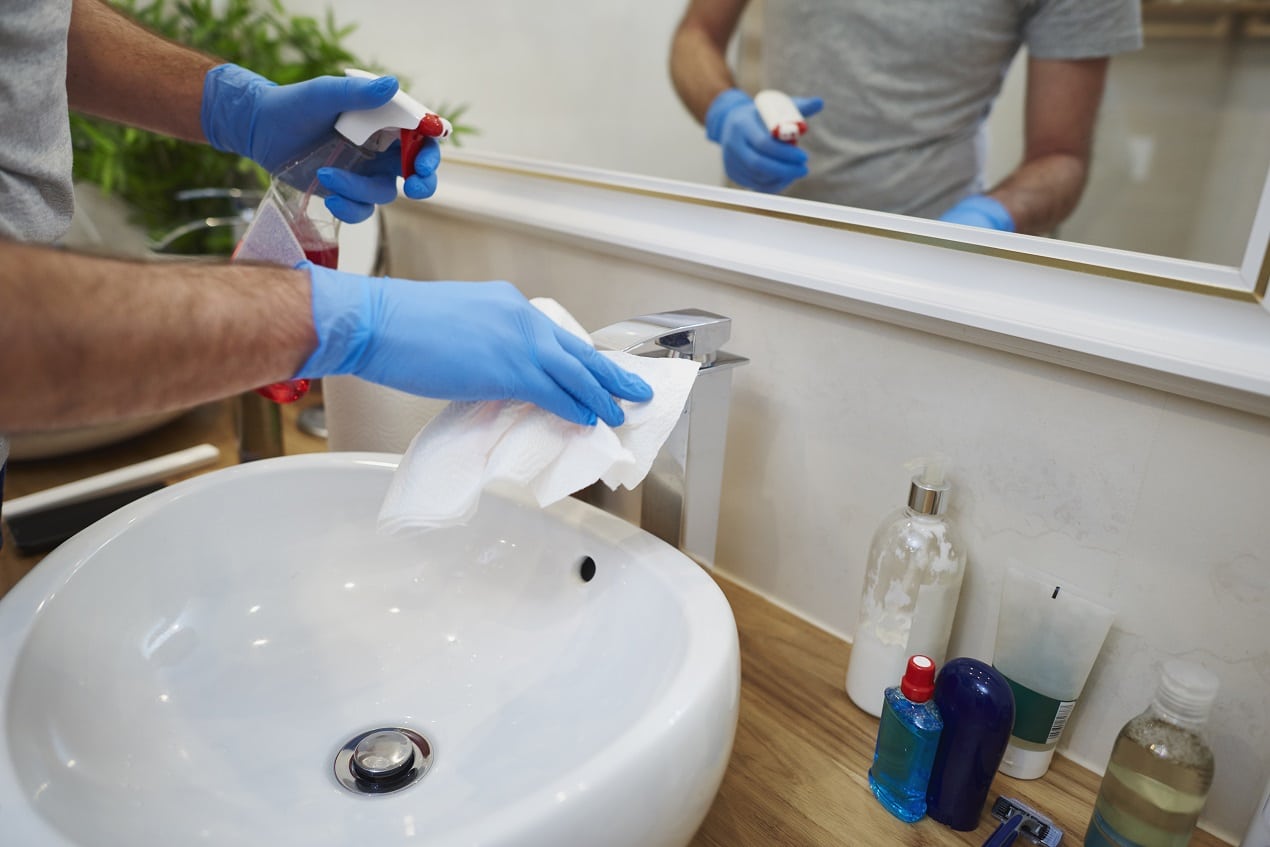
While it’s convenient to change your hair color at home, clean-up can be a difficult process. Hair dye is a concentrated pigment that sticks to hair and when used in the bathroom, the dye can leave a stubborn stain on the bathroom surface. Dark blue, black, red and purple dyes are prominent on light colored fixtures, grout and countertops.
Fortunately, with quick action and the proper process, most fresh stains can be treated. Knowing the characteristics of various materials when they are dyed will also help to minimize damage in the removal process.
Why Hair Dye Leaves Stubborn Bathroom Stains
Different surfaces of bathrooms have different porosity and resistance to chemicals. Pigments can also be absorbed into the fine pores of grout and unsealed stone, which is not the case with smooth, nonporous materials. After the color has settled regular soap and water might not suffice.
The difficulty of removing a stain can depend on the water temperature, dye type, and length of time the stain has been on the surface. It’s better to act promptly than after the dye has dried.
Removing Hair Dye From a Variety of Surfaces
1. Grout and Tile
Grout is particularly susceptible as it is porous and can absorb colored pigments. Firstly, clean off excess dye using a damp cloth. Use clubbed with a mild dish soap and water and gently scrub with soft-bristled brush the affected grout.
If the stain persists, apply a grout cleaner designed for the material, and follow the manufacturer’s directions. Do not scrub too hard since the grout or sealant will be damaged. Do not combine cleaning products, especially not bleach and ammonia or cleaning with acidic products.
2. Bathtubs and Sinks
Acrylic, porcelain, and fiberglass fixtures can react differently to abrasive cleaners and strong chemicals. Use warm water, a gentle dish soap and a soft sponge to start. Let the soapy solution sit for a few minutes before removing stain.
Before applying a special stain remover, verify with fixture manufacturer’s cleaning guidelines if the mark persists. Do not use steel wool, rough scouring pads or harsh solvents that can scratch or dull the surface.
3. Countertops
Care of the countertop materials is extra. Laminate and sealed quartz surfaces have different cleaning solutions than natural stone like marble or granite. Dye fresh spills immediately, not spreading dye across the surface.
A mild detergent is a wise choice for most washable surfaces. Acid products or the wrong stain removers can cause natural stone to be damaged so make sure to use a cleaner that is approved for natural stone. Test new product on an inconspicuous place first.
Preventing Blue and Other Hair Dye Stains
It is always simpler to prevent a stain than to get rid of a set in stain. Cover the countertop with a protective sheet, remove towels and toiletries from work area, and place a damp cloth near the work area before applying hair dye. Rinse splashes immediately, paying particular attention to grout lines and the edges around the sink.
Color planning prior to application can also minimize the amount of ‘mess’. For instance, a dark blue hair filter can allow users to see a different shade of a blue dye digitally before deciding to dye their hair. This kind of visual experimentation can be useful for color selection, but can’t tell you what the final product will look like when dyed to real hair.
Use gloves when coloring, use the dye manufacturer’s instructions and do not put down tools that have been dyed onto bathroom surfaces. Once set, clean up and look for splashes in corners, faucets, and grout.
When Do You Need a Professional Cleaner?
If a stain fails to respond to a gentle clean, don’t repeatedly wipe with a stronger chemical. If there is persistent discoloration, it could be a result of the discoloring having seeped through porous grout or through an improperly sealed surface. A professional cleaner can be able to evaluate the material and supply a treatment that is appropriate without causing unnecessary harm.
Final Thoughts
Hair dye stains can be avoided as permanent problems in the bathroom. The risk of discoloration can be minimized by prompt clean up, use of material appropriate products and simple protection measures. Homeowners can keep their bathroom clean while giving themselves the freedom to color their hair at home by treating grout, tubs, sinks and countertops to different cleaning products as needed.