

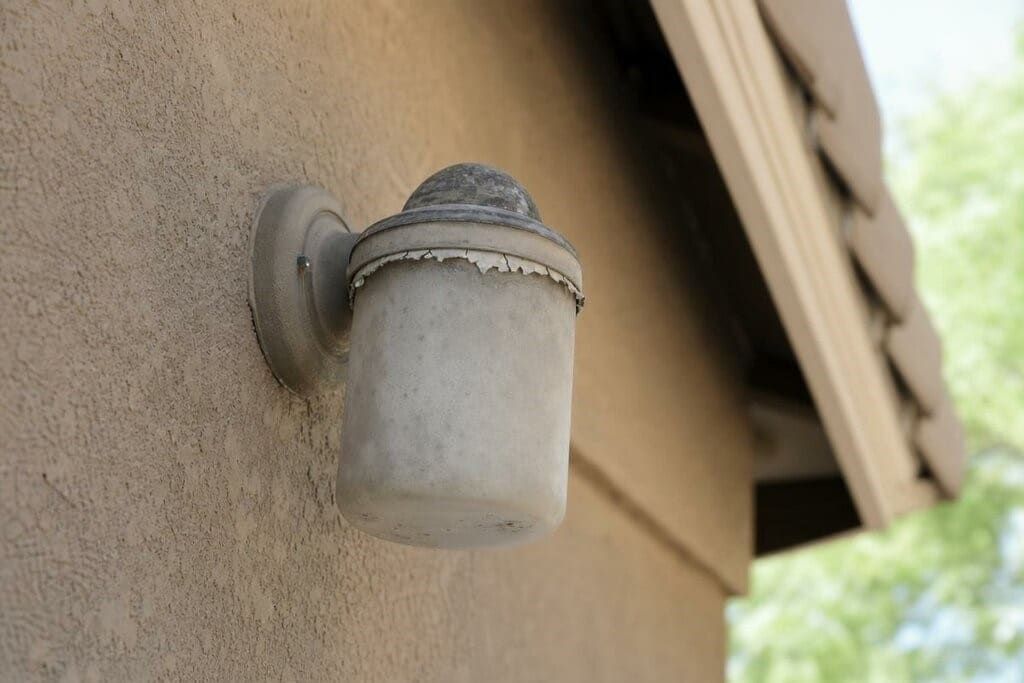
Phoenix homeowners know the sun is relentless. What many don’t realize is that the same UV intensity that fades patio furniture and peels paint is also breaking down lighting fixtures, both outside and near sun-drenched windows. It happens slowly, so most people don’t notice until a fixture cracks, dims, or fails entirely. Penguin Air, Plumbing & Electrical, serving the Phoenix Valley since 2011, sees this pattern season after season across the East and West Valley suburbs.
The Sun Works Against Lighting Fixtures Year-Round
The Phoenix Valley UV index climbs to 11 or above from May through September. The EPA classifies anything at 11 or higher as “extreme,” not just a sunscreen warning, but a material-science problem for anything mounted on exterior walls.
Surface temperatures on south- and west-facing fixtures can exceed 160 to 180 degrees Fahrenheit on summer afternoons. That combination of UV radiation and heat breaks down plastics, fades finishes, and cracks seals faster than most fixture manufacturers design for. Many homeowners replace a faded fixture with the same materials, then watch it fail again in two or three seasons. The exposure is the problem, not the fixture.
What UV Radiation Actually Does to a Light Fixture
UV radiation breaks down polymer chains in plastics through photodegradation, fades and chalks metal finishes, and cracks the insulation around electrical wiring. Phoenix’s extreme UV combined with high surface temperatures accelerates damage across four material categories far beyond what manufacturer ratings account for.
Plastic and Resin: Yellowing, Chalking, and Brittleness
Polycarbonate globes, acrylic diffusers, ABS housings, and nylon brackets all rely on intact polymer chains. UV breaks those chains progressively. Warning signs include yellowing or amber discoloration on clear or white globes, chalky white powdery residue on plastic surfaces, fine surface cracks or crazing on diffusers and housings, and brittleness that makes plastic snap rather than flex. A fixture rated for 15 years in a temperate climate can show serious damage within 3 to 5 years in the Sonoran Desert.
Metal Housings and Finishes: Fading, Oxidation, and Peeling
Powder-coat finishes on aluminum and steel housings fade and chalk under sustained UV and heat cycling. Anodized aluminum loses its protective oxide layer faster here than in almost any other U.S. climate, opening the door to corrosion underneath. Brass and bronze fixtures lose lacquer coating unevenly, producing patchy discoloration and surface pitting. Faded finish is cosmetic; corroded housing is structural.
Wiring and Electrical Components: The Safety-Critical Layer
PVC insulation on wiring inside outdoor junction boxes becomes brittle under sustained UV and heat. Brittle insulation cracks, potentially exposing bare conductors and creating a shock or fire hazard. UV also breaks down the rubber and silicone gaskets that seal moisture out of outdoor fixtures. Once those seals fail, monsoon rain finds a direct path inside. The combination of UV-degraded insulation and Arizona monsoon moisture is a documented cause of outdoor electrical failures specific to this climate.
Visual inspection alone will not catch wiring damage. A qualified, licensed electrician can identify insulation breakdown before it becomes a hazard, and work performed under Arizona ROC licensing is inspected against current National Electrical Code requirements for outdoor and wet-location wiring.
When to Call a Licensed Electrician Instead of DIYing the Fix
Swapping a bulb, cleaning a housing, or replacing a cracked globe are reasonable DIY tasks. But if a junction box reveals any of the following, a licensed electrician should take over: cracked or brittle wire insulation inside the box, visible corrosion on terminals or wiring connections, any sign of moisture or water staining inside the housing, a fixture upgrade requiring higher wattage than existing wiring supports, or rewiring that connects back into a junction box.
There is also a financial consideration: when upgrading to qualifying energy-efficient LED fixtures, both APS and SRP offer residential rebate programs, and a licensed electrician can confirm the installation meets program requirements.
Why the Phoenix Valley Makes This More Relevant Than Most Cities
Greater Phoenix carries one of the highest UV index averages in the U.S. That UV exposure slowly degrades plastic seals and wire insulation in outdoor fixtures. Then monsoon season arrives, pushing sudden humidity and driving rain into gaps that UV damage created. That combination, extreme UV followed by abrupt moisture swings, is a known local cause of outdoor electrical failures that doesn’t exist in milder coastal markets.
Homeowners in Mesa, Glendale, or Peoria who have fixtures inspected are often surprised by what UV and monsoon cycles have quietly done to outdoor wiring over just a few seasons. Catching degraded insulation or moisture intrusion early is far simpler than addressing an electrical failure after the fact. Lighting installation from Penguin Air, Plumbing & Electrical includes a full fixture and wiring assessment ahead of the next monsoon season.
Frequently Asked Questions
How fast does UV damage actually show up on outdoor fixtures in Phoenix?
A fixture rated for 15 years in a temperate climate can show serious yellowing, chalking, or cracking within 3 to 5 years under Sonoran Desert conditions. Combined surface temperatures of 160 to 180 degrees and extreme UV accelerate photodegradation far beyond standard manufacturer ratings.
Is UV-damaged outdoor wiring actually dangerous?
Yes. Brittle, UV-cracked insulation can expose bare conductors, creating a shock or fire hazard, and failed rubber or silicone gaskets let monsoon rain reach those exposed wires directly. That combination of UV degradation followed by moisture intrusion is a documented cause of outdoor electrical failures in desert climates.
Can a faded or chalky fixture be fixed, or does it need full replacement?
Cosmetic fading on a finish is generally just cosmetic, but chalky residue and surface cracking on plastic components usually signal structural degradation underneath. Once polymer chains have broken down through UV exposure, replacement is typically more reliable than refinishing.
What outdoor electrical work should never be attempted as a DIY project?
Any junction box showing cracked wire insulation, visible terminal corrosion, moisture staining inside the housing, or a wattage upgrade beyond what existing wiring supports should be handled by a licensed electrician. Reasonable DIY tasks are limited to bulb swaps, housing cleaning, and replacing a cracked exterior globe.
About Penguin Air, Plumbing & Electrical
Penguin Air, Plumbing & Electrical is a Phoenix Metro Area home services company founded in 2011, offering HVAC, plumbing, and electrical work to residential and commercial customers across the Greater Phoenix region, including Surprise, Peoria, and the East Valley. The company holds a BBB A+ rating and has maintained BBB accreditation since 2011. All electrical work is performed by licensed electricians under Arizona ROC licensing. The office is located at 3710 E University Dr # 1, Phoenix, AZ 85034.
Business Name: Penguin Air, Plumbing & Electrical
Address: 3710 E University Dr # 1, Phoenix, AZ 85034
Phone Number: (480) 525-5400