

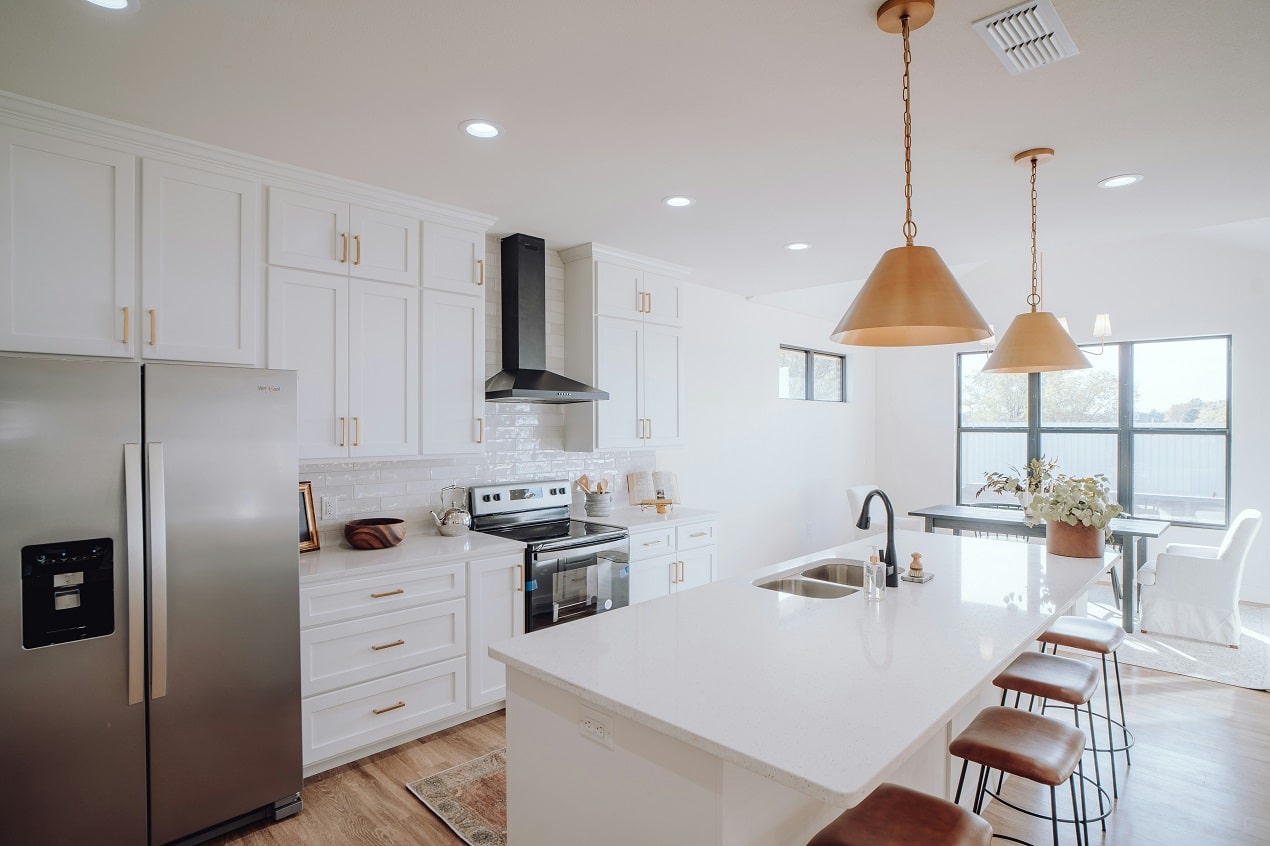
Most home refresh projects do not go wrong at the store. They go wrong in the first hour, when the homeowner skips the tape measure and heads straight to browsing tile samples on a phone. The backsplash arrives two boxes short. The patio pavers leave a bare strip along the fence. The bathroom vanity blocks the door by three inches. These problems share one cause: measurements that were guessed, rounded, or never taken at all.
A 30-minute measurement session before any shopping trip prevents most mid-project surprises. The catch is knowing what to measure — because square footage alone does not cover it.
Start With the Total Area, Not the Shopping List
The temptation is to start with materials. A homeowner sees a tile they like, checks the price per square foot, and estimates the total in their head. That estimate is almost always wrong, because rooms are not simple rectangles and memory is not a calculator.
Before comparing flooring or paint prices, run each room through a simple square footage calculator so your budget starts with a reliable number. Measure length and width at floor level, not at waist height — walls are rarely perfectly plumb, and the floor is where the material actually goes. For L-shaped kitchens or bathrooms with alcoves, break the space into rectangles and add them up. One total number for the whole room is not enough if different surfaces get different treatments.
This step sounds obvious. But the difference between “about 80 square feet” and an actual measurement of 94 square feet is real money — especially for natural stone, hardwood, or large-format porcelain.
Measure Walls, Floors, and Odd Corners Separately
A kitchen backsplash and a kitchen floor are two separate measurement jobs. The backsplash might run between the countertop and upper cabinets across three walls, wrapping around a window and stopping at a doorframe. The floor has its own shape, with cutouts for an island or a peninsula.
For each surface, note the height and width independently. Bathroom walls need the same treatment: the shower surround is different from the accent wall behind the vanity, and both are different from the floor. Patios have their own complications — irregular borders, sloped edges, planting beds that cut into the surface.
Sketch each surface on paper. It does not need to be pretty. Label every dimension. When you reach the store or open a calculator, you want numbers, not memories.
A few areas homeowners routinely forget to measure: the inside of window recesses on tiled walls, the strip of wall between a shower niche and the ceiling, the narrow border between a patio and the house foundation, and the riser faces on any steps. These small surfaces add up, and missing them means a second trip to the supplier.
Think About Movement, Clearance, and Daily Use
Square footage tells you how much material you need. Clearance tells you whether the finished room will actually work.
In kitchens, measure how far each appliance door swings open — the oven, the dishwasher, the refrigerator. Then check whether those arcs overlap or block a walkway. A standard kitchen aisle needs about 42 inches for two people to pass comfortably. If a new island or peninsula is part of the refresh, tape its footprint on the floor before ordering anything and walk around it for a day.
Bathrooms are tighter. Measure the space between the vanity edge and the opposite wall or shower enclosure. A vanity that looks perfect online might leave you squeezing sideways to reach the toilet. Check that the bathroom door clears the new vanity, any new shelving, and any planned towel bars.
On a patio, measure the clearance around seating. A dining chair needs roughly 24 inches behind it for someone to sit and stand without bumping the railing or planter. Measure the path from the back door to the seating area — anything narrower than 36 inches will feel like a squeeze once furniture is in place.
These are not aesthetic measurements. They are the ones that determine whether the room is comfortable to use every day.
Add Waste Before You Buy Materials
Every material needs overage. Tiles crack during cutting. Paint covers less when walls are textured or porous. Flooring planks get damaged or have color variations you want to skip. Outdoor pavers chip when cut to fit curved borders.
For straight-lay tile in a simple rectangle, plan on ordering at least 10 percent extra. Diagonal patterns, herringbone, or rooms with lots of cuts around obstacles push that to 15 or even 20 percent. For backsplashes, shower walls, or patio surfaces, a tile calculator for kitchens and bathrooms can help account for grout spacing, cuts, and waste before you order. Plugging in grout gap width and a waste percentage upfront beats discovering you are eight tiles short on a Saturday afternoon.
Paint is similar. One gallon covers roughly 350 to 400 square feet on smooth drywall, but textured surfaces, dark-to-light color changes, or porous materials can cut that by a third. Buy the extra quart.
For outdoor materials — deck boards, pavers, gravel — overage matters even more because batch colors vary. Ordering a small top-up later may not match what is already laid down.
Keep Measurements and Decisions in One Place
A kitchen or bathroom refresh rarely happens in one weekend. There is a measuring weekend, a shopping weekend, a waiting-for-delivery week, and then the actual work. Somewhere in that stretch, measurements end up on a scrap of paper in a jacket pocket, supplier quotes live in an email thread, the paint code is in a photo that got buried, and the tile dimensions are in a text to a friend who helped carry samples.
For projects that stretch across several weekends, a personal AI agent that remembers project details can keep dimensions, supplier notes, and design decisions together — so the numbers are still findable when the delivery finally arrives three weeks later. Whatever system you use, the point is the same: record every measurement, every product name, every decision and its reason, in one place you can search later.
Write down not just the numbers but why you chose them. “Went with 12×24 tile instead of 6×6 because fewer grout lines on the shower wall” is the kind of note that prevents second-guessing a month later.
When to Recheck Measurements or Call a Pro
Remeasure before ordering anything expensive. Walls settle, floors are not perfectly level, and first-pass measurements taken in a hurry have rounding errors. A second pass with a longer tape measure and a level catches the mistakes that a quick phone-app measurement misses.
Some projects cross a line where DIY measurements are not enough. If a wall might be load-bearing, if plumbing needs to move, if the patio sits on a slope that might need regrading, or if the room has unusual angles that affect cabinetry — bring in a contractor or designer to verify. Their measurement visit usually costs little or nothing when it leads to a project quote, and it can prevent a costly ordering mistake.
The best time to discover a problem is before any material is paid for and cut. Thirty minutes with a tape measure and a notepad is the cheapest step in any home refresh — and the one most likely to save real money.