

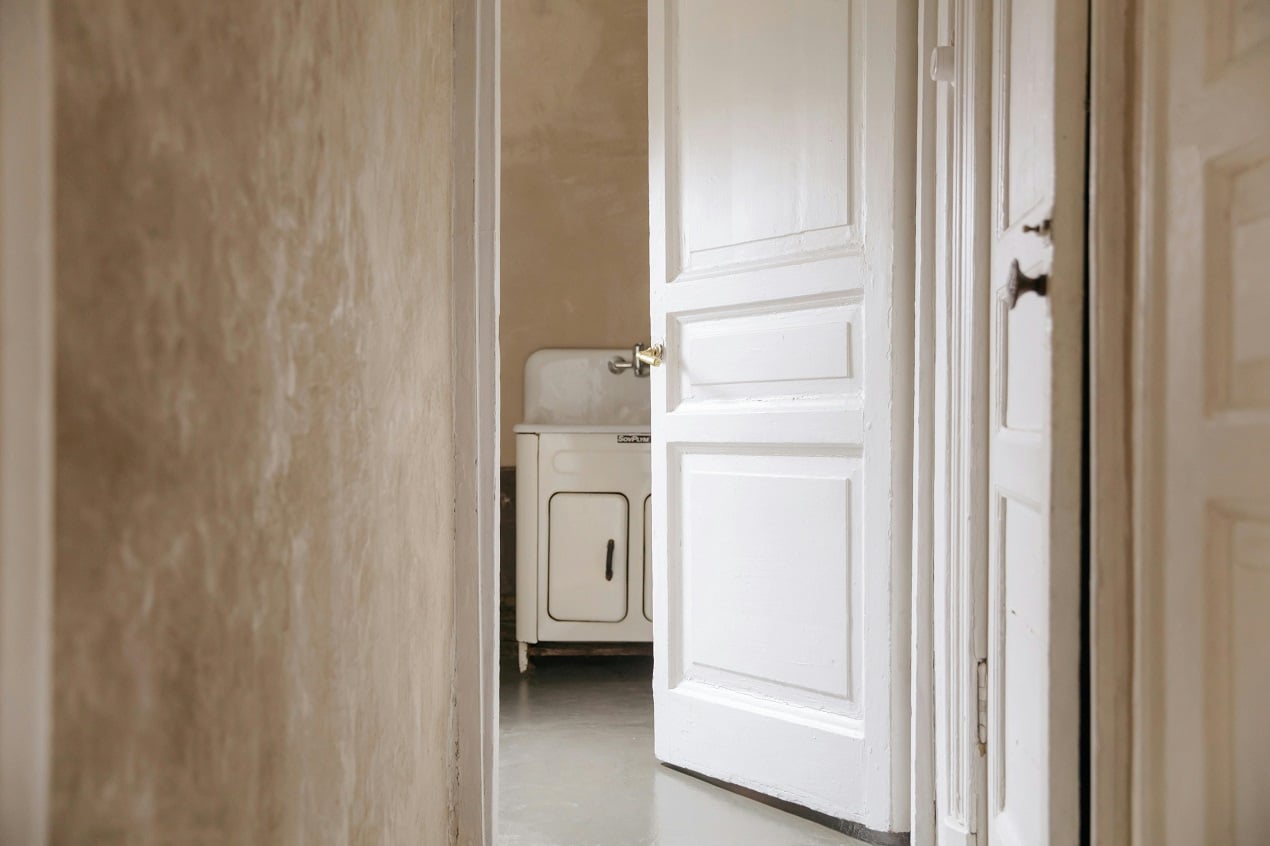
Many buildings are cited for noise issues that aren’t actually due to the walls. A room can have good insulation and sturdy walls, yet still hear conversations, TV sounds, and business calls, because the problem isn’t with the wall but with the door.
For property managers, facility managers, and building owners, this is an important distinction. Interior doors affect privacy, comfort, and the daily use of rooms, whether in an apartment, office, medical facility, or mixed-use building. Sound separation isn’t simply a matter of material selection. Door core material, perimeter gaps, hardware fit, door frame condition, and installation all contribute to how much sound can travel from one room to another. By understanding interior door performance, noise complaints can be remedied without overcompensating the wall.
When Walls Perform But Doors Fail
Why Doors Become The Weak Link
Sound travels along the path of least resistance. Even if walls are improved, a thin, hollow-core door with visible undercutting and a loose latch closure can still allow sound to pass through the opening with ease. What this means is that a conference room can bleed speech into a hallway, or a bedroom can allow household noise to penetrate despite improved construction.
This is why door selection must be considered as part of acoustic design, not just a finish choice. In many renovation projects, a team of professionals quickly discovers that Beautiful Interior Doors require proper construction and fitting to achieve quieter rooms, improved privacy, and reduced sound transfer between occupied spaces.
This change in perspective can help building owners avoid a common error: improving wall construction without improving the door assembly. If the opening is acoustically compromised, the room will not perform well.
Door Core Type Changes Performance
One of the most significant factors in sound isolation is the door core. Hollow-core doors are popular due to their affordability and ease of installation, but they are often less effective at sound isolation. A solid-core door is heavier and more effective at sound isolation, particularly for speech and general room noise.
Mass is not a panacea but shifts the paradigm. In residential rentals, hospitality environments, and professional office spaces, upgrading a hollow-core door with a solid-core door can be an effective upgrade without modifying the wall structure. This becomes increasingly important in environments for calls, focused work, counseling, or relaxation.
Consistency in materials is also important. Some doors, even those designed for aesthetic purposes, can have varying levels of core materials. Contractors and consumers should check what is actually inside the door slab rather than making assumptions based solely on thickness and surface treatment. Two doors can look very similar but differ significantly when installed.
Small Gaps Cause Big Leakage
A door slab can be fairly dense yet ineffective if air leaks are not sealed. Sound waves escape through the openings around the perimeter and under the door, and even a small opening can negate the benefit of a heavier door slab. This is why acoustic problems can persist even after a door replacement if the alignment and sealing of the door frame were not considered.
The areas where leaks are most likely to occur are around the head and jamb openings, the intersection at the latch side, and the undercut area at the bottom of the door. In many buildings, the problem is not necessarily a material issue but rather the result of wear, settling, repainting, hinge sag, or rushed installation. A latch that does not pull the door tightly into place can create a steady leak path, immediately noticeable to occupants, especially during quieter evening hours.
From a facilities management perspective, gap management is one of the most cost-effective aspects of sound-isolation improvement. It is also one of the most commonly overlooked because the door looks acceptable, but is not acoustically effective.
Frames And Hardware Affect Acoustic Results
The door’s performance depends on more than just the slab. Frames, hinges, strike alignment, and latching hardware all play a role in how well the door closes and how evenly it seats into the opening. A strong door on a warped frame will not provide consistent sound isolation because the points of contact and the gaps will change.
Hinge wear can cause a slight sag, increasing latch-side gaps. An unaligned strike can prevent full closure pressure, leaving the door technically closed but not seated. In commercial applications, high traffic can exacerbate these issues, particularly when doors are frequently propped open or shut forcefully. Over time, hardware drift can quietly compromise privacy even if no one is aware of the mechanical problem.
This is why contractors who are tasked with room-to-room noise problems will often investigate hardware fit before advising changes to construction. If the door assembly is not closing squarely and consistently, the acoustic performance will be inconsistent. Maintenance staff who check door alignment as part of regular checks often prevent noise complaints that are later attributed to wall or HVAC noise problems.
Door Bottoms And Threshold Details Matter
The bottom edge of an interior door is frequently the largest deliberate opening in the assembly. Undercuts are usually employed for clearance, flooring transitions, or ventilation, but they also establish a direct sound path. In areas where privacy is a concern, this opening can be the difference between acceptable and frustrating sound control.
Not all rooms require the same sound control. A bedroom, office, interview room, or treatment room may require more stringent acoustic control than a storage room or corridor door. The trick is to correlate the bottom detail with the room’s purpose. In some situations, a modification to the undercut during replacement can greatly diminish sound transfer. In other situations, a door bottom seal or solution compatible with the threshold may be more feasible, particularly in a retrofit scenario.
Owners of buildings should also consider how changes in flooring can affect door performance. Replacing carpeting with hard flooring can raise reflected sound levels and potentially alter the door-to-floor relationship. A door that was satisfactory before the flooring upgrade can become much noisier afterward, even though the door itself was never altered.
Better Privacy Starts At The Door
Interior doors have a disproportionate effect on sound separation because they commonly represent the weakest link in a room-to-room path. Wall type is still important, but room privacy can quickly unravel if door core material, perimeter gaps, hardware alignment, and bottom openings are not taken into account. This is why noise-related conversations that do not include the door assembly are likely to overlook the solution.
For building owners and facility professionals, the lesson is simple: interior doors must be considered functional acoustic components, not just finish materials. A focused improvement, a better fit, or a hardware adjustment can go a long way in enhancing room functionality, resolving complaints, and enabling quieter room operations without necessarily addressing every noise problem with a major renovation project. A better door means a better room.