

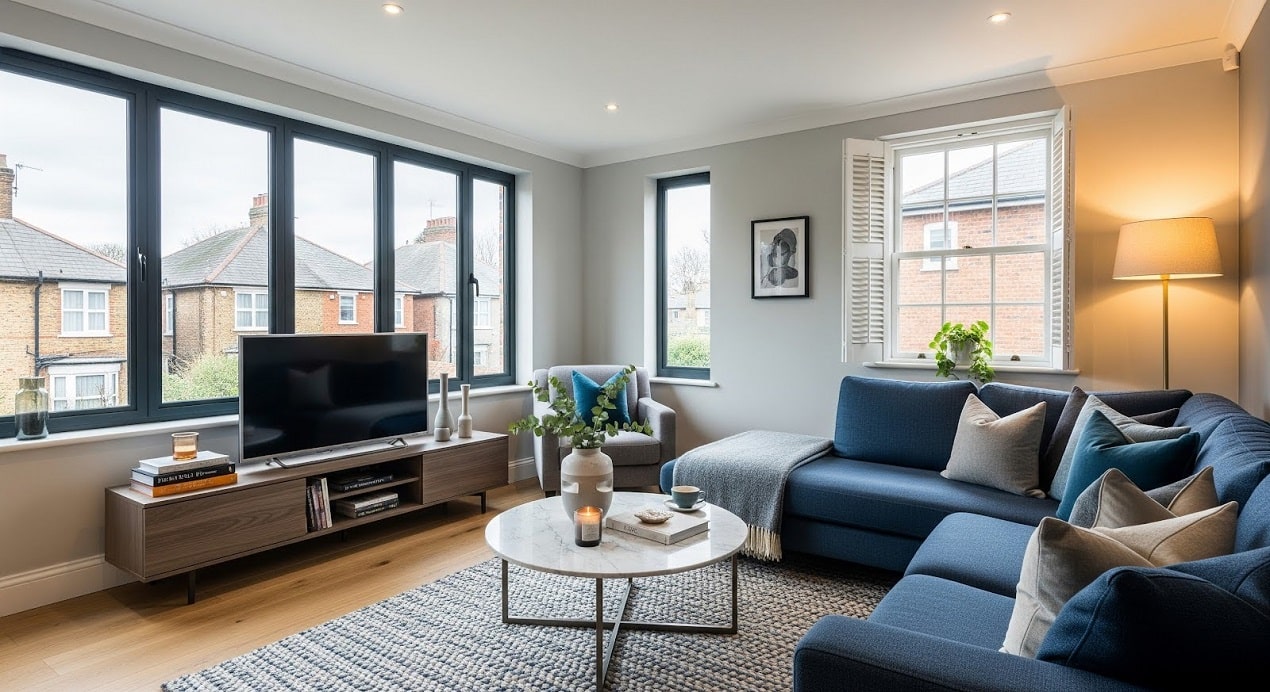
Modern interior design is shifting away from quick aesthetic repairs and towards thoughtful, comfort-driven choices that affect a home’s actual feel. Instead of using trendy décor or eye-catching colour schemes, today’s most successful home makeovers start with the fundamentals: how to manage space, control light, hide clutter, and create an environment that supports daily life. If you begin by concentrating on the design and functioning of your living area, every subsequent aesthetic decision will be more critical. Because everything works so well, the house has a beautiful appearance.
A Foundation of Comfort and Quiet
Every design idea needs a strong, peaceful base. Before choosing hues or furnishings, consider the envelope of your house. Effective insulation and high-performance windows are essential, not ostentatious, first steps. They reduce energy costs and external noise pollution by establishing a controlled indoor environment. Since new windows may be a noticeable yet straightforward upgrade for Scottish houses, many homeowners are considering double glazing in Bishopbriggs. This kind of improvement works subtly in the background, enhancing daily comfort and making other design choices in the area more enjoyable by eliminating drafts and street noise.
The New Meaning of Open Plan
The expansive, all-open floor plan is being re-evaluated. Nowadays, delineated zones within a shared area are preferred. Use furniture, different ceiling heights, or different lighting systems to create subtle divides rather than tearing down all the walls. A long library table can anchor a home office corner in a larger space. Without a physical barrier, a change in flooring type, such as from wood to tile, might indicate a change from a living area to a kitchen. This method provides transparency while preserving intimacy and a feeling of purpose for various activities.
Intentional Material Choices
Surfaces convey a narrative. Natural, honest materials with inherent texture and durability are preferred in contemporary design. Consider visible-grained wood, patina-developing unlacquered brass, or linen textiles that soften over time. These components add individuality and warmth that sterile, flawless finishes frequently lack. Combining materials is essential, such as combining sleek metal with tactile, soft cloth or slick concrete with rough-hewn wood. Instead of just being put together from a catalogue, this layering creates a room that feels carefully chosen and unique by adding visual appeal and depth.
Clever Concealment and Integrated Tech
Smart home hubs, charging connections, and routers are examples of the clutter that comes with modern life. Integrating these requirements effortlessly is the contemporary design necessity. Construct bedside tables with charging drawers. For electronics, designate cabinets with covert ventilation. For future-proof cable management, run conduits in walls during renovations. The use of technology in the house should be subtle. The best ways to control lighting, climate, and audio are through integrated systems or straightforward applications, which eliminate the visual complexity of numerous remote controls and tangled wires from your everyday view.
The Outdoor Room
In contemporary home design, the distinction between indoor and outdoor spaces is becoming less clear. You can use your space far more effectively if you use a terrace, balcony, or garden as a deliberate extension of your interior. An outdoor space can be transformed into a genuine leisure area with layered textures, cosy, weatherproof seating, and well-placed outdoor lighting. The space is made more welcoming year-round by adding cover or modest heating. This method turns the garden from an afterthought into a vital, fully integrated living area when combined with large sliding doors that let in an abundance of natural light and frame shifting external views.
Lighting as Architecture
Using a single ceiling light may make a room look unattractive and dull. Multiple layers of thoughtful lighting design shape a space’s purpose and atmosphere. After beginning with soft, diffused lighting, add focused task lights where clarity is necessary, e.g., desks or kitchen counters. Personality can be added with accent pieces that emphasise elements and provide visual appeal, including the magnificent wall lights or theatrical floor lamps. With dimmers, you can change the mood at any time, making it bright and active or cosy and close. Lighting, when properly utilised, is far beyond a mere necessity; it is an effective tool that increases size, comfort, and intent.
Your Home’s Next Chapter
Achieving perfection is not the goal of adopting modern design concepts. It involves deliberate editing and astute improvement. Start with one aspect that is outdated or ineffective. It could be organising that tech nook, adding a natural material, or changing the harsh lighting. Every intentional modification adds to a greater sense of purpose and harmony. Your house should be a peaceful, functional, and really personal representation of your life.